





















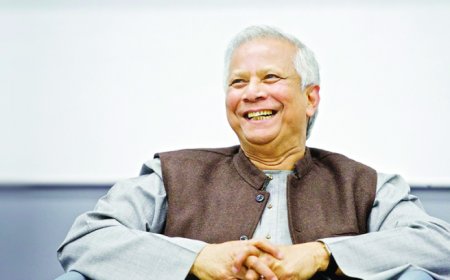



Mohammad Abdul Hamid: Analysis of Long-Term Presidency and Constitutional Role
Explore Mohammad Abdul Hamid’s long term presidency and constitutional role in Bangladesh, analyzing his leadership style, institutional impact, and the broader democratic framework.

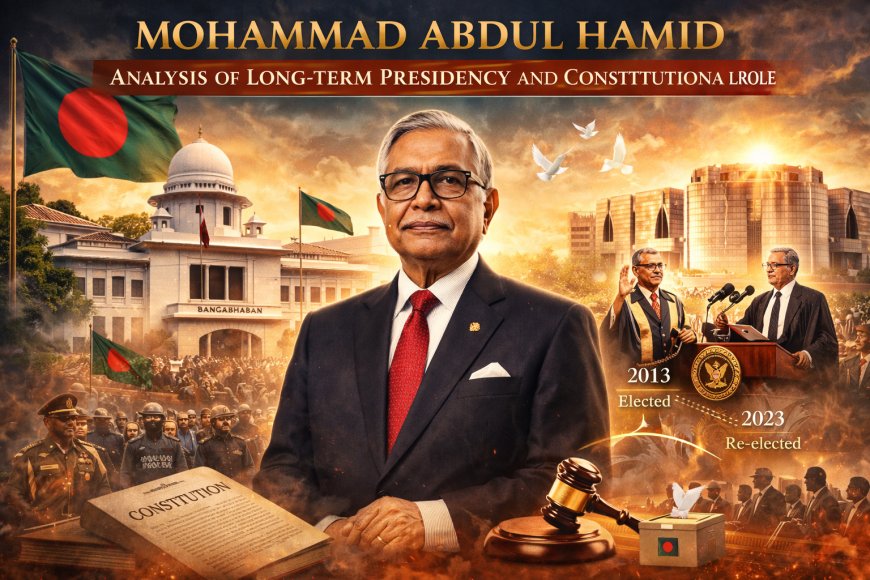
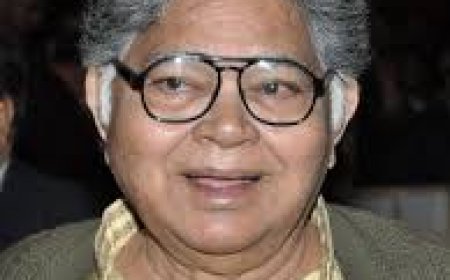
In the evolving political narrative of Bangladesh, the presidency often operates quietly in the background, overshadowed by parliamentary politics and executive leadership. Yet during moments of transition, constitutional interpretation, and national symbolism, the office assumes profound importance. Mohammad Abdul Hamid, who served as President of Bangladesh from 2013 to 2023, represents one of the longest continuous presidencies in the nation’s history. His tenure invites reflection on the constitutional boundaries and moral weight of the role.
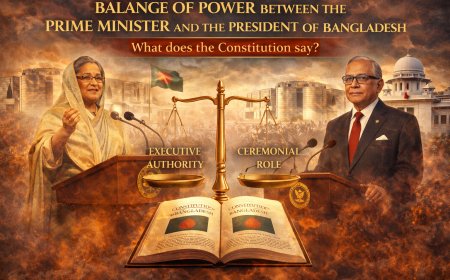
Bangladesh follows a parliamentary system where the President largely performs ceremonial duties. However, constitutional provisions grant the office significant influence in times of uncertainty, including the appointment of the Prime Minister, assent to legislation, and oversight during government transitions. Abdul Hamid’s decade long presidency unfolded amid electoral reforms, evolving party dynamics, and debates about democratic representation.
To understand his legacy is to explore the delicate balance between symbolism and authority, continuity and change, and the subtle yet critical role of constitutional guardianship in a developing democracy.
Personal Information Table
| Field | Information |
|---|---|
| Full Name | Mohammad Abdul Hamid |
| Nickname | Not widely known |
| Father Name | Haji Tayeb Uddin |
| Mother Name | Tomiza Khatun |
| Son & Daughter | 3 sons, 1 daughter |
| Date of Birth | 1 January 1944 |
| Place of Birth | Kamalpur, Kishoreganj District, Bengal Presidency, British India |
| Height | Not publicly documented |
| Color | Not publicly documented |
| Life Partner | Rashida Hamid |
| Marriage | Married |
| Assets | Not publicly disclosed |
| Education | Gurudayal Government College, University of Dhaka |
| Profession | Politician, Lawyer |
| Position | President of Bangladesh, Former Speaker of Parliament |
| Title | Former President |
| Company | Government of Bangladesh |
| Business | Public Service |
Unpacking the Layers of Mohammad Abdul Hamid: Analysis of Long Term Presidency and Constitutional Role
Mohammad Abdul Hamid assumed office in 2013 following the resignation of his predecessor and was later elected to a full term. His presidency coincided with significant political consolidation and evolving electoral frameworks in Bangladesh.
Under the Constitution of Bangladesh, the President acts on the advice of the Prime Minister in most matters. Yet constitutional scholars, including those referenced by Encyclopaedia Britannica and Banglapedia, note that the office retains discretionary authority in specific situations such as appointing a Prime Minister when no clear majority exists.
Abdul Hamid’s tenure was marked by public outreach, ceremonial diplomacy, and symbolic engagement with citizens across districts. He was known for accessible public speeches and efforts to present the presidency as a unifying institution rather than a partisan one.
His long stay in office also reflected political continuity. Analysts argue that such continuity can strengthen institutional stability, though it may also raise questions about the evolving function of ceremonial leadership in competitive democracies.
To examine his legacy is to assess both constitutional text and political practice, recognizing the subtle interplay between formal authority and practical restraint.
Navigating the Challenges and Debates
The central debate surrounding Abdul Hamid’s presidency revolves around the nature of executive power in a parliamentary democracy. While constitutionally limited, the President’s assent to legislation and appointment powers carry symbolic weight.
Critics of Bangladesh’s broader political landscape during his tenure often questioned whether the presidency could or should exercise greater moral oversight in times of controversy. Others argue that strict adherence to constitutional limits preserved institutional clarity.
Organizations such as Transparency International Bangladesh and international observers periodically raised concerns about electoral competitiveness and governance standards during this period. However, assigning direct responsibility to the presidency remains complex, as executive policymaking resides primarily with the cabinet and parliament.
Another discussion involves the symbolism of longevity. Serving two consecutive terms provided continuity, but it also prompted reflection on whether the presidency should evolve toward a more active guardian role or remain largely ceremonial.
These debates highlight the enduring tension between constitutional design and democratic expectations.
Real World Echoes: Case Studies and Applications
One of the most illustrative aspects of Abdul Hamid’s tenure was his role in parliamentary transitions. Having previously served as Speaker of Parliament, he possessed deep procedural knowledge. During key legislative sessions and oath ceremonies, his conduct reinforced procedural continuity.
His public engagements, including visits to remote districts and educational institutions, demonstrated how ceremonial leadership can shape national unity. By maintaining visibility beyond the capital, he emphasized symbolic inclusion.
Comparative scholars sometimes examine Bangladesh alongside other parliamentary systems, such as India or Germany, where presidents hold largely ceremonial roles yet influence political tone. Abdul Hamid’s presidency fits within this framework of restrained authority combined with public moral presence.
The case shows that even within limited constitutional powers, leadership style, communication, and consistency can shape public perception and institutional culture.
Conclusion
Mohammad Abdul Hamid’s long term presidency offers a valuable study of constitutional balance in a parliamentary democracy. His decade in office underscores how the presidency, though often ceremonial, remains a pillar of continuity and symbolic unity. The debates surrounding his tenure reflect broader conversations about governance, accountability, and institutional restraint. As Bangladesh continues to evolve, examining such leadership invites thoughtful engagement with the principles that anchor democratic systems.
For accurate and professionally crafted biographies or historical profiles, contact https://biography.com.bd/ and let your story be told with depth and clarity.
Q&A Section
1. What is the constitutional role of the President of Bangladesh?
The President acts as head of state in a parliamentary system. Most actions are taken on the advice of the Prime Minister, though limited discretionary powers exist in specific constitutional circumstances. For detailed legal interpretation, refer to Banglapedia and the Constitution of Bangladesh.
2. Why is Abdul Hamid’s presidency considered significant?
He served two consecutive terms from 2013 to 2023, making him one of the longest serving presidents in Bangladesh. His tenure symbolizes institutional continuity during a transformative decade.
3. Did the President influence policymaking directly?
In Bangladesh, policymaking authority rests primarily with the cabinet and parliament. The President’s influence is largely symbolic and procedural, though moral authority can shape public discourse.
4. How does Bangladesh’s presidency compare globally?
It resembles other parliamentary democracies where presidents perform ceremonial functions while safeguarding constitutional order, similar in structure to systems found in countries like India and Germany.
For further reading:
-
Encyclopaedia Britannica
-
Banglapedia
-
Transparency International Bangladesh
What's Your Reaction?
 Like
0
Like
0
 Dislike
0
Dislike
0
 Love
0
Love
0
 Funny
0
Funny
0
 Angry
0
Angry
0
 Sad
0
Sad
0
 Wow
0
Wow
0