



































Albert Einstein: Thought of the Father of Relativity
Explore Albert Einstein’s life, relativity theories, debates, and global impact. Discover how the father of relativity transformed science and modern technology.

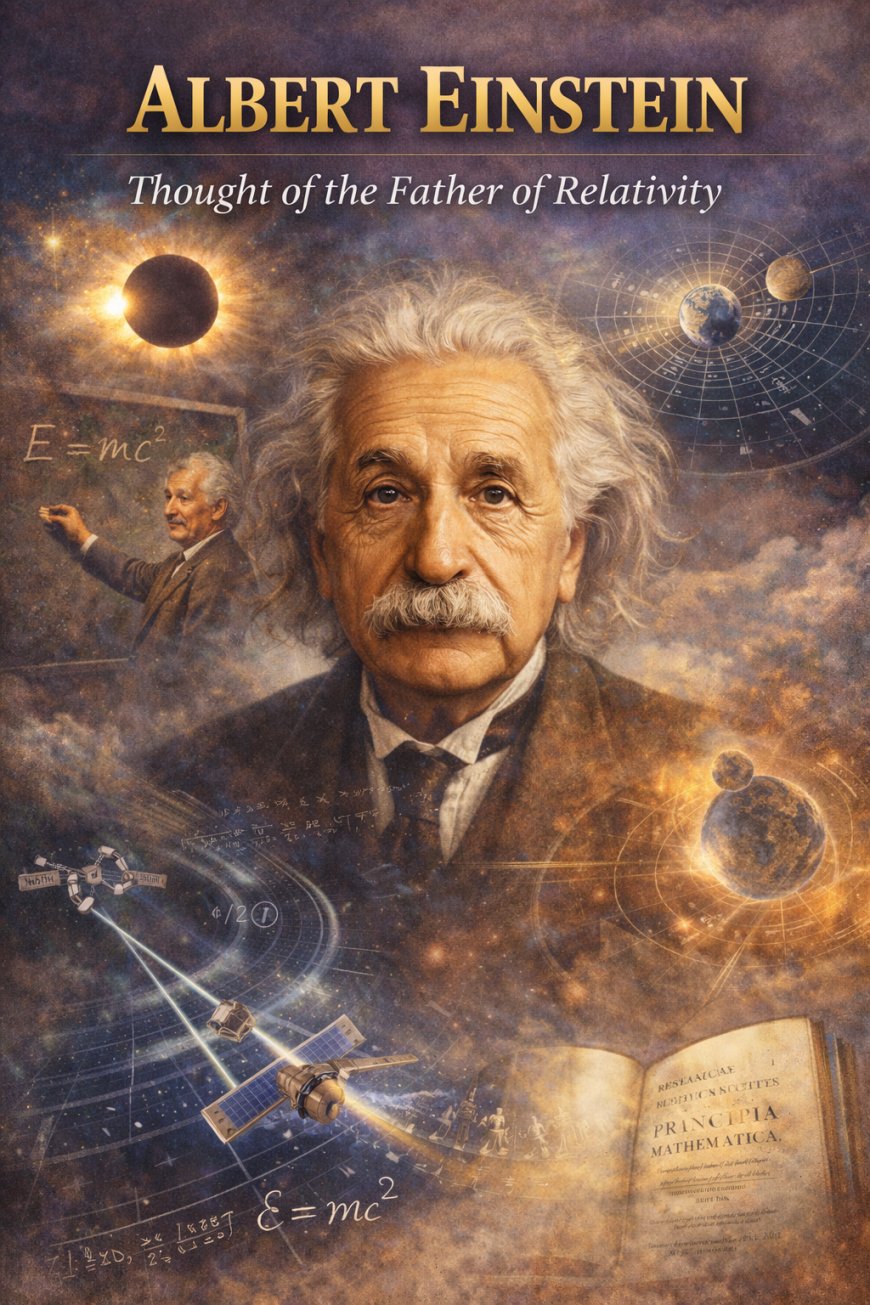
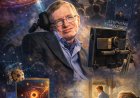
In an age defined by space telescopes, nuclear energy, GPS navigation, and quantum computing, the influence of Albert Einstein is impossible to ignore. His name has become shorthand for genius, yet behind the familiar wild hair and thoughtful gaze lies a thinker who transformed humanity’s understanding of space, time, gravity, and light. More than a scientific icon, Einstein reshaped the intellectual landscape of the twentieth century and continues to shape the twenty first.
Born in 1879 in Germany, Einstein matured during a period of rapid industrialization and scientific upheaval. Classical physics, largely defined by Newton, appeared stable and complete. Yet unanswered questions about light and motion lingered. In 1905, often called his miracle year, Einstein published papers that challenged established assumptions and opened new frontiers. Today, as researchers probe black holes and gravitational waves, they are still testing and extending the framework he introduced.
Einstein’s life invites curiosity not only about science but also about ethics, politics, and responsibility. His work bridges abstract theory and real world consequence, making his legacy both inspiring and deeply complex.
Unpacking the Layers of Albert Einstein: Thought of the Father of Relativity
The Miracle Year and Special Relativity
In 1905, while working at the Swiss Patent Office, Albert Einstein published four groundbreaking papers. One introduced the theory of special relativity, which redefined concepts of space and time. It proposed that the laws of physics are the same for all observers in uniform motion and that the speed of light is constant. From this emerged the iconic equation E equals mc squared.
Archival materials at the Einstein Archives at Hebrew University of Jerusalem provide access to manuscripts and correspondence that reveal his thought process during this pivotal year.
General Relativity and the Curvature of Space
In 1915, Einstein expanded his insights with general relativity, presenting gravity not as a force but as the curvature of spacetime caused by mass and energy. Confirmation came in 1919, when observations during a solar eclipse supported his predictions. Institutions such as NASA and the European Space Agency continue to rely on Einstein’s equations for mission planning and cosmological research.
His ideas laid the foundation for modern astrophysics, influencing studies of black holes, gravitational waves, and the expanding universe.
Navigating the Challenges and Debates
Quantum Mechanics and Intellectual Tension
Despite his revolutionary contributions, Einstein questioned aspects of quantum mechanics. His famous remark that God does not play dice reflected skepticism about probabilistic interpretations of reality. Debates between Einstein and figures such as Niels Bohr highlight the philosophical depth of scientific inquiry.
Research from the Perimeter Institute for Theoretical Physics explores how these debates continue to influence theoretical physics today.
Ethics, Politics, and the Atomic Age
Einstein’s name is often linked to the development of nuclear weapons due to his letter to President Franklin D Roosevelt urging attention to atomic research. While he did not work directly on the Manhattan Project, his equation underpinned nuclear physics. After World War II, Einstein advocated for global cooperation and nuclear disarmament.
The United Nations archives include records of discussions about atomic responsibility that echo themes Einstein publicly supported.
These complexities reveal a scientist deeply aware of the moral implications of knowledge, reminding us that discovery and responsibility often intersect.
Real World Echoes: Case Studies and Applications
GPS and Relativity in Everyday Life
Global Positioning System technology depends on corrections derived from both special and general relativity. Without accounting for time dilation effects, GPS calculations would quickly become inaccurate. This practical application demonstrates how abstract theory shapes everyday navigation.
Gravitational Waves and Modern Astronomy
In 2015, the Laser Interferometer Gravitational Wave Observatory confirmed the existence of gravitational waves, a phenomenon predicted by Einstein a century earlier. Research institutions around the globe use his equations to interpret cosmic events such as black hole mergers.
-
Satellite communication systems rely on relativistic corrections.
-
Particle accelerators test limits of energy and mass relationships.
-
Cosmology models the evolution of the universe through spacetime equations.
Einstein’s theoretical insights have thus become pillars of modern science and technology. From smartphones to space telescopes, his influence continues to expand.
Conclusion
Albert Einstein reimagined the universe with ideas that altered how humanity perceives reality. His theories of relativity challenged classical assumptions and opened pathways to new scientific horizons. Yet his life also reflects debate, doubt, and ethical reflection. By exploring both his intellectual achievements and the dilemmas that surrounded them, we gain a fuller appreciation of his enduring impact. Einstein’s legacy is not frozen in history but alive in research laboratories, policy discussions, and philosophical inquiry. Embracing this complexity encourages us to value curiosity, responsibility, and thoughtful dialogue.
For professional biography writing or historical research services, visit https://biography.com.bd/ and connect with experienced experts.
Q&A Section
1. Why is Albert Einstein called the father of relativity?
Einstein developed both special and general relativity, fundamentally transforming concepts of space, time, and gravity. The Einstein Archives at Hebrew University of Jerusalem preserves original documents related to these theories.
2. Did Einstein win a Nobel Prize for relativity?
No. He received the Nobel Prize in Physics in 1921 for his explanation of the photoelectric effect, which was crucial to quantum theory.
3. How does relativity affect daily life?
Relativity ensures accurate GPS functioning and influences satellite communication systems. Agencies like NASA apply Einstein’s equations in mission planning.
4. Where can I explore Einstein’s original work?
Consider these resources:
-
Einstein Archives: https://alberteinstein.info
-
NASA Education: https://www.nasa.gov
-
Perimeter Institute: https://www.perimeterinstitute.ca
These platforms offer accessible explanations and primary materials for deeper study.
What's Your Reaction?
 Like
0
Like
0
 Dislike
0
Dislike
0
 Love
0
Love
0
 Funny
0
Funny
0
 Angry
0
Angry
0
 Sad
0
Sad
0
 Wow
0
Wow
0