











Nelson Mandela: The story of an unforgettable struggle from birth to death
Explore the unforgettable life of Nelson Mandela, from his early struggle against apartheid to his legacy of reconciliation and global influence.

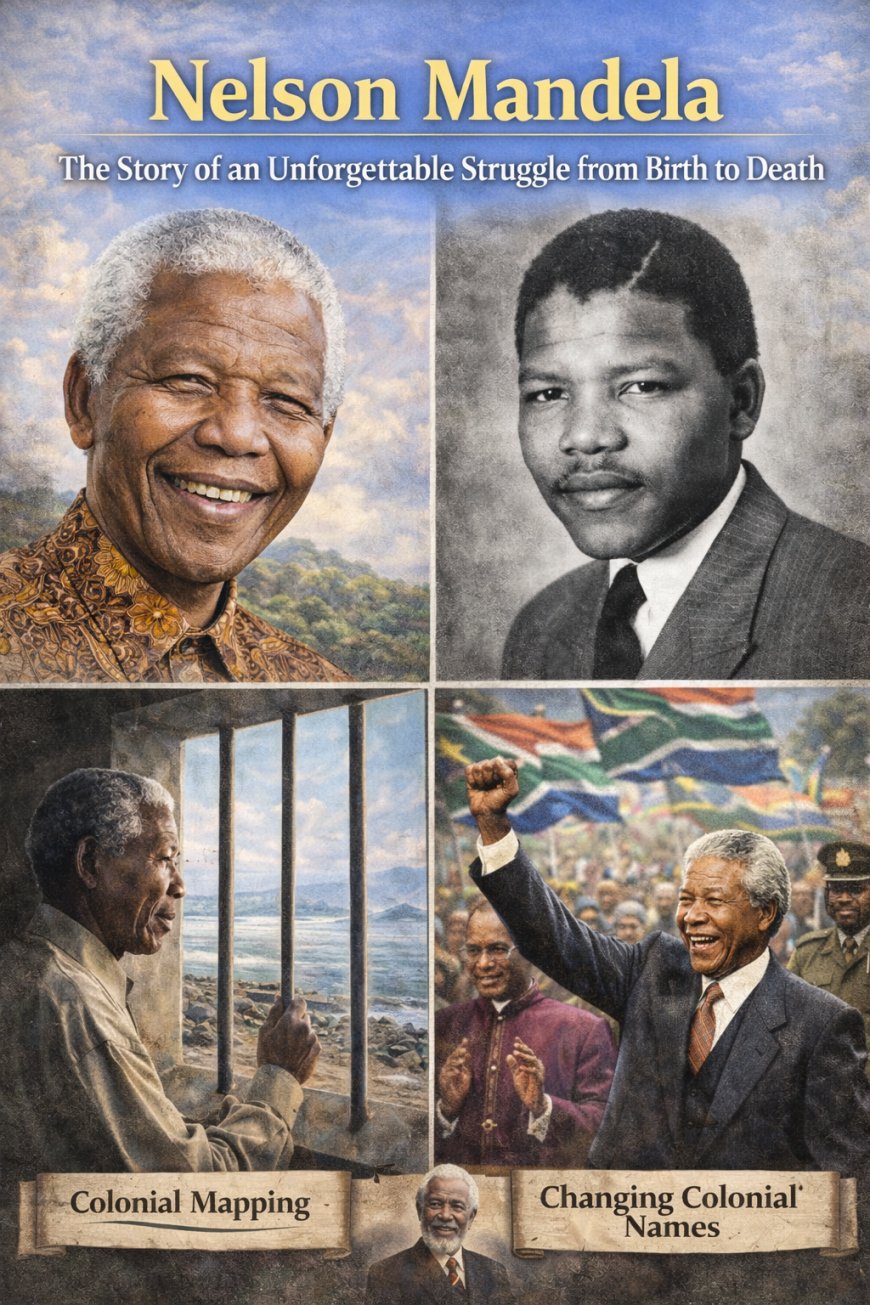
Few names resonate across continents with the moral clarity and emotional weight of Nelson Mandela. Born into a rural village in 1918 and rising to become the first Black President of South Africa, Mandela’s life journey reflects not only political struggle but a profound transformation of a nation. In a world still grappling with injustice, inequality, and polarization, his story remains strikingly relevant.
Mandela’s lifetime spanned colonial rule, institutionalized racial segregation, armed resistance, imprisonment, reconciliation, and democratic rebirth. The system of apartheid in South Africa divided communities for decades. Yet Mandela’s response after 27 years in prison was not revenge, but reconciliation. That choice continues to inspire debates about justice, forgiveness, and leadership.
Today, as movements for social equity unfold around the globe, Mandela’s legacy is both celebrated and examined. Was his approach universally successful? Did reconciliation come at a cost? These complexities make his life not just inspiring, but deeply human and historically significant.
Unpacking the Layers of Nelson Mandela: From Birth to Legacy
Mandela was born Rolihlahla Mandela in the village of Mvezo in 1918. Educated at missionary schools and later at the University of Fort Hare, he became involved in political activism in the 1940s through the African National Congress. His early efforts were rooted in nonviolent resistance. However, as state repression intensified, he helped form an armed wing of the movement, reflecting the shifting strategies of liberation movements worldwide.
In 1962, Mandela was arrested. During the Rivonia Trial, he delivered a historic speech declaring his readiness to die for a democratic ideal. He was sentenced to life imprisonment and spent 18 of his 27 years behind bars on Robben Island.
Key phases of his life include:
-
Early activism and ANC leadership
-
Armed resistance during apartheid repression
-
Imprisonment and international advocacy
-
Negotiated transition to democracy
-
Presidency from 1994 to 1999
His release in 1990 marked a turning point. Four years later, he became South Africa’s first democratically elected president. The Nelson Mandela Foundation offers comprehensive archives of his life and speeches at https://www.nelsonmandela.org. The South African Government archive also provides historical documentation at https://www.gov.za.
Mandela’s struggle was not linear. It reflected strategic adaptation, moral reflection, and political negotiation.
Navigating the Challenges and Debates
Mandela’s legacy, though widely admired, is not free from debate. One central question concerns the balance between reconciliation and structural reform. After apartheid ended, South Africa established the Truth and Reconciliation Commission led by Archbishop Desmond Tutu. Its aim was restorative justice rather than widespread prosecution.
Supporters argue that this process prevented civil war and fostered national healing. Critics suggest that economic inequalities rooted in apartheid remained largely intact. Scholars continue to examine whether reconciliation slowed deeper transformation.
Key debates include:
-
The ethics of forgiveness versus punishment
-
The limits of symbolic unity
-
Persistent socioeconomic inequality
-
Leadership choices during transitional justice
The United Nations recognizes Mandela’s contribution to human rights, designating July 18 as Nelson Mandela International Day https://www.un.org/en/events/mandeladay.
These discussions highlight the complexity of political transitions. Mandela’s leadership style emphasized dialogue and inclusion, yet structural challenges endured. His story invites reflection on what lasting justice truly requires.
Real-world Echoes: Case Studies and Global Influence
Mandela’s influence extends far beyond South Africa. His model of negotiated settlement has informed peace processes worldwide. Leaders and activists studying post conflict societies often reference South Africa’s transition as a case study.
Examples of Mandela’s global resonance include:
-
Peace negotiations in Northern Ireland
-
Advocacy for restorative justice frameworks
-
Youth leadership initiatives inspired by his example
-
Educational programs promoting tolerance and civic responsibility
The Mandela Rhodes Foundation supports leadership development across Africa, reflecting his belief in education as a transformative tool.
One notable case study is the integration of former political prisoners into democratic institutions without widespread retaliatory trials. This approach prioritized stability while acknowledging past harms. It demonstrates how leadership can shape collective outcomes.
Mandela’s life illustrates that political courage is not only about resistance, but also about restraint and vision. His choices continue to inform discussions about ethical governance and inclusive nation building.
Conclusion
Nelson Mandela’s journey from rural birth to global statesman stands as one of the defining stories of the twentieth century. His unwavering commitment to dignity and equality reshaped a divided nation and influenced conversations across continents.
Yet his life also reminds us that transformation is gradual and often incomplete. Reconciliation demands compromise. Justice requires persistence. Mandela’s legacy is not a finished chapter, but an invitation to continue striving for fairness and humanity.
To explore more compelling biographies and professional storytelling services, contact https://biography.com.bd/ and be part of preserving powerful life stories.
Q&A Section
1. What made Nelson Mandela’s struggle unique?
Mandela combined resistance with reconciliation. After decades of imprisonment, he chose inclusive leadership rather than retaliation, shaping a peaceful transition.
2. How long was Nelson Mandela imprisoned?
He was imprisoned for 27 years, primarily on Robben Island and later in Pollsmoor Prison.
3. What was the Truth and Reconciliation Commission?
It was a post apartheid body aimed at uncovering human rights abuses and fostering national healing through restorative justice.
4. Where can I learn more about Nelson Mandela’s life?
The Nelson Mandela Foundation at https://www.nelsonmandela.org and the United Nations Mandela Day page at https://www.un.org/en/events/mandeladay provide authoritative resources.
What's Your Reaction?
 Like
0
Like
0
 Dislike
0
Dislike
0
 Love
0
Love
0
 Funny
0
Funny
0
 Angry
0
Angry
0
 Sad
0
Sad
0
 Wow
0
Wow
0