

























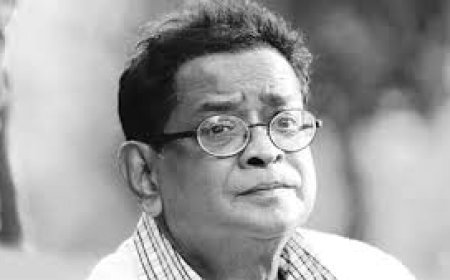
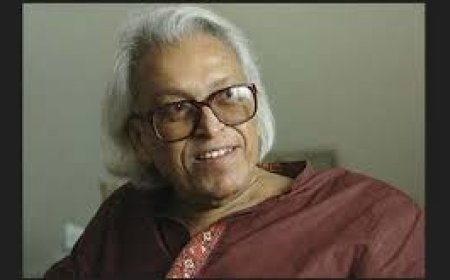
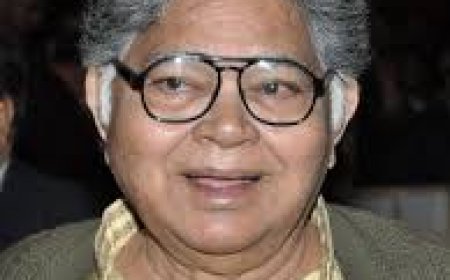






Shahabuddin Ahmed: From Chief Justice to President—The Role of Democratic Transformation
Explore Shahabuddin Ahmed’s remarkable journey from Chief Justice to President of Bangladesh and his pivotal role in the nation’s democratic transformation during a critical political transition.

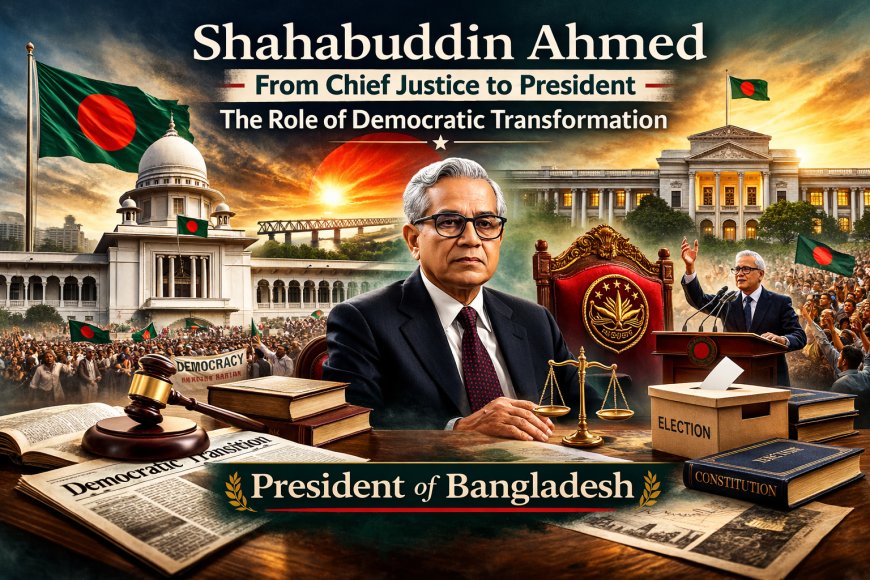
In the shifting landscape of South Asian politics, few figures embody the bridge between law and leadership as compellingly as Shahabuddin Ahmed. Rising from the highest judicial office to assume the presidency of Bangladesh, his journey mirrors a nation’s search for democratic stability. At a time when constitutional institutions were under strain and public trust wavered, his appointment signaled more than a change in office. It represented a test of whether rule of law could anchor political transition.
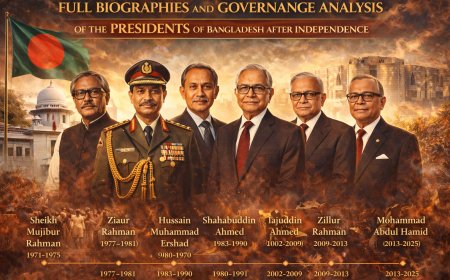
Bangladesh, since its independence in 1971, has faced periods of political turbulence, military interventions, and intense partisan divides. Against this backdrop, Shahabuddin Ahmed emerged as a figure associated with neutrality and constitutional discipline. His tenure as Chief Justice placed him at the center of legal debates, while his role as interim President during a critical democratic transition in 1990 added another layer to his legacy.
His story invites deeper reflection. How does a jurist navigate political power without compromising judicial integrity? What does democratic transformation truly require in a developing nation? These questions continue to resonate in contemporary governance debates.
Personal Information Table
| Field | Information |
|---|---|
| Full Name | Shahabuddin Ahmed |
| Nickname | Not widely known |
| Father Name | Talukdar Abdur Rashid |
| Mother Name | Not publicly documented |
| Son & Daughter | 2 sons |
| Date of Birth | 1 February 1930 |
| Place of Birth | Pedatoli village, Madaripur District, Bengal Presidency, British India |
| Height | Not publicly documented |
| Color | Not publicly documented |
| Life Partner | Anwara Begum |
| Marriage | Married |
| Assets | Not publicly disclosed |
| Education | University of Dhaka |
| Profession | Jurist |
| Position | Chief Justice of Bangladesh, President of Bangladesh |
| Title | Former President |
| Company | Supreme Court of Bangladesh |
| Business | Public Service |
Unpacking the Layers of Shahabuddin Ahmed: From Chief Justice to President—The Role of Democratic Transformation
Shahabuddin Ahmed’s career offers a remarkable lens through which to examine democratic consolidation in Bangladesh. As Chief Justice of the Supreme Court, he upheld judicial principles in an era marked by political polarization. His reputation for integrity positioned him as a neutral figure when nationwide protests in 1990 led to the resignation of President Hussain Muhammad Ershad.
In a rare constitutional move, Shahabuddin Ahmed was appointed Acting President to oversee a transition toward free and fair elections. This decision reflected public trust in the judiciary as an impartial institution. Under his leadership, Bangladesh conducted elections widely regarded as credible, paving the way for parliamentary democracy’s restoration.
Scholars often reference this period when discussing civil military relations and constitutional resilience in South Asia. Resources such as the Encyclopaedia Britannica and the Banglapedia national encyclopedia provide detailed background on his leadership and constitutional role.
His subsequent election as the 16th President of Bangladesh in 1996 further cemented his place in national history. Yet his journey also raises deeper theoretical questions about separation of powers, institutional trust, and the delicate balance between law and politics.
Navigating the Challenges and Debates
Shahabuddin Ahmed’s transition from Chief Justice to President was not without debate. Critics questioned whether a serving Chief Justice assuming executive authority might blur constitutional boundaries. Supporters, however, argued that extraordinary political crises require exceptional solutions grounded in public confidence.
One major challenge involved maintaining judicial independence while temporarily stepping into political leadership. The principle of separation of powers is foundational in democratic governance. Scholars from institutions such as the International Commission of Jurists have long emphasized the importance of judicial neutrality during political transitions.
Additionally, Bangladesh’s deeply polarized political environment complicated reform efforts. Even as Acting President, Shahabuddin Ahmed had to balance competing demands from opposition movements, military leadership, and civil society actors. Each step required careful calibration to avoid perceptions of bias.
Ethical dilemmas also surfaced around precedent. Would appointing a Chief Justice to head a transitional government create expectations for future crises? Or was it a uniquely context driven decision? These debates continue to inform contemporary discussions on constitutional safeguards in emerging democracies.
Understanding these challenges not only clarifies his legacy but also enriches global discourse on democratic transformation and institutional integrity.
Real-world Echoes: Case Studies and Applications
The 1990 democratic transition in Bangladesh stands as a compelling case study of constitutional crisis management. When mass protests surged and political deadlock deepened, institutions faced the risk of collapse. Shahabuddin Ahmed’s interim leadership offered a stabilizing force.
Under his supervision, electoral reforms were initiated and a neutral caretaker framework gained legitimacy. The 1991 parliamentary elections marked a pivotal return to democratic governance. Observers noted improvements in transparency and voter participation, strengthening public faith in constitutional processes.
Beyond Bangladesh, political scientists often compare this transition with similar experiences in countries navigating post authoritarian shifts. The concept of neutral caretaker administrations has since influenced governance debates in several regions.
His later tenure as President between 1996 and 2001 further demonstrated the ceremonial yet symbolic importance of constitutional guardianship. While the presidency in Bangladesh operates within a parliamentary framework, its occupant plays a vital role in safeguarding democratic norms.
The broader lesson is clear. Democratic transformation is rarely linear. It demands institutional trust, credible leadership, and constitutional flexibility. Shahabuddin Ahmed’s experience continues to serve as a reference point for policymakers and scholars exploring sustainable democratic frameworks.
Conclusion
Shahabuddin Ahmed’s journey from Chief Justice to President reflects the evolving democratic narrative of Bangladesh. His leadership during a moment of national uncertainty underscores the importance of institutional credibility and principled governance. While debates persist about constitutional precedent and political neutrality, his role in overseeing a peaceful transition remains a defining chapter in the nation’s history. In a world where democracies face renewed pressures, his story invites reflection on the power of law, trust, and measured leadership in shaping political futures.
If you need professional biography writing, research assistance, or digital profile development, feel free to contact https://biography.com.bd/ for expert services.
Q&A Section
1. Why was Shahabuddin Ahmed chosen to lead Bangladesh during the 1990 crisis?
He was widely respected for his integrity as Chief Justice. Political stakeholders and civil society viewed him as a neutral figure capable of overseeing a credible transition. His appointment reflected trust in judicial institutions during a time of political upheaval.
2. Did his move from judiciary to presidency violate democratic principles?
The move sparked debate. Some critics argued it risked blurring separation of powers. Others saw it as a pragmatic, constitutionally sanctioned response to extraordinary circumstances. The transition’s success in restoring electoral democracy strengthened arguments in its favor.
3. What impact did his leadership have on Bangladesh’s democracy?
His interim leadership facilitated free and fair elections in 1991 and helped reestablish parliamentary governance. The episode is frequently cited in comparative political studies as an example of institutional resilience.
4. Where can readers learn more about Bangladesh’s constitutional history?
-
Encyclopaedia Britannica
-
Banglapedia national encyclopedia
-
International Commission of Jurists
These resources provide historical context, legal analysis, and broader discussions on democratic governance.
What's Your Reaction?
 Like
0
Like
0
 Dislike
0
Dislike
0
 Love
0
Love
0
 Funny
0
Funny
0
 Angry
0
Angry
0
 Sad
0
Sad
0
 Wow
0
Wow
0