


















Full biographies and governance analysis of the presidents of Bangladesh after independence.
Explore full biographies and governance analysis of Bangladesh’s presidents after independence, examining leadership evolution, constitutional roles, and democratic transitions.

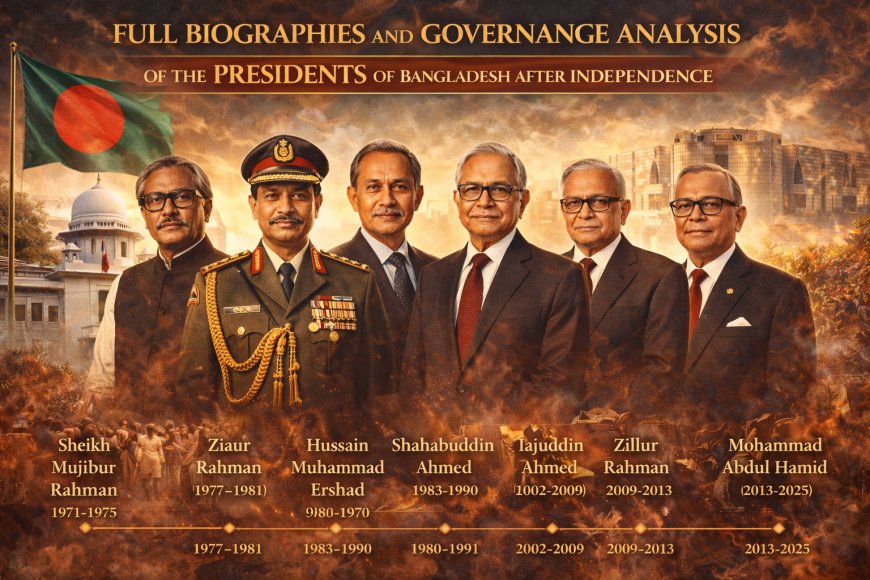
Since gaining independence in 1971, Bangladesh has witnessed dramatic political transformations that have shaped the office of the President. From revolutionary leadership and constitutional restructuring to caretaker transitions and ceremonial stewardship, the presidency has evolved alongside the nation itself. While Bangladesh operates under a parliamentary system where executive power rests primarily with the Prime Minister, the President remains a constitutional guardian, symbol of unity, and, at times, a pivotal actor during crises.
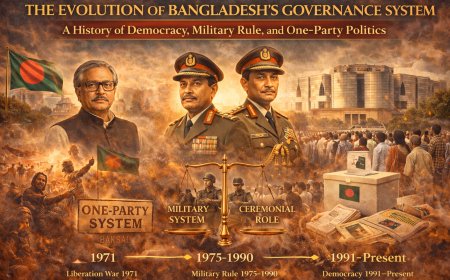
The story of Bangladesh’s presidents is inseparable from the country’s broader journey. Early years were marked by instability, coups, and military interventions. Later decades introduced constitutional amendments, caretaker systems, and democratic recalibration. Each president reflected the political realities of his era, whether operating as executive authority during martial law or fulfilling a largely ceremonial role in parliamentary democracy.
Today, as debates over governance, institutional independence, and democratic norms continue across the globe, revisiting the biographies and governance roles of Bangladesh’s presidents offers valuable perspective. Their collective legacy reveals how leadership, constitutional design, and political culture intersect in shaping a nation’s democratic trajectory.
Key Presidents Information Table
| Field | Bangabandhu Sheikh Mujibur Rahman | Ziaur Rahman | Hussain Muhammad Ershad | Shahabuddin Ahmed | Iajuddin Ahmed | Zillur Rahman | Mohammad Abdul Hamid |
|---|---|---|---|---|---|---|---|
| Full Name | Sheikh Mujibur Rahman | Ziaur Rahman | Hussain Muhammad Ershad | Shahabuddin Ahmed | Iajuddin Ahmed | Zillur Rahman | Mohammad Abdul Hamid |
| Nickname | Bangabandhu | Zia | Ershad | Not widely known | Not widely known | Not widely known | Not widely known |
| Father Name | Sheikh Lutfur Rahman | Mansur Rahman | Mustafizur Rahman | Talukdar Abdur Rashid | Not publicly documented | Meher Ali Miah | Haji Tayeb Uddin |
| Mother Name | Sayera Khatun | Jahanara Begum | Mazida Khatun | Not publicly documented | Not publicly documented | Not publicly documented | Tomiza Khatun |
| Son & Daughter | 5 children | 2 sons | 1 son | 2 sons | 1 son | 1 son, 1 daughter | 3 sons, 1 daughter |
| Date of Birth | 17 March 1920 | 19 January 1936 | 1 February 1930 | 1 February 1930 | 1 February 1931 | 9 March 1929 | 1 January 1944 |
| Place of Birth | Tungipara, Gopalganj | Bogura | Cooch Behar | Madaripur | Munshiganj | Kishoreganj | Kishoreganj |
| Education | University of Dhaka | Pakistan Military Academy | University of Dhaka | University of Dhaka | University of Wisconsin | University of Dhaka | University of Dhaka |
| Profession | Politician | Military Officer | Military Officer | Jurist | Academic | Politician | Politician |
| Position | President, Prime Minister | President | President | President | President | President | President |
| Title | Founding Leader | Former President | Former President | Former President | Former President | Former President | Former President |
| Company | Government of Bangladesh | Government of Bangladesh | Government of Bangladesh | Government of Bangladesh | Government of Bangladesh | Government of Bangladesh | Government of Bangladesh |
| Business | Public Service | Public Service | Public Service | Public Service | Public Service | Public Service | Public Service |
Unpacking the Layers of Full Biographies and Governance Analysis of the Presidents of Bangladesh After Independence
The presidency in Bangladesh has undergone distinct phases. Sheikh Mujibur Rahman shaped the early constitutional framework, briefly shifting from parliamentary to presidential governance before the tragic events of 1975 altered the nation’s direction.
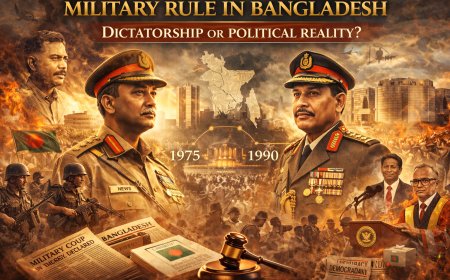
Subsequent leaders such as Ziaur Rahman and Hussain Muhammad Ershad presided during military backed administrations, introducing constitutional amendments and political restructuring. Their governance blended executive authority with controlled political participation.
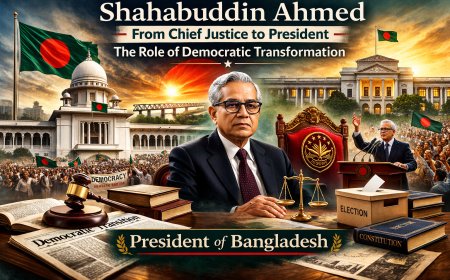
Later presidents like Shahabuddin Ahmed, Iajuddin Ahmed, Zillur Rahman, and Mohammad Abdul Hamid operated largely within parliamentary norms, focusing on ceremonial duties, constitutional assent, and institutional continuity.
Authoritative resources such as Encyclopaedia Britannica and Banglapedia provide detailed insights into these leadership periods. Together, these biographies reveal a presidency molded by both upheaval and stabilization, reflecting the evolving character of Bangladesh’s democracy.
Navigating the Challenges and Debates
The presidency has often stood at the crossroads of constitutional interpretation and political expectation. During military eras, executive authority concentrated heavily within the presidential office, raising concerns about civil liberties and institutional checks.
In parliamentary periods, debates have shifted toward neutrality, moral authority, and constitutional discretion. Should the President remain strictly ceremonial, or assert greater oversight during crises? Legal scholars emphasize that constitutional boundaries must guide the office to preserve democratic balance.
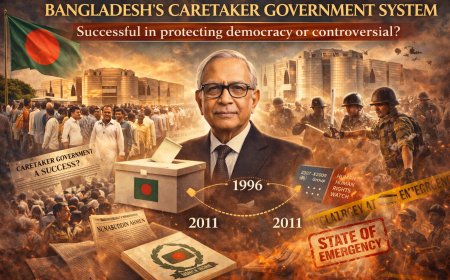
Controversies have included constitutional amendments, caretaker government transitions, and questions about electoral legitimacy. International observers and domestic analysts alike continue to examine how the presidency interacts with executive power, judiciary independence, and parliamentary supremacy.
These discussions extend beyond Bangladesh. They contribute to global conversations on hybrid governance, civil military relations, and constitutional resilience.
Real World Echoes: Case Studies and Applications
The 1990 democratic transition offers a compelling example of presidential impact. Under a neutral interim arrangement led by Shahabuddin Ahmed, parliamentary democracy was restored, demonstrating how the presidency can facilitate peaceful transition.
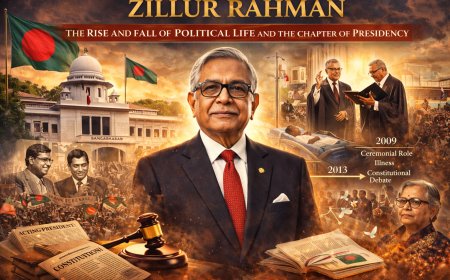
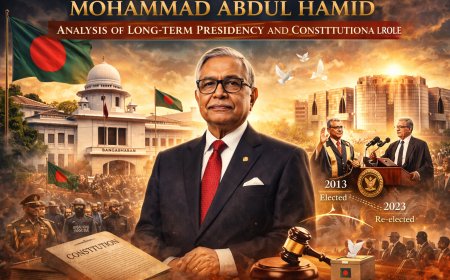
Similarly, the 2007 to 2008 emergency under Iajuddin Ahmed revealed how constitutional mechanisms can be tested during political crisis. More recently, ceremonial presidencies under Zillur Rahman and Mohammad Abdul Hamid illustrate how symbolic leadership can reinforce national unity.
Comparative political studies often reference Bangladesh when analyzing the evolution from executive presidential dominance to parliamentary ceremonial structure. These transitions underscore how constitutional frameworks adapt over time while retaining continuity.
Conclusion
The biographies and governance records of Bangladesh’s presidents trace the arc of a nation navigating upheaval, reform, and institutional consolidation. From executive dominance to ceremonial stewardship, the presidency has mirrored political transformation. Understanding these leaders in context deepens appreciation of Bangladesh’s constitutional journey. The presidency remains not merely an office, but a reflection of democratic evolution and national aspiration.
For comprehensive biography writing and governance analysis services, contact https://biography.com.bd/ to document history with accuracy and insight.
Q&A Section
1. Has the role of the President always been ceremonial in Bangladesh?
No. During certain periods, especially under military rule, the President exercised executive authority. After constitutional reforms, the role became largely ceremonial within a parliamentary framework.
2. Which president had the most transformative impact?
Sheikh Mujibur Rahman shaped the founding structure of the state. Later presidents influenced constitutional amendments and transitions that redefined governance models.
3. How does the presidency influence democracy today?
While largely symbolic, the President plays a key role in constitutional procedures, appointment formalities, and national representation.
4. Where can readers explore more detailed biographies?
Reliable sources include:
-
Encyclopaedia Britannica
-
Banglapedia
-
Official constitutional documents
What's Your Reaction?
 Like
0
Like
0
 Dislike
0
Dislike
0
 Love
0
Love
0
 Funny
0
Funny
0
 Angry
0
Angry
0
 Sad
0
Sad
0
 Wow
0
Wow
0