


































Abu Sadat Mohammad Sayem: From Judge to President—The Reality of Interim Rule
Abu Sadat Mohammad Sayem biography and presidency overview. Explore his journey from Chief Justice to interim President of Bangladesh, key debates, challenges, and legacy.

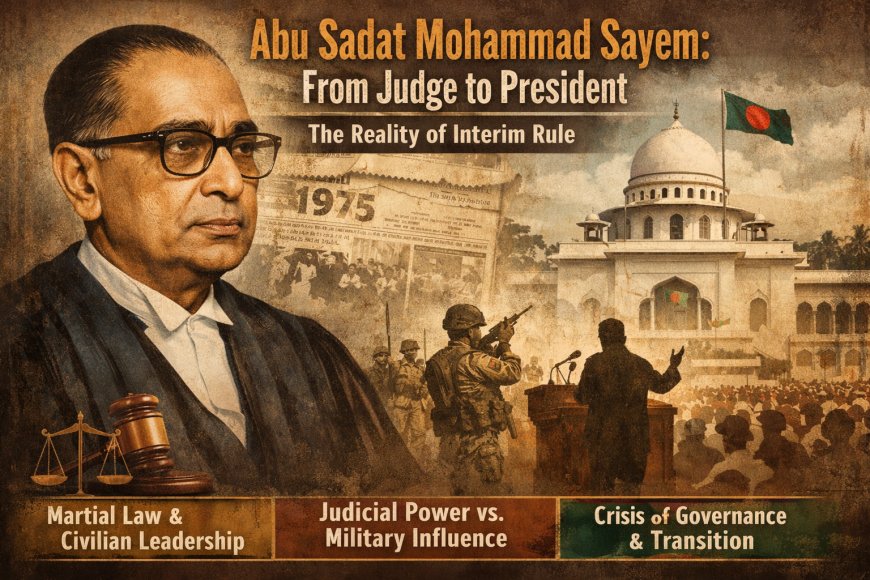
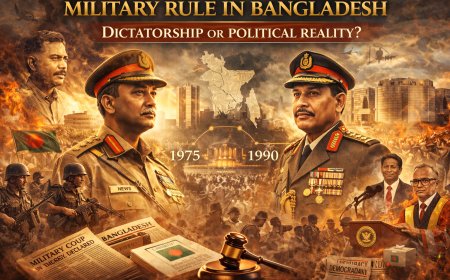
In the turbulent years following Bangladesh’s independence, few figures embodied the fragile balancing act between law and power quite like Abu Sadat Mohammad Sayem. A respected jurist who rose to become Chief Justice of the Supreme Court, he unexpectedly stepped into the highest office in the land during one of the nation’s most uncertain chapters. His tenure as President from 1975 to 1977 came at a time marked by political upheaval, military influence, and institutional realignment.
Sayem’s journey from the bench to Bangabhaban was not the result of electoral ambition but of constitutional necessity. After a series of dramatic political events in 1975, he was appointed President as a non partisan figure intended to guide the state through transition. Yet, the role of an interim leader during crisis carries complexities that go far beyond ceremonial duties.
Today, discussions about constitutional order, civil military relations, and judicial independence in Bangladesh often revisit Sayem’s brief presidency. His story raises vital questions about governance during emergencies, the limits of neutrality in politics, and the fragile intersection between law and executive authority.
Personal Information Table
| Field | Information |
|---|---|
| Full Name | Abu Sadat Mohammad Sayem |
| Nickname | Sayem |
| Father Name | Mohammad Fazlur Rahman |
| Mother Name | Ayesha Khatun |
| Son & Daughter | Information not widely documented |
| Date of Birth | 1 December 1916 |
| Place of Birth | Rangpur District, Bengal Presidency, British India |
| Height | Not publicly documented |
| Color | Not publicly documented |
| Life Partner | Information not widely documented |
| Marriage | Married |
| Assets | Not publicly disclosed |
| Education | University of Calcutta |
| Profession | Judge, Lawyer |
| Position | 6th President of Bangladesh |
| Title | Chief Justice of Bangladesh |
| Company | Supreme Court of Bangladesh |
| Business | Public service |
Introduction
The story of Abu Sadat Mohammad Sayem is deeply interwoven with the early constitutional evolution of Bangladesh. Before entering politics, Sayem built his reputation within the judicial sphere, eventually serving as Chief Justice. His legal background positioned him as a symbol of constitutional continuity at a time when the nation’s democratic foundations were shaken.
Following the assassination of Sheikh Mujibur Rahman in 1975, Bangladesh entered a period of instability. Against this backdrop, Sayem was appointed President and assumed responsibilities that extended far beyond his courtroom expertise. His leadership came during martial law, a time when the boundaries between civilian authority and military power were under intense negotiation.
Understanding Sayem’s presidency provides insight into how emerging democracies navigate crisis leadership. It also invites reflection on the enduring importance of institutional integrity in times of uncertainty.
Unpacking the Layers of Abu Sadat Mohammad Sayem: From Judge to President
Abu Sadat Mohammad Sayem’s transition from Chief Justice to President represents a rare constitutional pathway. His appointment followed a series of rapid political shifts after August 1975. As a jurist, he was perceived as politically neutral, making him a strategic choice to stabilize the administration.
According to historical records from Britannica and academic analyses of Bangladesh’s early political history, Sayem initially operated within a framework shaped by martial law authorities. Over time, he consolidated executive authority, serving not only as President but also assuming key administrative responsibilities.
His presidency must be understood within the broader debate on interim rule. Interim leaders are often tasked with restoring order, facilitating constitutional transitions, and preparing the ground for long term governance. However, these roles frequently blur the line between neutral stewardship and active political participation.
Sayem resigned in 1977 due to health reasons, leading to Lieutenant General Ziaur Rahman assuming the presidency. More details about his public service career can be found on the official website of the Supreme Court of Bangladesh and reputable historical archives such as https://www.britannica.com.
Navigating the Challenges and Debates
The presidency of Abu Sadat Mohammad Sayem remains a topic of nuanced debate among historians and political analysts. One of the central challenges involved balancing constitutional authority with the influence of military leadership during martial law.
Key areas of debate include:
-
The extent of civilian control during his presidency
-
The constitutional legitimacy of decisions taken under martial law
-
The role of the judiciary in political transitions
Some scholars argue that Sayem’s acceptance of executive power reflected the necessity of stabilizing the state. Others suggest it marked a moment where judicial independence intersected uncomfortably with executive authority.
These debates extend beyond Bangladesh. Transitional governance remains a global issue, particularly in emerging democracies. The experience under Sayem highlights the fragility of institutions during crisis and the delicate tension between legality and practicality.
Such discussions are explored in South Asian political studies journals and research institutions analyzing post independence governance models.
Real world Echoes: Case Studies and Applications
Sayem’s presidency offers a significant case study in interim governance. One practical lesson lies in how legal professionals navigate executive roles during national crises.
Case study reflections include:
-
How constitutional frameworks adapt under emergency conditions
-
The effectiveness of interim civilian leadership under military oversight
-
The long term institutional impact of transitional presidencies
Bangladesh’s later constitutional developments and political reforms were shaped in part by precedents set during the mid 1970s. While his tenure was relatively brief, it contributed to shaping discourse on constitutional amendment, executive authority, and separation of powers.
Modern governance scholars frequently examine such transitional moments to better understand how countries safeguard institutional continuity during upheaval. Sayem’s legacy therefore extends beyond his time in office and continues to inform academic and political discussions.
Conclusion
Abu Sadat Mohammad Sayem’s journey from the courtroom to the presidency captures a pivotal moment in Bangladesh’s national narrative. His tenure reflects both the promise and tension inherent in interim rule during turbulent times. Positioned between law and power, he navigated a complex landscape shaped by constitutional challenges and political realities.
Understanding his presidency invites deeper reflection on the resilience of institutions and the responsibilities of leadership during crisis. The conversation remains relevant today as nations worldwide grapple with governance under pressure.
For professional biography writing, documentation, and historical profiles, visit https://biography.com.bd/ and connect with experts who bring stories to life with depth and authenticity.
Q&A Section
1. Why was Abu Sadat Mohammad Sayem chosen as President?
He was serving as Chief Justice and was viewed as politically neutral. In a time of crisis, this neutrality was seen as essential for stabilizing the administration and maintaining constitutional continuity.
2. What made his presidency significant in Bangladesh’s history?
His presidency occurred during martial law, making it a critical transitional phase. It highlighted the complex interaction between civilian leadership and military authority.
3. Did Sayem play a long term political role?
His tenure was relatively short, ending in 1977 due to health reasons. However, the institutional precedents during his presidency influenced later governance structures.
4. Where can readers learn more about Bangladesh’s early political history?
Readers can consult reputable sources such as Britannica, academic journals on South Asian politics, and the official Supreme Court archives. For professionally written biographies, visit https://biography.com.bd/.
What's Your Reaction?
 Like
0
Like
0
 Dislike
0
Dislike
0
 Love
0
Love
0
 Funny
0
Funny
0
 Angry
0
Angry
0
 Sad
0
Sad
0
 Wow
0
Wow
0