





























The evolution of Bangladesh's governance system: A history of democracy, military rule, and one-party politics.
Explore the evolution of Bangladesh’s governance system, tracing its journey through democracy, military rule, and one party politics since independence.

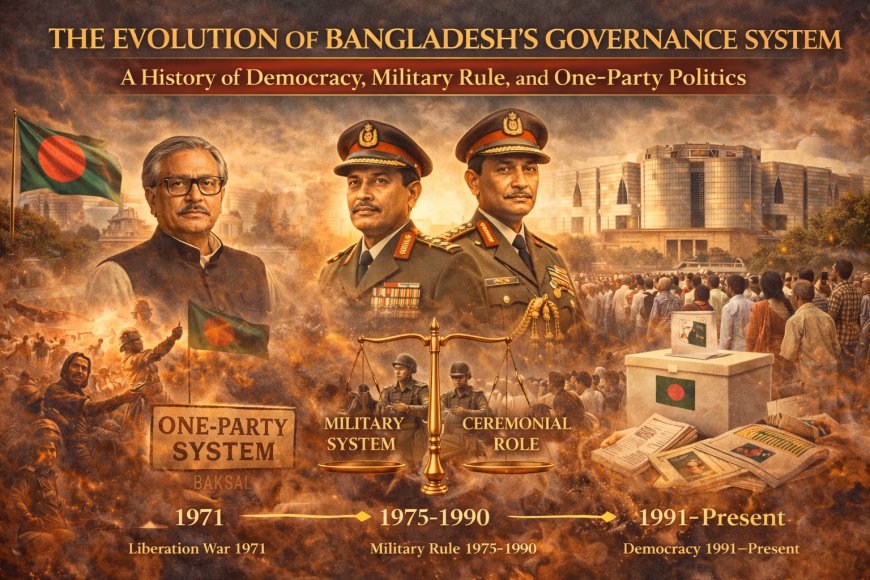
Since its birth in 1971, Bangladesh has traveled a complex and compelling political path. Emerging from the devastation of the Liberation War with aspirations of parliamentary democracy, the young nation soon encountered ideological struggles, constitutional amendments, coups, and experiments with governance. Over the decades, Bangladesh has oscillated between multi party democracy, one party consolidation, and military backed administrations.
Today, as democratic systems across the world grapple with polarization, institutional reform, and civil military balance, Bangladesh’s governance evolution offers a powerful case study. The country’s journey raises critical questions. How does a new nation safeguard democracy amid instability? Can periods of centralized control lay foundations for later reforms? And what lessons does this history hold for the future?
Understanding the evolution of Bangladesh’s governance system requires examining not just constitutional texts, but also political actors, social movements, and global influences. It is a story of resilience, recalibration, and the enduring tension between authority and representation.
Founding Leadership Information Table
| Field | Information |
|---|---|
| Full Name | Sheikh Mujibur Rahman |
| Nickname | Bangabandhu |
| Father Name | Sheikh Lutfur Rahman |
| Mother Name | Sayera Khatun |
| Son & Daughter | 5 children |
| Date of Birth | 17 March 1920 |
| Place of Birth | Tungipara, Gopalganj |
| Height | Not publicly documented |
| Color | Not publicly documented |
| Life Partner | Sheikh Fazilatunnesa Mujib |
| Marriage | Married |
| Assets | Not publicly disclosed |
| Education | University of Dhaka |
| Profession | Politician |
| Position | President, Prime Minister |
| Title | Founding Leader of Bangladesh |
| Company | Government of Bangladesh |
| Business | Public Service |
Unpacking the Layers of The Evolution of Bangladesh's Governance System: A History of Democracy, Military Rule, and One Party Politics
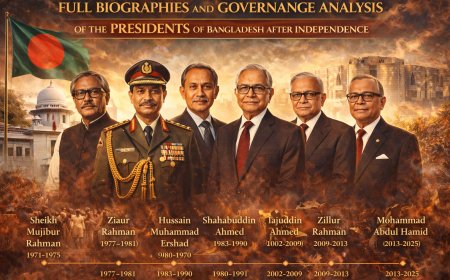
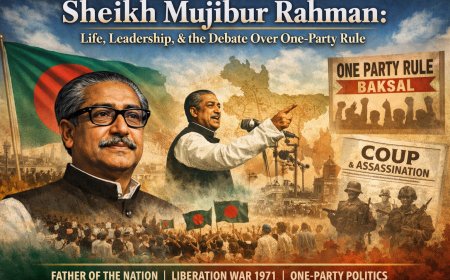
The early governance framework was shaped by Sheikh Mujibur Rahman, who initially established a parliamentary system. However, political instability and economic challenges led to the introduction of a one party system under BAKSAL in 1975, transforming the structure into a presidential model.
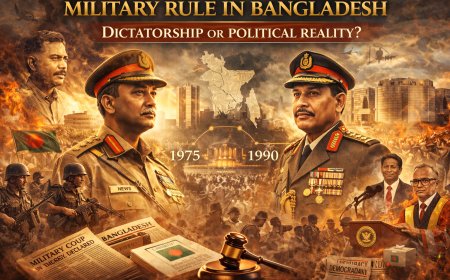
Following the assassination of Mujib in 1975, the country entered a period of military influence. Leaders such as Ziaur Rahman and Hussain Muhammad Ershad oversaw governance that blended centralized authority with limited electoral participation.
The mass uprising of 1990 marked a significant democratic turning point, restoring parliamentary democracy. Since then, Bangladesh has conducted multiple national elections, though debates over electoral fairness and institutional independence persist.
Authoritative sources such as Encyclopaedia Britannica and Banglapedia provide detailed documentation of these transitions. This layered evolution reveals how governance systems adapt under pressure, reflecting both structural constraints and political agency.
Navigating the Challenges and Debates
Bangladesh’s governance journey raises enduring challenges. One debate centers on whether one party rule was a pragmatic response to instability or a departure from democratic ideals. Similarly, military administrations are viewed by some as stabilizing forces during crises, while others see them as interruptions in democratic continuity.
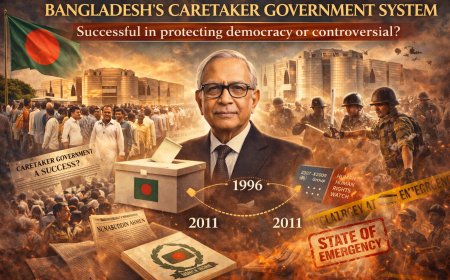
Constitutional amendments have repeatedly reshaped the political system. The introduction and later abolition of the caretaker government system exemplifies how institutional innovation can spark both trust and controversy.
Another critical issue involves civil military relations. Ensuring civilian supremacy while maintaining national security remains an important balance. Comparative political studies often examine Bangladesh alongside other South Asian democracies to analyze patterns of constitutional resilience.
These debates underscore the importance of institutional maturity, political inclusiveness, and legal safeguards in sustaining democratic governance.
Real World Echoes: Case Studies and Applications
The 1990 pro democracy movement stands as a defining case study. Student activists, political coalitions, and civil society groups mobilized across the country, leading to the resignation of President Ershad and the restoration of parliamentary democracy.
Similarly, the caretaker government framework introduced in 1996 provided a mechanism for neutral election oversight, reflecting adaptive constitutional design. Though later abolished, its implementation influenced global discussions on transitional governance models.
In contemporary Bangladesh, governance remains shaped by this historical trajectory. The interplay between executive authority, parliamentary procedure, and judicial review continues to define institutional dynamics.
Bangladesh’s experience illustrates that democratic evolution is rarely linear. Periods of reform, regression, and renewal often coexist within a broader narrative of state building.
Conclusion
The evolution of Bangladesh’s governance system reflects a nation navigating post liberation aspirations, internal turmoil, and democratic recalibration. From one party experiments to military rule and renewed parliamentary democracy, each chapter has shaped institutional culture and political practice. Rather than a simple arc, Bangladesh’s story is one of adaptation and resilience. Engaging with this history deepens understanding of how governance systems mature, confront crisis, and strive toward representative stability.
For well researched biographies and governance analysis services, contact https://biography.com.bd/ to preserve political history with clarity and professionalism.
Q&A Section
1. Why did Bangladesh adopt a one party system in 1975?
The move was framed as a strategy to address instability and economic crisis. Critics argue it limited democratic pluralism, while supporters at the time saw it as a consolidation measure.
2. How did military rule impact democracy?
Military administrations introduced constitutional changes and development initiatives but also centralized authority. The 1990 movement ultimately restored parliamentary governance.
3. What is the current system of governance?
Bangladesh currently operates under a parliamentary democratic system where executive authority rests with the Prime Minister.
4. Where can readers explore further historical details?
-
Encyclopaedia Britannica
-
Banglapedia
-
Academic journals on South Asian political history
What's Your Reaction?
 Like
0
Like
0
 Dislike
0
Dislike
0
 Love
0
Love
0
 Funny
0
Funny
0
 Angry
0
Angry
0
 Sad
0
Sad
0
 Wow
0
Wow
0