


























Martin Luther King Jr.: The Real Struggle of a Dreamer
Explore the real struggle of Martin Luther King Jr., examining his life, philosophy of nonviolence, challenges, debates, and enduring global legacy.

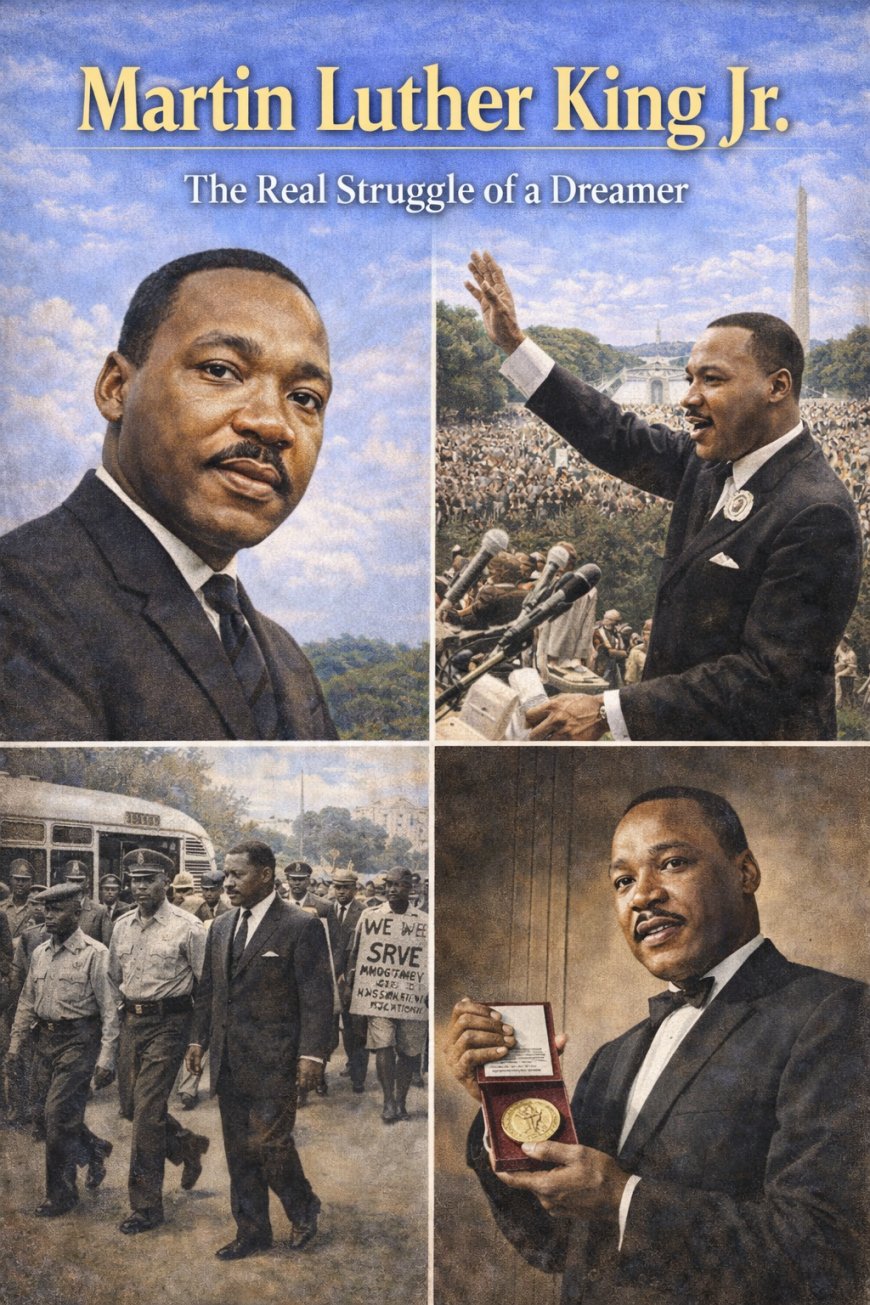
Few voices in modern history have echoed as powerfully across generations as Martin Luther King Jr.. His words, delivered from the steps of the Lincoln Memorial in 1963, continue to resonate in classrooms, protests, and public discourse around the world. Yet behind the famous dream was a life shaped by persistent struggle, surveillance, threats, and deep moral conviction.
King emerged as a leading figure during a turbulent era in the United States when racial segregation and systemic discrimination defined daily life for millions of African Americans. The Civil Rights Movement challenged entrenched power structures through marches, boycotts, and nonviolent resistance. Today, as societies confront issues of racial justice, inequality, and democratic accountability, King’s legacy invites renewed reflection.
His story is often summarized through iconic speeches and memorials. However, the real struggle of this dreamer was complex. It required balancing faith, strategy, political negotiation, and personal sacrifice. To understand Martin Luther King Jr. fully, one must explore both the inspiration and the tension that shaped his life.
Unpacking the Layers of Martin Luther King Jr.: The Real Struggle of a Dreamer
Martin Luther King Jr. was born in Atlanta, Georgia, in 1929 into a family deeply rooted in the church. His theological training shaped his philosophy of nonviolent resistance, inspired in part by Mahatma Gandhi’s principles. King’s leadership during the Montgomery Bus Boycott in 1955 marked his emergence as a national figure.
Over time, King’s activism expanded beyond desegregation. He addressed poverty, voting rights, and opposition to the Vietnam War. His evolution reflected a broader understanding of systemic injustice.
Key milestones in his journey include:
-
Leadership in the Montgomery Bus Boycott
-
Founding role in the Southern Christian Leadership Conference
-
The March on Washington and the I Have a Dream speech
-
Award of the Nobel Peace Prize in 1964
The King Center provides access to archives, speeches, and educational resources at https://thekingcenter.org. The National Archives documents civil rights era legislation and activism at https://www.archives.gov.
King’s philosophy emphasized love and moral courage. Yet his path was fraught with arrests, threats, and constant public scrutiny. His dream was not naive optimism. It was a deliberate and courageous commitment to justice through peaceful means.
Navigating the Challenges and Debates
While King is widely celebrated, his legacy also invites discussion. During his lifetime, he faced criticism from various sides. Some civil rights activists believed nonviolence was too slow or conciliatory. Others feared his opposition to the Vietnam War broadened his focus beyond civil rights and risked alienating political allies.
Important debates surrounding his life include:
-
The effectiveness of nonviolent resistance
-
Government surveillance and civil liberties
-
The limits of legislative reform in achieving equality
-
The challenges of addressing economic injustice
Declassified records reveal that King was monitored by federal agencies, raising enduring questions about dissent and democracy. The Federal Bureau of Investigation archives include historical documentation of surveillance activities https://vault.fbi.gov.
Modern scholars also explore how King’s later focus on economic justice and systemic poverty remains unfinished business. His Poor People’s Campaign highlighted the intersection of race and economic inequality. These dimensions of his work have gained renewed relevance in contemporary social movements.
By acknowledging these complexities, we see a fuller portrait of a leader navigating pressure from allies and opponents alike.
Real-world Echoes: Case Studies and Applications
The influence of Martin Luther King Jr. extends well beyond the 1960s. His philosophy of nonviolent protest has informed movements around the world, from South Africa’s anti apartheid struggle to modern grassroots activism.
Applications of his legacy include:
-
Community organizing grounded in peaceful demonstration
-
Educational curricula promoting civic engagement
-
Interfaith dialogue initiatives
-
Legislative advocacy inspired by moral leadership
One powerful example is the continued observance of Martin Luther King Jr. Day in the United States, which encourages service and reflection. His words have also shaped contemporary discussions about voting rights and criminal justice reform.
Universities and policy institutes frequently analyze King’s approach to coalition building. His emphasis on moral persuasion combined with strategic action offers valuable lessons for leadership in polarized environments.
King’s life demonstrates that enduring social change requires persistence, courage, and collective action.
Conclusion
Martin Luther King Jr. was more than a dreamer with a famous speech. He was a strategist, theologian, and advocate who confronted injustice with conviction and grace. His life reveals both the promise and the cost of transformative leadership.
As new generations face challenges of inequality and division, King’s journey reminds us that moral clarity must be paired with sustained effort. His dream remains a call to action rather than a finished chapter.
For inspiring biographies and professional storytelling services, contact https://biography.com.bd/ and share powerful life stories with a wider audience.
Q&A Section
1. What was the central philosophy of Martin Luther King Jr.?
King championed nonviolent resistance, rooted in Christian theology and inspired by Gandhian principles, as a path toward justice and equality.
2. Why was King controversial during his lifetime?
He faced criticism for his stance on nonviolence and later for opposing the Vietnam War, which expanded his activism beyond civil rights.
3. What is the significance of the I Have a Dream speech?
Delivered during the March on Washington in 1963, the speech articulated a vision of racial equality that continues to inspire movements worldwide.
4. Where can I explore primary sources about King’s life?
The King Center at https://thekingcenter.org and the National Archives at https://www.archives.gov provide authoritative resources.
What's Your Reaction?
 Like
0
Like
0
 Dislike
0
Dislike
0
 Love
0
Love
0
 Funny
0
Funny
0
 Angry
0
Angry
0
 Sad
0
Sad
0
 Wow
0
Wow
0