
































Charles Darwin: The man behind the theory of evolution
Discover Charles Darwin’s life, his groundbreaking theory of evolution by natural selection, key debates, and the lasting impact of his ideas on science, society, and modern research.

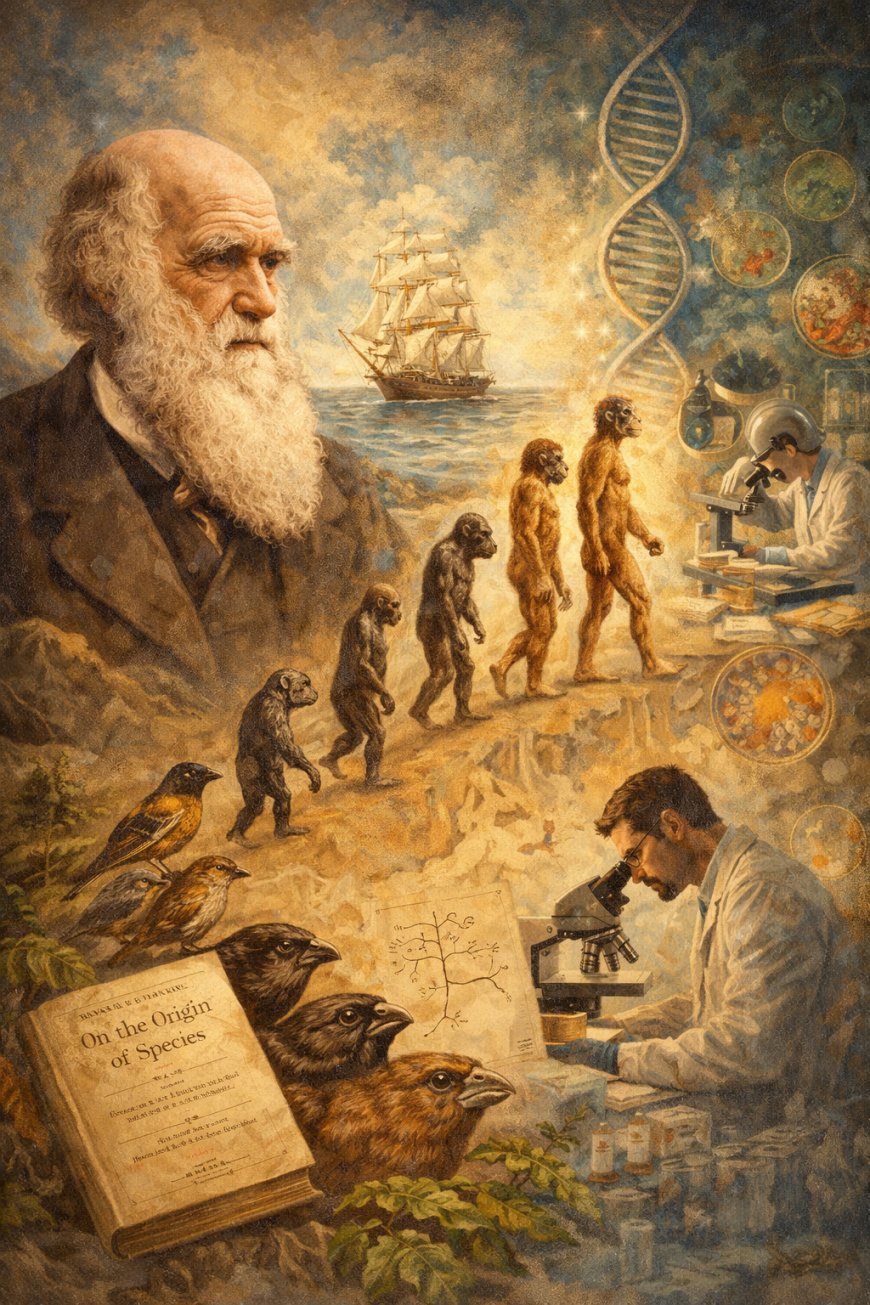
In a world shaped by rapid advances in genetics, biotechnology, and environmental science, the ideas of Charles Darwin continue to influence how we understand life itself. From classroom discussions about biodiversity to cutting edge research in genomic medicine, Darwin’s theory of evolution remains central to scientific inquiry and public debate.
When Darwin published On the Origin of Species in 1859, he offered more than a biological theory. He introduced a framework for understanding how species change over time through natural selection. His ideas challenged established views about creation and humanity’s place in nature. The response was immediate and varied. Some embraced the explanatory power of natural selection. Others saw it as a profound cultural and theological disruption.
Today, as societies confront climate change, species extinction, and ethical questions about genetic editing, Darwin’s legacy feels more relevant than ever. His work invites us to explore not only where we come from, but how knowledge evolves in conversation with culture, belief, and discovery.
Unpacking the Layers of Charles Darwin’s Evolutionary Vision
To understand Darwin’s theory, it is important to look beyond simplified summaries. His journey began aboard the HMS Beagle, where five years of travel exposed him to diverse ecosystems. Observations in the Galapagos Islands proved especially formative. The subtle differences among finch species suggested that organisms adapt to specific environments over time.
Darwin’s theory of natural selection rests on several key principles:
-
Variation exists within populations
-
More offspring are produced than can survive
-
Individuals with advantageous traits are more likely to reproduce
-
Over generations, these traits become more common
These ideas reshaped biology. Rather than viewing species as fixed, Darwin proposed that life is dynamic and interconnected. Modern research in genetics has reinforced and expanded his framework. The discovery of DNA provided the mechanism Darwin could not explain in his time.
For readers interested in deeper exploration, the Natural History Museum offers accessible resources on Darwin’s work:
https://www.nhm.ac.uk/discover/who-was-charles-darwin.html
The Stanford Encyclopedia of Philosophy also examines the intellectual foundations of evolutionary theory:
https://plato.stanford.edu/entries/darwinism/
Darwin’s influence extends into fields like psychology, anthropology, and even artificial intelligence. Concepts such as adaptation and selection have become metaphors for broader systems of change.
Navigating the Challenges and Debates
Darwin’s theory sparked intense controversy in the nineteenth century, and debates continue today. Religious leaders and communities have expressed varied responses, ranging from rejection to reinterpretation. The famous 1925 Scopes Trial in the United States highlighted tensions between evolutionary science and certain interpretations of Scripture.
Ethical concerns also emerged from misapplications of evolutionary theory. Social Darwinism, for example, used distorted interpretations of natural selection to justify inequality and colonial expansion. Many scholars emphasize that such uses misrepresented Darwin’s biological arguments.
In modern times, discussions focus on how evolution is taught in schools and how scientific literacy shapes public policy. The American Association for the Advancement of Science provides updated perspectives on evolution education:
https://www.aaas.org/programs/dialogue-science-ethics-and-religion/evolution
These debates underscore a broader question. How do societies integrate transformative scientific ideas without losing respect for cultural and ethical diversity? Darwin’s story demonstrates that scientific progress often unfolds within complex social landscapes.
Real World Echoes: Case Studies and Applications
Darwin’s theory is not confined to history books. It shapes real world practices across multiple fields.
In medicine, evolutionary principles guide understanding of antibiotic resistance. Bacteria evolve rapidly, and treatments must adapt accordingly. Public health strategies rely on evolutionary models to predict virus mutations.
In conservation biology, evolutionary thinking informs efforts to protect endangered species. By understanding genetic diversity and adaptation, scientists design programs that support long term survival.
Advances in gene editing technologies such as CRISPR have also renewed discussions about evolution. While Darwin did not know about DNA, his insights into variation and inheritance provide conceptual foundations for modern genetics.
Institutions like The Royal Society continue to support research rooted in evolutionary biology. Their publications highlight how Darwin’s ideas evolve alongside new discoveries.
Darwin’s legacy demonstrates that science is both cumulative and adaptive. Each generation builds on previous insights while refining them through new evidence and tools.
Conclusion
Charles Darwin’s life and work reveal a thinker deeply engaged with the mysteries of the natural world. His theory of evolution transformed biology and reshaped humanity’s understanding of its origins. Yet his legacy is not static.
From classroom debates to genetic laboratories, Darwin’s ideas continue to inspire inquiry and discussion. They remind us that knowledge grows through observation, dialogue, and careful reflection.
As we navigate a world of scientific breakthroughs and ethical complexity, Darwin’s story encourages curiosity paired with responsibility. To explore more inspiring biographies or to seek professional biography writing services, connect with https://biography.com.bd/ and continue your journey into the lives that changed our world.
Q and A Section
1. What is Charles Darwin best known for?
Charles Darwin is best known for developing the theory of evolution by natural selection. His book On the Origin of Species presented evidence that species change over time through adaptive processes. More details can be found at the Natural History Museum website:
https://www.nhm.ac.uk/discover/who-was-charles-darwin.html
2. Did Darwin invent the idea of evolution?
No. Earlier thinkers proposed that species could change. However, Darwin provided a comprehensive mechanism through natural selection and supported it with extensive evidence. The Stanford Encyclopedia of Philosophy offers further analysis:
https://plato.stanford.edu/entries/darwinism/
3. Why is evolution still debated in some societies?
Evolution intersects with religious, cultural, and educational values. While widely accepted within the scientific community, interpretations vary in broader society. Organizations like the AAAS explore these conversations:
https://www.aaas.org/programs/dialogue-science-ethics-and-religion/evolution
4. How does Darwin’s theory impact modern science?
Evolutionary principles guide research in genetics, medicine, ecology, and public health. Understanding adaptation and variation helps scientists address issues such as disease control and biodiversity preservation.
What's Your Reaction?
 Like
0
Like
0
 Dislike
0
Dislike
0
 Love
0
Love
0
 Funny
0
Funny
0
 Angry
0
Angry
0
 Sad
0
Sad
0
 Wow
0
Wow
0