
























Winston Churchill: Legend of Wartime Leadership
Explore Winston Churchill: Legend of Wartime Leadership. Discover his role in World War II, key debates, leadership lessons, and lasting global impact.

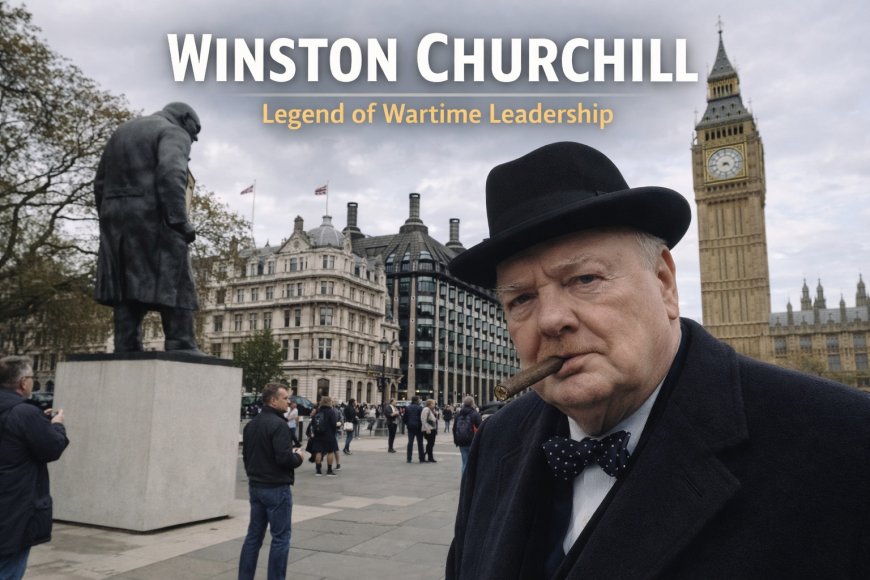
In moments of global crisis, certain figures rise to define the spirit of their era. Few leaders are as closely associated with resilience and resolve as Winston Churchill. His speeches, delivered in the darkest days of World War II, continue to echo through history classrooms, political debates, and leadership seminars worldwide.
Churchill’s image is often framed against the backdrop of bombed cities, radio broadcasts, and the defiant promise that Britain would never surrender. Yet his story stretches far beyond wartime rhetoric. He was a soldier, journalist, historian, Nobel Prize winning author, and long serving statesman whose career spanned dramatic shifts in the British Empire and global power structures.
Today, discussions about Churchill remain vibrant and, at times, contentious. Admirers celebrate his unwavering defiance against fascism. Critics examine his imperial policies and controversial decisions. In a world still grappling with questions of leadership, nationalism, and moral responsibility, the legend of Churchill invites both admiration and reflection.
Unpacking the Layers of Winston Churchill: Legend of Wartime Leadership
Winston Churchill served as Prime Minister of the United Kingdom during two critical periods, most notably from 1940 to 1945 during World War II. His leadership emerged at a time when Nazi Germany appeared unstoppable, and much of Europe had fallen. Britain stood largely alone.
Churchill’s speeches, including the famous We shall fight on the beaches address, galvanized public morale. His command of language helped frame the war not just as a geopolitical struggle, but as a defense of freedom and democratic values. The official UK government archive offers insight into his speeches and papers at https://www.nationalarchives.gov.uk.
Beyond wartime leadership, Churchill’s life was marked by complexity. He had served in various ministerial roles before World War II and experienced political setbacks, including criticism for his role in the Gallipoli Campaign during World War I. Britannica provides a comprehensive overview of his life at https://www.britannica.com/biography/Winston-Churchill.
In 1953, Churchill was awarded the Nobel Prize in Literature for his historical writings and speeches. His multi volume work on the war remains influential. His legacy, therefore, is not limited to wartime command. It includes intellectual contributions, political endurance, and a nuanced career shaped by triumphs and failures alike.
Navigating the Challenges and Debates
While Churchill is widely celebrated for wartime leadership, historical debates surrounding his record have grown more nuanced in recent decades.
One area of controversy concerns his views on empire and colonial policy. Critics point to his stance during the Bengal Famine of 1943, where British policies and wartime priorities contributed to devastating food shortages in India. Scholars continue to debate the extent of his responsibility. Academic discussions at institutions like the Imperial War Museums, available at https://www.iwm.org.uk, provide valuable historical context.
Another debate centers on strategic decisions during World War II. Churchill’s early support for the Gallipoli Campaign during World War I resulted in heavy casualties and political fallout. Some historians argue this shaped his cautious yet bold decision making in later years.
In modern Britain, public statues and commemorations have sparked conversations about how to remember complex figures. Should Churchill be viewed solely as a heroic defender of democracy, or also as a product of imperial attitudes of his time? These questions mirror broader global discussions about historical memory, accountability, and evolving societal values.
By exploring these debates, we gain a richer understanding of leadership itself. Leadership is rarely simple or flawless. It is shaped by context, culture, and consequence.
Real world Echoes: Case Studies and Applications
Churchill’s legacy offers compelling case studies in leadership, communication, and crisis management.
One powerful example is the Blitz. During sustained German bombing campaigns over London and other cities, Churchill’s presence in affected neighborhoods symbolized solidarity. His visits reassured citizens that their suffering was seen and acknowledged. Modern crisis leadership models often reference this approach as an example of visible, empathetic governance.
In business and political science courses, Churchill’s speeches are studied for rhetorical strategy. His use of repetition, vivid imagery, and moral framing demonstrates how communication can unite a population under stress. Harvard and other institutions frequently analyze wartime speeches as case studies in persuasion and public leadership.
International relations scholars also examine Churchill’s partnership with Allied leaders, including Franklin D Roosevelt. The transatlantic alliance forged during World War II shaped the postwar global order and influenced institutions such as the United Nations.
Churchill’s story continues to inform leadership training programs, historical documentaries, and public discourse. His successes and mistakes alike offer lessons on courage, accountability, and the burdens of decision making during extraordinary times.
Conclusion: A Legacy Both Illuminating and Complex
Winston Churchill remains a towering figure in twentieth century history. His steadfast resolve during World War II earned him enduring admiration, while his imperial policies and controversial decisions invite ongoing debate.
By examining both his triumphs and shortcomings, we engage with history in its full complexity. Churchill’s life reminds us that leadership is forged in uncertainty and judged over generations. The study of his legacy continues to shape conversations about power, responsibility, and national identity.
To explore more compelling biographies or receive professional writing services, visit https://biography.com.bd/ and connect with a team dedicated to bringing powerful stories to life.
Q and A Section
1. Why is Winston Churchill considered a legendary wartime leader?
Churchill is celebrated for his ability to inspire and unify Britain during World War II. His speeches strengthened public morale at a time when defeat seemed possible. His strategic alliance with Allied powers also contributed significantly to the eventual victory.
Learn more through the UK National Archives at https://www.nationalarchives.gov.uk.
2. What are the main criticisms of Churchill?
Criticisms often focus on his imperial views and decisions related to colonial policy, particularly during the Bengal Famine of 1943. Historians continue to debate his level of responsibility and the broader wartime context.
The Imperial War Museums provide balanced historical resources at https://www.iwm.org.uk.
3. Did Churchill’s influence extend beyond World War II?
Yes. Churchill played a key role in shaping postwar Europe and warning about the Iron Curtain in Eastern Europe. His writings earned him the Nobel Prize in Literature, further cementing his intellectual legacy.
4. How should modern readers approach Churchill’s legacy?
A balanced approach is essential. Recognizing his leadership during a global crisis while also examining controversial aspects of his career fosters a deeper understanding of history and its lasting impact.
What's Your Reaction?
 Like
0
Like
0
 Dislike
0
Dislike
0
 Love
0
Love
0
 Funny
0
Funny
0
 Angry
0
Angry
0
 Sad
0
Sad
0
 Wow
0
Wow
0