


































Hitler: The Terrible History of the Rise and Fall
Explore Hitler: The Terrible History of the Rise and Fall. Discover the rise of Nazi Germany, key debates, real world lessons, and why this history still shapes global conversations today.

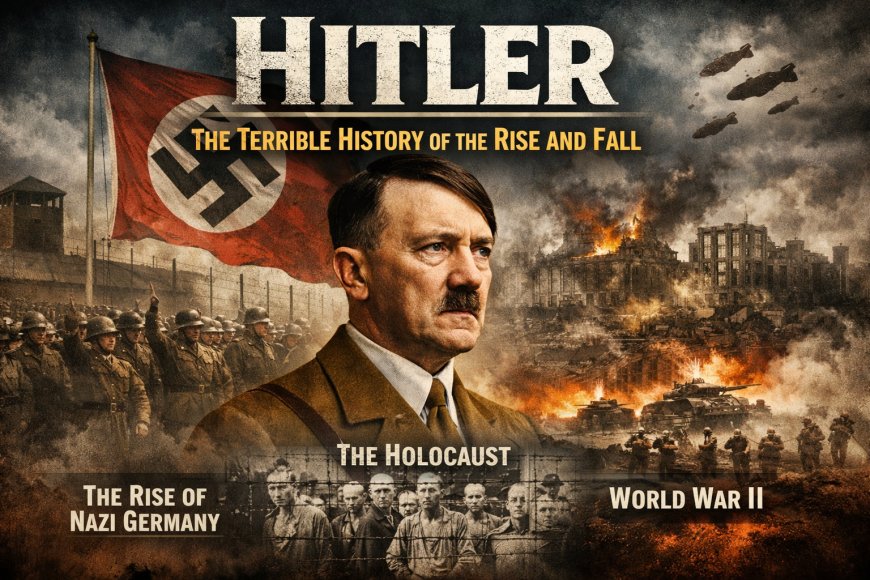
Few names in modern history evoke as strong a reaction as Adolf Hitler. More than eight decades after the fall of Nazi Germany, his rise and catastrophic collapse continue to shape global conversations about leadership, propaganda, nationalism, and moral responsibility. In classrooms, documentaries, political discourse, and cultural memory, the shadow of the Third Reich lingers as both warning and lesson.
The story of Hitler is not only about one individual. It is deeply tied to the economic despair of post World War I Germany, the fragility of democratic institutions, and the terrifying efficiency of modern state power when guided by extremist ideology. The horrors of the Holocaust and the devastation of World War II have left scars that still inform international law, human rights advocacy, and global diplomacy.
Yet the subject remains complex. Historians continue to debate the roots of his popularity, the structure of the Nazi regime, and the extent to which ordinary citizens were complicit or coerced. Understanding this dark chapter is not an exercise in morbid curiosity. It is an essential part of understanding how societies can unravel and how such tragedies might be prevented in the future.
Unpacking the Layers of Hitler: The Terrible History of the Rise and Fall
The trajectory of Adolf Hitler's life illustrates how personal ambition can intersect with national crisis. Born in Austria in 1889, Hitler rose to prominence amid Germany's instability after World War I. The Treaty of Versailles, which imposed severe penalties on Germany, fueled resentment and economic collapse. Within this climate, Hitler's message of national revival found an audience.
Adolf Hitler became leader of the Nazi Party and eventually Chancellor of Germany in 1933. His consolidation of power marked the beginning of the Third Reich, a regime built on aggressive expansionism, racial ideology, and authoritarian control. Through propaganda, orchestrated by figures like Joseph Goebbels, the regime cultivated an image of strength and destiny while systematically dismantling democratic institutions.
The regime's racial ideology culminated in the Holocaust, the systematic murder of six million Jews and millions of others deemed undesirable. The United States Holocaust Memorial Museum provides a comprehensive overview of this tragedy at https://www.ushmm.org.
World War II further cemented Hitler's global impact. His invasion of Poland in 1939 triggered the conflict that would engulf much of the world. As Allied forces gained ground and Germany's defeat became inevitable, the regime collapsed. In April 1945, Hitler died in Berlin as Soviet forces closed in, marking the end of his rule and the beginning of Germany's reckoning with its past.
For a detailed biography, readers can explore https://www.britannica.com/biography/Adolf-Hitler.
Navigating the Challenges and Debates
The study of Hitler and the Nazi era presents profound ethical and intellectual challenges. Scholars have long debated whether Hitler's rise was primarily the result of his personal charisma and strategy or broader social and economic forces that made extremist ideas appealing. This debate, often framed as intentionalism versus functionalism, highlights the complexity of historical causation.
Another challenge lies in confronting the Holocaust's scale and brutality. Preserving survivor testimony while countering denial and distortion remains a global priority. Institutions such as Yad Vashem, accessible at https://www.yadvashem.org, work tirelessly to preserve historical truth.
There are also contemporary concerns. The misuse of Nazi symbolism and rhetoric by extremist groups raises alarms about the persistence of radical ideologies. Experts in political science and sociology warn that economic anxiety, misinformation, and weakened institutions can create fertile ground for authoritarian movements.
Educators face a delicate balance. How do we teach this history in a way that is accurate, respectful, and impactful without sensationalizing violence? Many argue that focusing on human stories and moral choices fosters deeper understanding.
These debates are not confined to historians. They shape discussions about free speech, memory laws, civic education, and the resilience of democratic systems around the world.
Real world Echoes: Case Studies and Applications
The legacy of Hitler and Nazi Germany extends into modern international law and collective memory practices. One powerful example is the Nuremberg Trials. After World War II, Allied powers prosecuted leading Nazi officials for crimes against humanity. These trials laid the groundwork for modern international criminal law and institutions such as the International Criminal Court.
Another case study is Germany's postwar transformation. Through policies known as Vergangenheitsbewältigung, meaning coming to terms with the past, Germany has invested heavily in memorials, education, and public acknowledgment of its history. Sites like the Memorial to the Murdered Jews of Europe in Berlin stand as visible commitments to remembrance.
Educational programs worldwide also draw lessons from this period. Museums, documentaries, and academic research continue to explore how propaganda influenced public opinion and how democratic collapse can occur incrementally rather than overnight.
In a digital age marked by rapid information spread, the study of Nazi propaganda offers important insights into how narratives can be shaped and manipulated. Media literacy initiatives often reference this era to illustrate the dangers of unchecked misinformation.
These real world applications show that history is not static. The rise and fall of Hitler continues to inform global discussions about governance, accountability, and the responsibilities of citizens.
Conclusion: Remembering to Safeguard the Future
The story of Hitler is a sobering reminder of how fragile societies can become under pressure. His rise was rooted in genuine grievances and exploited fears. His fall came at an immense human cost. From the Holocaust to the battlefield devastation of World War II, the consequences reshaped the modern world.
By examining this history carefully and thoughtfully, we gain insight into the mechanics of power, prejudice, and resistance. The subject remains dynamic because its lessons are still unfolding. As new generations grapple with political polarization and misinformation, the importance of historical awareness grows stronger.
To explore more powerful biographies and historical insights or to access professional writing services, contact https://biography.com.bd/ and continue your journey into meaningful storytelling and research.
Q and A Section
1. Why is studying Hitler still relevant today?
Studying Hitler helps us understand how democratic systems can erode and how extremist ideologies can gain traction during times of crisis. It also reinforces the importance of protecting human rights and fostering civic responsibility. The United States Holocaust Memorial Museum at https://www.ushmm.org offers valuable educational materials.
2. What were the main factors behind his rise to power?
Key factors include economic hardship after World War I, resentment toward the Treaty of Versailles, effective propaganda, and political instability within the Weimar Republic. Scholars continue to debate the relative weight of these elements.
3. How did the world respond after his fall?
The Allied powers established the Nuremberg Trials to prosecute major war criminals. These trials set precedents for international law and accountability for crimes against humanity.
4. Where can readers learn more about this period?
Reliable sources include Encyclopaedia Britannica at https://www.britannica.com, the United States Holocaust Memorial Museum at https://www.ushmm.org, and Yad Vashem at https://www.yadvashem.org. These institutions provide research based, carefully vetted historical information.
What's Your Reaction?
 Like
0
Like
0
 Dislike
0
Dislike
0
 Love
0
Love
0
 Funny
0
Funny
0
 Angry
0
Angry
0
 Sad
0
Sad
0
 Wow
0
Wow
0