

































Vincent Van Gogh: Failure in Life, Legend in Death
Discover how Vincent Van Gogh transformed from a struggling, overlooked artist into a global legend. Explore his life, artistic innovation, controversies, and enduring impact.

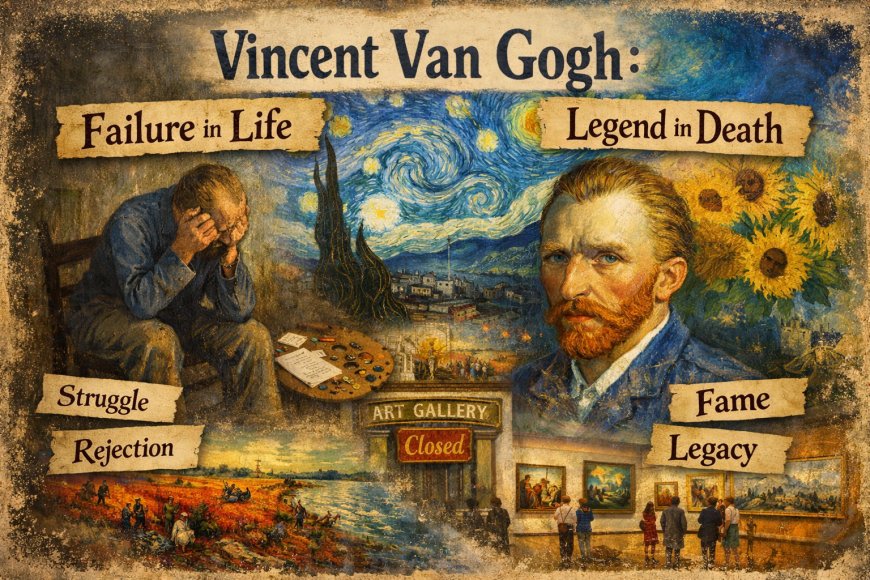
Few artists embody the paradox of obscurity and immortality quite like Vincent van Gogh. Today, his swirling skies and sun-drenched fields are instantly recognizable, reproduced on everything from museum walls to coffee mugs. His paintings sell for staggering sums. His name is synonymous with artistic genius. Yet during his lifetime, Van Gogh struggled with poverty, mental illness, and near-total rejection from the art world.
Born in 1853 in the Netherlands, Van Gogh’s career as an artist lasted barely a decade. He sold only a handful of paintings while alive. Critics dismissed him. Galleries overlooked him. Even his contemporaries found his style unsettling. Now, he stands alongside icons of Western art history, influencing generations of artists and scholars.
How did a man labeled a failure in life become a legend in death? The story of Van Gogh is not only about art. It is about perseverance, suffering, innovation, and the unpredictable forces that shape legacy. His life continues to spark debates about mental health, creativity, and the true meaning of success. In an era obsessed with visibility and validation, Van Gogh’s journey feels more relevant than ever.
Unpacking the Layers of Vincent Van Gogh: Failure in Life, Legend in Death
To understand Van Gogh, one must look beyond the myth and into the layered reality of his life and work.
Van Gogh’s artistic evolution was rapid and intense. His early works were dark and somber, influenced by Dutch realism. Later, during his time in France, his palette brightened dramatically. In Arles and Saint-Rémy, he developed the bold brushstrokes and vivid colors that define his style today.
Key dimensions of his life and work include:
-
Artistic Innovation: Van Gogh was deeply influenced by Impressionists and Japanese prints, yet he pushed color and form into emotional territory. His masterpiece, The Starry Night, now housed at Museum of Modern Art, reveals his fascination with movement and the cosmos.
-
Personal Struggles: His letters to his brother Theo provide extraordinary insight into his psyche. These letters, archived and translated by institutions such as Van Gogh Museum, show a thoughtful, articulate man wrestling with purpose and despair.
-
Isolation and Support: Despite his struggles, Theo van Gogh remained his unwavering supporter, both emotionally and financially.
For deeper exploration, readers can consult:
-
The Van Gogh Museum’s research archive at https://www.vangoghmuseum.nl
-
The Museum of Modern Art collection at https://www.moma.org
-
Scholarly overviews via The Metropolitan Museum of Art at https://www.metmuseum.org
Van Gogh was not simply a tragic figure. He was a deliberate experimenter who believed art should express human emotion, not just visual reality.
Navigating the Challenges and Debates
Van Gogh’s life invites complex discussions that extend beyond art.
One of the most persistent debates revolves around his mental health. Scholars have proposed diagnoses ranging from bipolar disorder to epilepsy and depression. However, retrospective diagnosis is inherently speculative. Modern mental health experts caution against reducing his genius to illness alone.
Another challenge lies in the commercialization of his suffering. Popular culture often romanticizes the trope of the tortured artist. Films like Loving Vincent and biographies frequently center on his ear incident and tragic death, sometimes overshadowing his intellectual depth and disciplined practice.
There is also ongoing debate about authenticity in the art market. As Van Gogh’s works command record-breaking prices, disputes over attribution and provenance intensify. Institutions such as the Van Gogh Museum play a critical role in research and authentication.
These discussions matter because they shape how society views creativity, mental health, and artistic value. Is genius inseparable from suffering? Does recognition define success? Van Gogh’s life compels us to question simplistic narratives.
Real-world Echoes: Case Studies and Applications
Van Gogh’s influence extends far beyond galleries.
Consider the global exhibition history of his work. The Van Gogh Museum in Amsterdam attracts millions of visitors annually, demonstrating the enduring power of his art. His paintings have inspired:
-
Modern expressionist movements
-
Art therapy approaches that emphasize emotional expression
-
Digital reinterpretations and immersive exhibitions
-
Educational curricula focused on resilience and creativity
The immersive Van Gogh exhibitions traveling worldwide offer a compelling case study. Using projection technology, these events reimagine classics like Sunflowers and The Starry Night on massive digital canvases. Critics debate whether such experiences dilute artistic integrity or broaden accessibility. Either way, they testify to the adaptability of his legacy.
His story is also frequently referenced in entrepreneurship and leadership discussions. Many motivational speakers cite Van Gogh as an example of perseverance without immediate reward. While such comparisons can oversimplify, they reveal how his narrative resonates across industries.
Van Gogh’s life reminds us that impact is not always immediate. Sometimes, value emerges gradually, shaped by shifting cultural perspectives.
Conclusion: The Paradox That Endures
Vincent van Gogh’s journey from obscurity to immortality is a powerful reminder that success is neither linear nor guaranteed. His life was marked by hardship, yet his art radiates vitality and hope. Through innovation, vulnerability, and relentless dedication, he reshaped modern art.
Today, his legacy invites reflection on mental health, artistic authenticity, and the nature of recognition itself. His story remains unfinished in one crucial way: each generation interprets him anew.
To explore more inspiring biographies and professional storytelling services, visit https://biography.com.bd/ and connect with experts who bring remarkable lives to light.
Q and A Section
1. Why did Vincent van Gogh fail during his lifetime?
Van Gogh struggled with financial instability, limited critical acceptance, and mental health challenges. His unconventional style did not align with mainstream tastes of the late nineteenth century. For historical context, see resources from the Van Gogh Museum at https://www.vangoghmuseum.nl.
2. Did Van Gogh sell any paintings while alive?
Historical evidence suggests he sold very few works. One confirmed sale is The Red Vineyard. His primary financial support came from his brother Theo.
3. How did Van Gogh become famous after his death?
His sister-in-law, Johanna van Gogh-Bonger, played a crucial role in promoting his work. She organized exhibitions and preserved his letters, ensuring broader public exposure. Over time, changing artistic tastes embraced his expressive style.
4. What makes Van Gogh relevant today?
Van Gogh’s exploration of emotion, mental health, and perseverance resonates strongly in modern conversations about creativity and resilience. Institutions such as The Metropolitan Museum of Art provide further analysis at https://www.metmuseum.org.
What's Your Reaction?
 Like
0
Like
0
 Dislike
0
Dislike
0
 Love
0
Love
0
 Funny
0
Funny
0
 Angry
0
Angry
0
 Sad
0
Sad
0
 Wow
0
Wow
0