





































Larry Page: The genius behind Google
Discover the story of Larry Page, the genius behind Google, and explore how his innovation reshaped search, technology, and the digital world.

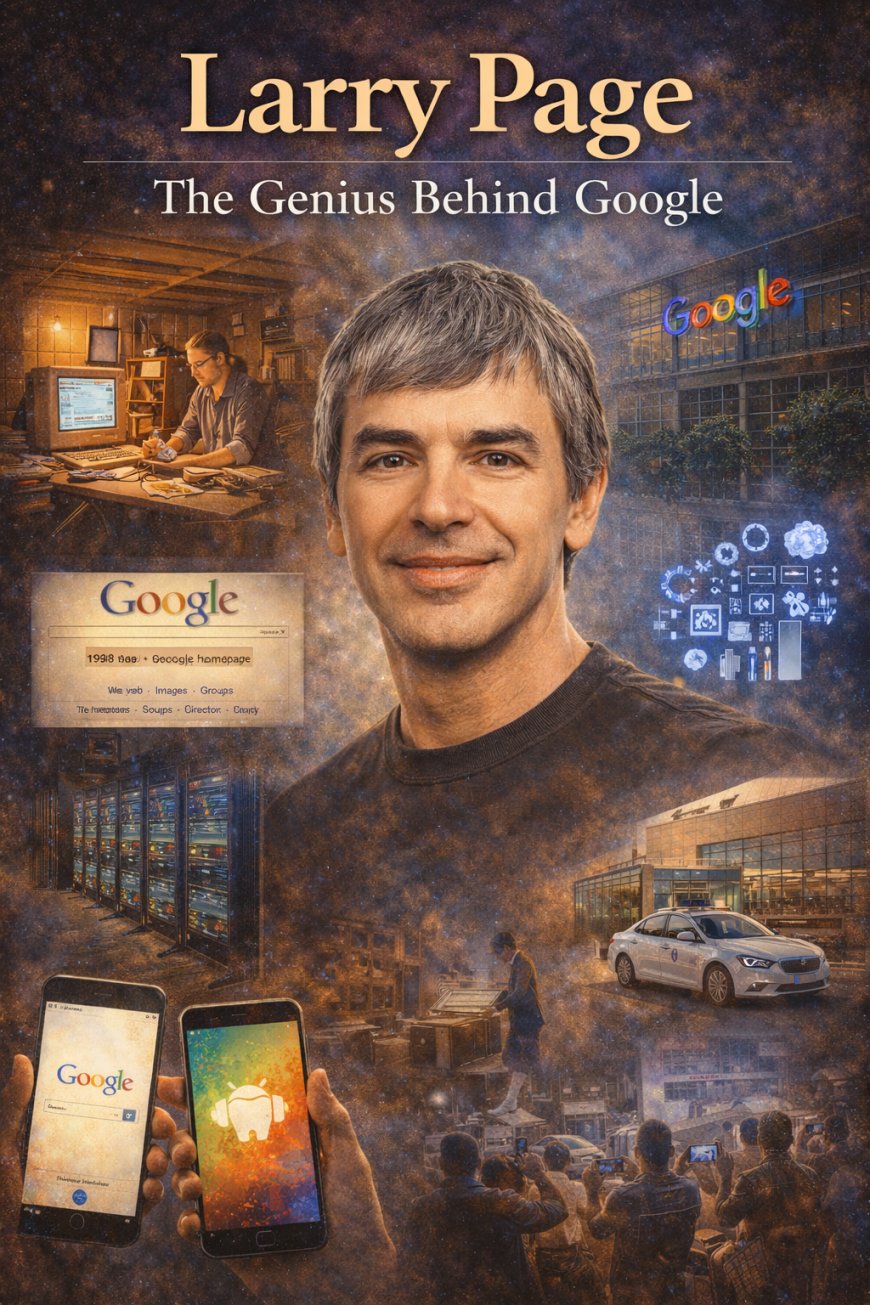
In a digital world where billions of searches are made every day, it is difficult to imagine life before search engines organized the web. Yet in the late 1990s, the internet was chaotic, fragmented, and growing at an overwhelming pace. Into this environment stepped Larry Page, a computer scientist whose curiosity about hyperlinks and data connections would reshape the global flow of information.
Born in 1973 in Michigan to parents who were both computer science educators, Larry Page grew up immersed in technology. By the time he entered Stanford University for graduate studies, the internet was still in its formative years. The prevailing challenge was simple but profound: how could users find reliable information among millions of scattered web pages?
Today, as discussions intensify around artificial intelligence, data privacy, and the societal influence of technology platforms, Page’s early innovation feels even more significant. His work laid the foundation for a company that not only changed search, but also advertising, mobile operating systems, cloud services, and AI research. The story of Larry Page is not just about building a search engine. It is about redefining how humanity accesses knowledge.
Unpacking the Layers of Larry Page: The Genius Behind Google
Larry Page co founded Google in 1998 alongside Sergey Brin. While still graduate students at Stanford University, they developed PageRank, an algorithm that ranked web pages based on the number and quality of links pointing to them. This approach treated links as signals of credibility, dramatically improving search relevance.
Google’s early growth was fueled by its clean interface and accurate results. Over time, the company expanded into advertising through AdWords, creating a business model that monetized search while offering free services to users. This advertising engine became one of the most profitable in corporate history.
Page also championed ambitious projects beyond search. Under his leadership, Google invested in Android, which became the world’s most widely used mobile operating system. The company reorganized under Alphabet Inc. in 2015, separating core search and advertising operations from experimental ventures such as autonomous vehicles and life sciences research.
For further reading on Google’s history and innovation strategies, readers can explore Stanford University archives at https://www.stanford.edu and Alphabet’s investor relations page at https://abc.xyz/investor/.
Larry Page’s vision was rooted in organizing the world’s information and making it universally accessible. That mission continues to guide the company’s evolution.
Navigating the Challenges and Debates
As Google grew into a global powerhouse, its influence sparked significant debate. Antitrust regulators in the United States and Europe have scrutinized the company’s market dominance in search and digital advertising. Critics argue that such scale may limit competition, while supporters contend that innovation and consumer benefit remain central to its success.
Data privacy is another focal point. Google’s business model relies on user data to deliver targeted advertising and personalized services. This has led to ongoing conversations about transparency, consent, and digital rights. Policymakers continue to shape regulations that define how technology companies manage user information.
Artificial intelligence research at Google also raises ethical considerations. From search optimization to machine learning applications, the integration of AI into daily life prompts questions about bias, accountability, and societal impact. Institutions and think tanks worldwide are engaged in exploring responsible AI frameworks.
Larry Page himself has maintained a relatively low public profile in recent years, stepping back from active leadership roles. Yet the structures he helped build continue to influence policy discussions, academic research, and technological advancement across the globe.
Real World Echoes: Case Studies and Applications
The practical impact of Larry Page’s work is visible in everyday digital experiences. Google Search processes billions of queries daily, supporting education, commerce, and research. Students rely on it for academic discovery, businesses depend on it for visibility, and individuals use it for everything from recipes to medical information.
Android’s global adoption illustrates another dimension of his influence. By providing an open source mobile operating system, Google enabled smartphone manufacturers worldwide to create accessible devices at various price points.
Google Maps, Gmail, and cloud based productivity tools demonstrate the integration of search and data across platforms. Meanwhile, Waymo, a subsidiary of Alphabet, is pioneering autonomous vehicle technology, reflecting Page’s longstanding interest in long term, high impact innovation.
Larry Page’s legacy is not confined to a single product. It is embedded in a digital ecosystem that shapes how people communicate, learn, travel, and conduct business.
Conclusion: Organizing the Infinite
Larry Page transformed a graduate research project into a technology empire that influences nearly every corner of modern life. His algorithmic insight into link structures sparked a revolution in information access. Yet the scale of that success also invites thoughtful debate about privacy, competition, and technological responsibility.
As the digital landscape continues to evolve, Page’s foundational vision of organizing information remains both inspiring and complex. His story encourages ongoing dialogue about innovation, ethics, and the future of knowledge.
If you are looking for professionally crafted biographies or expert storytelling services, contact https://biography.com.bd/ and bring impactful life stories to a global audience.
Q and A Section
1. How did Larry Page create Google?
Larry Page developed the PageRank algorithm with Sergey Brin while at Stanford University. The system ranked web pages based on link analysis, improving search accuracy.
2. Why is Google considered revolutionary?
Google provided faster, more relevant search results than competitors at the time. Its advertising model also transformed how digital businesses generate revenue.
3. What is Alphabet Inc.?
Alphabet Inc. is the parent company of Google and other ventures such as Waymo. It was created to separate core operations from experimental projects.
4. What are the main debates surrounding Google today?
Key discussions include antitrust regulation, data privacy, and ethical uses of artificial intelligence. These topics remain central to global policy conversations.
For further information, visit Alphabet’s official website at https://abc.xyz and Stanford University at https://www.stanford.edu.
What's Your Reaction?
 Like
0
Like
0
 Dislike
0
Dislike
0
 Love
0
Love
0
 Funny
0
Funny
0
 Angry
0
Angry
0
 Sad
0
Sad
0
 Wow
0
Wow
0