








































Sergey Brin: The Man Who Changed Search Engines

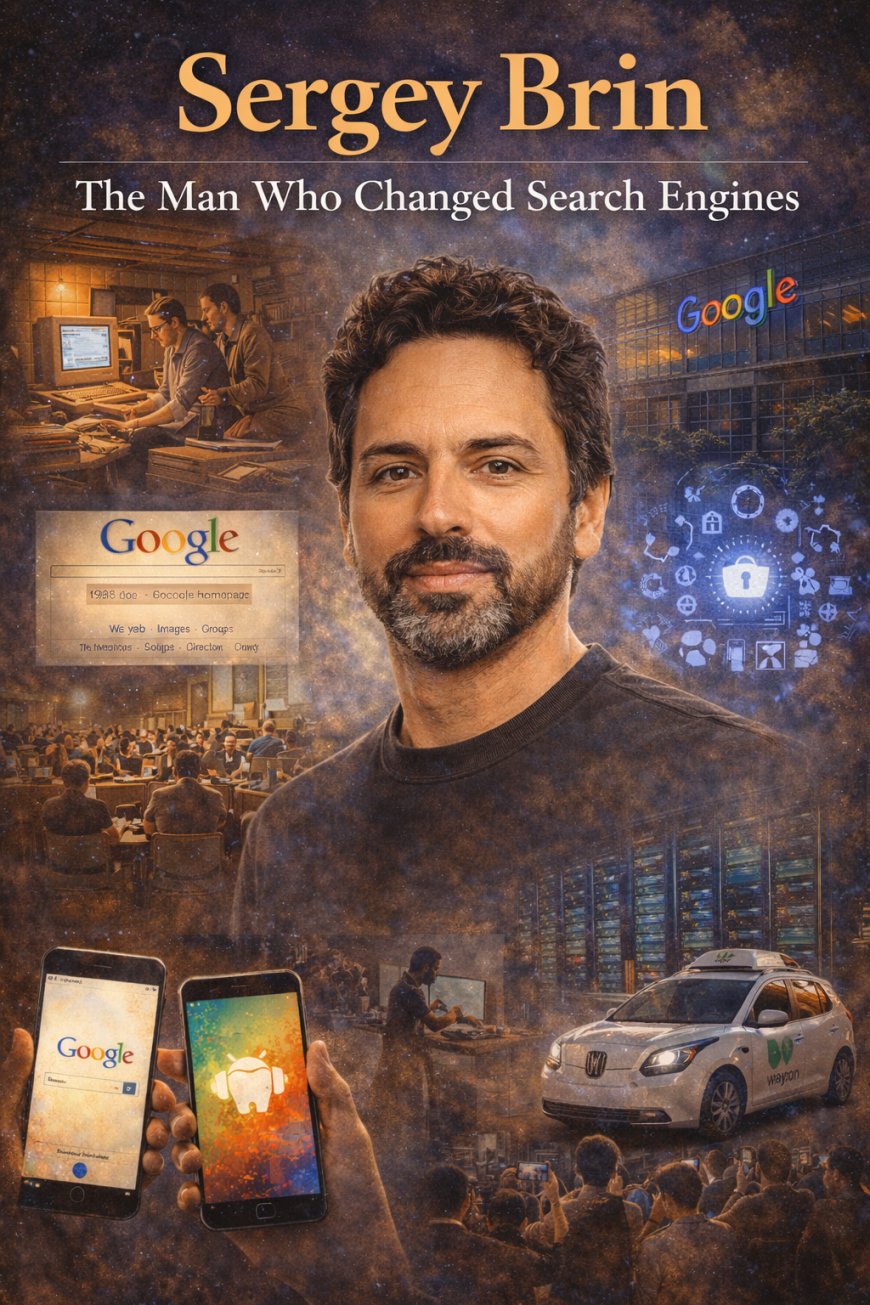
Every day, billions of people turn to a search bar to answer questions, explore ideas, and connect with information. What feels effortless today was once a technological puzzle. In the late 1990s, the internet was growing at an astonishing rate, yet finding relevant information was frustrating and inefficient. At the center of the transformation stood Sergey Brin, a computer scientist whose innovative thinking helped reshape the way humanity interacts with the web.
Born in 1973 in Moscow and later emigrating to the United States, Brin grew up in an environment shaped by mathematics and scientific inquiry. His family’s relocation to America opened doors to educational opportunities that would eventually lead him to Stanford University. There, he met Larry Page, and together they began exploring how links between web pages could signal credibility and relevance.
Today, as debates swirl around artificial intelligence, online privacy, and digital monopolies, Brin’s early contributions to search technology take on renewed significance. His story reflects the dynamic intersection of innovation, opportunity, and responsibility in a rapidly evolving digital landscape.
Unpacking the Layers of Sergey Brin: The Man Who Changed Search Engines
Sergey Brin co founded Google in 1998 alongside Larry Page. The foundation of their success lay in the PageRank algorithm, which evaluated web pages based on the quantity and quality of links pointing to them. This method dramatically improved search accuracy and relevance compared to existing engines.
Brin’s background in mathematics and data mining played a critical role in refining Google’s early architecture. While Page focused heavily on the structure of links, Brin concentrated on scalable systems and innovative data handling techniques. Together, they created a platform that quickly gained global traction.
As Google expanded, Brin supported ventures beyond search, including investments in artificial intelligence, wearable technology, and experimental projects under Alphabet Inc.. The creation of Alphabet in 2015 allowed the company to separate core operations from high risk innovation initiatives.
For further insight into Google’s origins and technological breakthroughs, readers can explore Stanford University resources at https://www.stanford.edu and Alphabet’s official site at https://abc.xyz.
Sergey Brin’s influence extends far beyond the original search engine. His work helped establish the blueprint for organizing digital information at unprecedented scale.
Navigating the Challenges and Debates
The rapid growth of Google brought scrutiny alongside praise. As one of the architects of its early structure, Brin became indirectly linked to debates about corporate responsibility and digital ethics. Regulatory authorities in the United States and Europe have raised concerns about market dominance and competitive fairness.
Data privacy remains a central issue. Google’s ability to collect and analyze user data to enhance services and deliver targeted advertising has sparked conversations about transparency and consent. Privacy advocates emphasize stronger safeguards, while others highlight the convenience and personalization that data driven systems enable.
Artificial intelligence research associated with Google also presents complex questions. From automated search results to machine learning models influencing decision making, the ethical deployment of AI continues to evolve. Institutions around the world are examining how companies can balance innovation with accountability.
Although Brin stepped back from active executive roles, his early leadership helped establish systems that remain influential. His career reflects the dual reality of technological brilliance and societal responsibility that defines the digital age.
Real World Echoes: Case Studies and Applications
The impact of Sergey Brin’s work is visible in daily life across the globe. Google Search supports students conducting research, entrepreneurs marketing businesses, and individuals seeking practical guidance. The ease of accessing accurate information has transformed education and commerce.
Google’s Android operating system has enabled smartphone adoption across diverse markets. By offering an open platform, Google empowered manufacturers and developers to innovate at scale.
Data centers around the world power cloud computing services that support startups, governments, and global enterprises. Meanwhile, Waymo, an Alphabet subsidiary, advances autonomous vehicle research, demonstrating how early investments in technology can evolve into entirely new industries.
These applications illustrate the ripple effects of Brin’s vision. What began as a research project has become a cornerstone of modern digital infrastructure.
Conclusion: A Digital Pioneer in a Complex Era
Sergey Brin helped reshape how the world finds and processes information. His collaboration at Stanford sparked a revolution in search technology that continues to influence communication, commerce, and education. Yet with that influence comes ongoing dialogue about ethics, privacy, and competition.
Brin’s journey highlights the power of curiosity combined with opportunity. It also underscores the importance of thoughtful stewardship in a technology driven world.
If you are seeking professionally crafted biographies or expert storytelling services, contact https://biography.com.bd/ and bring meaningful life stories to a global audience.
Q and A Section
1. How did Sergey Brin contribute to Google’s success?
Sergey Brin worked alongside Larry Page to develop the PageRank algorithm and design scalable data systems that improved search relevance and performance.
2. What role did Stanford University play in Brin’s journey?
Stanford University provided the academic environment where Brin and Page met and developed their research project that evolved into Google.
3. What are the main controversies associated with Google?
Key debates include antitrust concerns, data privacy issues, and ethical questions surrounding artificial intelligence.
4. What is Alphabet Inc.?
Alphabet Inc. is the parent company of Google and other ventures. It was formed to manage diverse projects and encourage innovation beyond core search operations.
For further exploration, visit Alphabet’s official website at https://abc.xyz and Stanford University at https://www.stanford.edu.
What's Your Reaction?
 Like
0
Like
0
 Dislike
0
Dislike
0
 Love
0
Love
0
 Funny
0
Funny
0
 Angry
0
Angry
0
 Sad
0
Sad
0
 Wow
0
Wow
0