






























Malala Yousafzai: A Life Bet for Education
Explore Malala Yousafzai’s inspiring journey as a global education activist. Discover her Nobel Peace Prize, the Malala Fund, and the lasting impact of her advocacy for girls’ education.

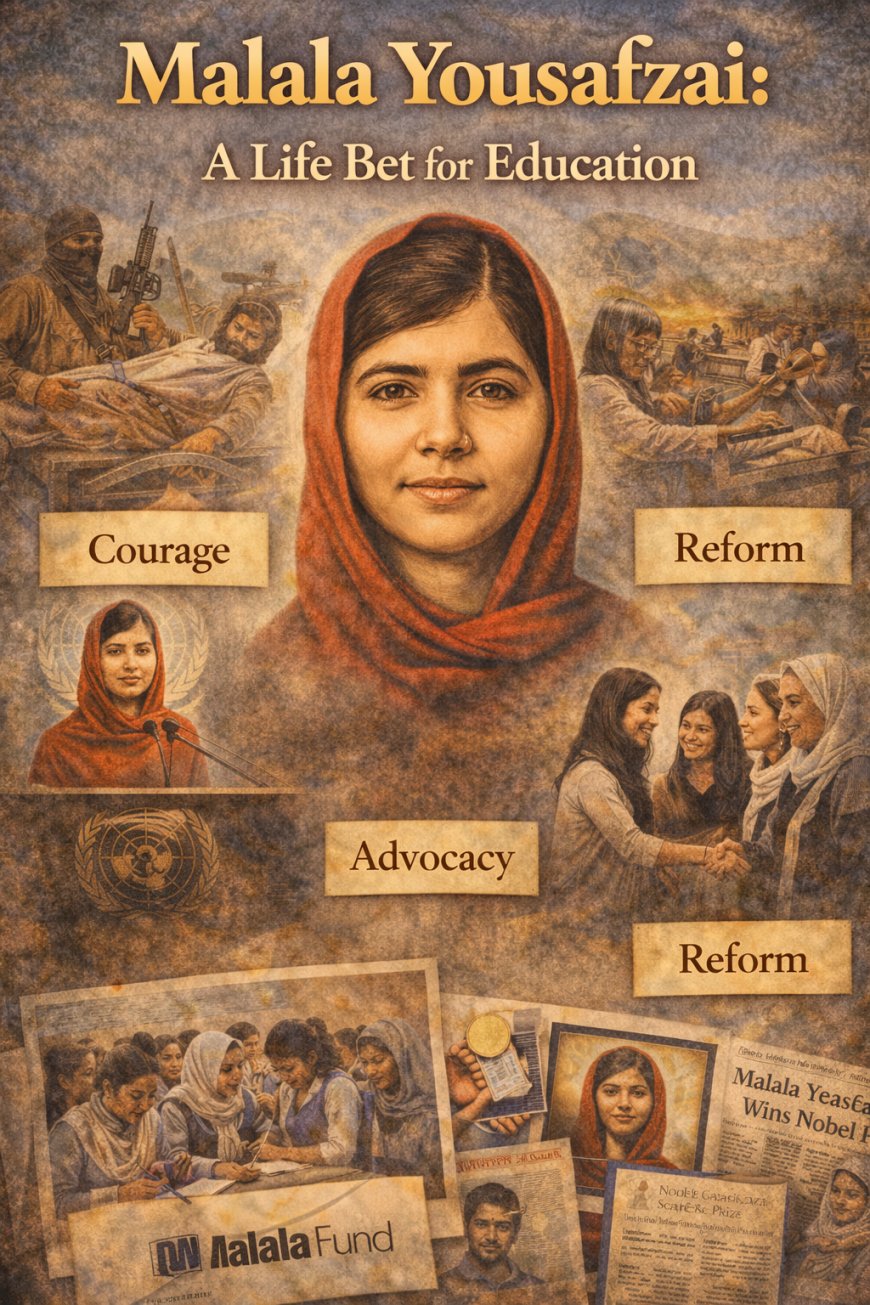
In a century defined by rapid technological change and widening educational gaps, the voice of Malala Yousafzai continues to echo across classrooms, parliaments, and international forums. At a time when millions of children remain out of school, her story stands as a reminder that access to education is not merely a policy issue but a fundamental human right.
Born in Pakistan’s Swat Valley in 1997, Malala grew up in a region where girls’ education became a contested issue under extremist control. As a teenager, she publicly advocated for girls’ schooling, a stand that brought global attention and life threatening consequences. Her survival and continued activism transformed her into an international symbol of resilience.
Today, as conversations around gender equality, youth leadership, and global development evolve, Malala’s journey invites both admiration and reflection. Her advocacy sits at the intersection of courage, politics, and systemic reform. To understand her life is to explore the broader stakes of education in shaping the future of societies worldwide.
Unpacking the Layers of Malala Yousafzai: A Life Bet for Education
Malala’s life story unfolds across personal courage, global advocacy, and institutional action.
1. Early Advocacy in Swat Valley
As a schoolgirl, Malala began blogging anonymously about life under Taliban restrictions. She spoke openly about her desire to learn, challenging narratives that denied girls the right to education. This activism drew international recognition and eventually targeted violence.
Her memoir, I Am Malala, offers a firsthand account of her experiences and mission.
2. Global Platform and the Nobel Peace Prize
In 2014, Malala became the youngest ever recipient of the Nobel Peace Prize. The Nobel Committee recognized her struggle against the suppression of children and young people. The official Nobel Prize website provides detailed insights into her award and speech:
https://www.nobelprize.org/prizes/peace/2014/yousafzai/facts/
3. The Malala Fund
Through the Malala Fund, she supports programs that expand girls’ access to secondary education worldwide. The fund collaborates with educators, policymakers, and community leaders to remove systemic barriers.
More information can be found at the Malala Fund’s official site:
https://malala.org/
These layers demonstrate that Malala’s activism extends beyond symbolic speeches into sustained institutional engagement.
Navigating the Challenges and Debates
While widely celebrated, Malala’s global prominence also invites nuanced conversations.
1. Representation and Western Media
Some critics argue that Western media narratives can simplify complex regional realities. They caution against portraying Malala as the singular face of educational activism in Pakistan, emphasizing the efforts of many local advocates.
2. Political Context and Security Concerns
Her advocacy operates within sensitive geopolitical contexts. Education reform intersects with cultural traditions, religious interpretations, and political tensions. Experts stress the importance of culturally informed approaches that empower local communities.
3. Youth Activism and Global Expectations
Malala’s rise as a teenage activist sparked conversations about youth leadership. While inspiring, it also raises questions about pressure placed on young advocates navigating intense public scrutiny.
These debates highlight how educational advocacy exists within broader systems of power, culture, and international discourse. Understanding these dynamics enriches appreciation of her work without oversimplifying its impact.
Real World Echoes: Case Studies and Applications
Malala’s advocacy has tangible global effects.
Case Study 1: Education Reform Initiatives
The Malala Fund invests in local education leaders who address barriers such as child marriage, poverty, and conflict. This model emphasizes community based solutions rather than centralized directives.
Case Study 2: Global Policy Conversations
Her speeches at the United Nations have amplified discussions about universal secondary education. Policymakers reference her advocacy when debating funding priorities and gender equality frameworks.
Case Study 3: Inspiring Youth Leadership
Malala’s story motivates young activists worldwide to speak out on issues ranging from climate change to human rights. Educational institutions often cite her as an example of constructive civic engagement.
These applications demonstrate that Malala’s life is not confined to symbolic recognition. It actively shapes dialogue and action within global education systems.
Conclusion: Education as Hope and Responsibility
Malala Yousafzai’s journey embodies resilience and determination in the face of adversity. Her life illustrates how one voice, grounded in conviction, can catalyze global awareness and institutional change.
At the same time, her story encourages thoughtful engagement with the complex realities of education reform. Progress requires sustained collaboration, cultural sensitivity, and accountability.
As societies continue to debate equity and access, Malala’s advocacy remains a powerful reminder that education is both a personal aspiration and a collective responsibility.
If you wish to explore transformative biographies or require professional storytelling services, contact https://biography.com.bd/ and discover how impactful life stories can inspire change and understanding.
Q&A Section
1. Why did Malala Yousafzai become famous?
Malala became internationally known for advocating girls’ education in Pakistan and surviving an assassination attempt linked to her activism. Her continued advocacy elevated her as a global education leader.
Learn more at the Nobel Prize website:
https://www.nobelprize.org/prizes/peace/2014/yousafzai/facts/
2. What does the Malala Fund do?
The Malala Fund supports local education leaders and works to ensure girls complete twelve years of safe, quality education worldwide. Details are available at:
https://malala.org/
3. How does Malala influence global policy?
Through speeches, partnerships, and fundraising, she contributes to international discussions on gender equality and educational access.
4. What lessons can young activists learn from her journey?
Her story highlights resilience, the importance of education, and the value of global collaboration. It also underscores the need for empathy and cultural awareness in advocacy work.
What's Your Reaction?
 Like
0
Like
0
 Dislike
0
Dislike
0
 Love
0
Love
0
 Funny
0
Funny
0
 Angry
0
Angry
0
 Sad
0
Sad
0
 Wow
0
Wow
0