

































Cleopatra: Combination of Beauty and Intelligence
Explore Cleopatra’s blend of beauty and intelligence, her strategic alliances, political challenges, and enduring legacy in world history.

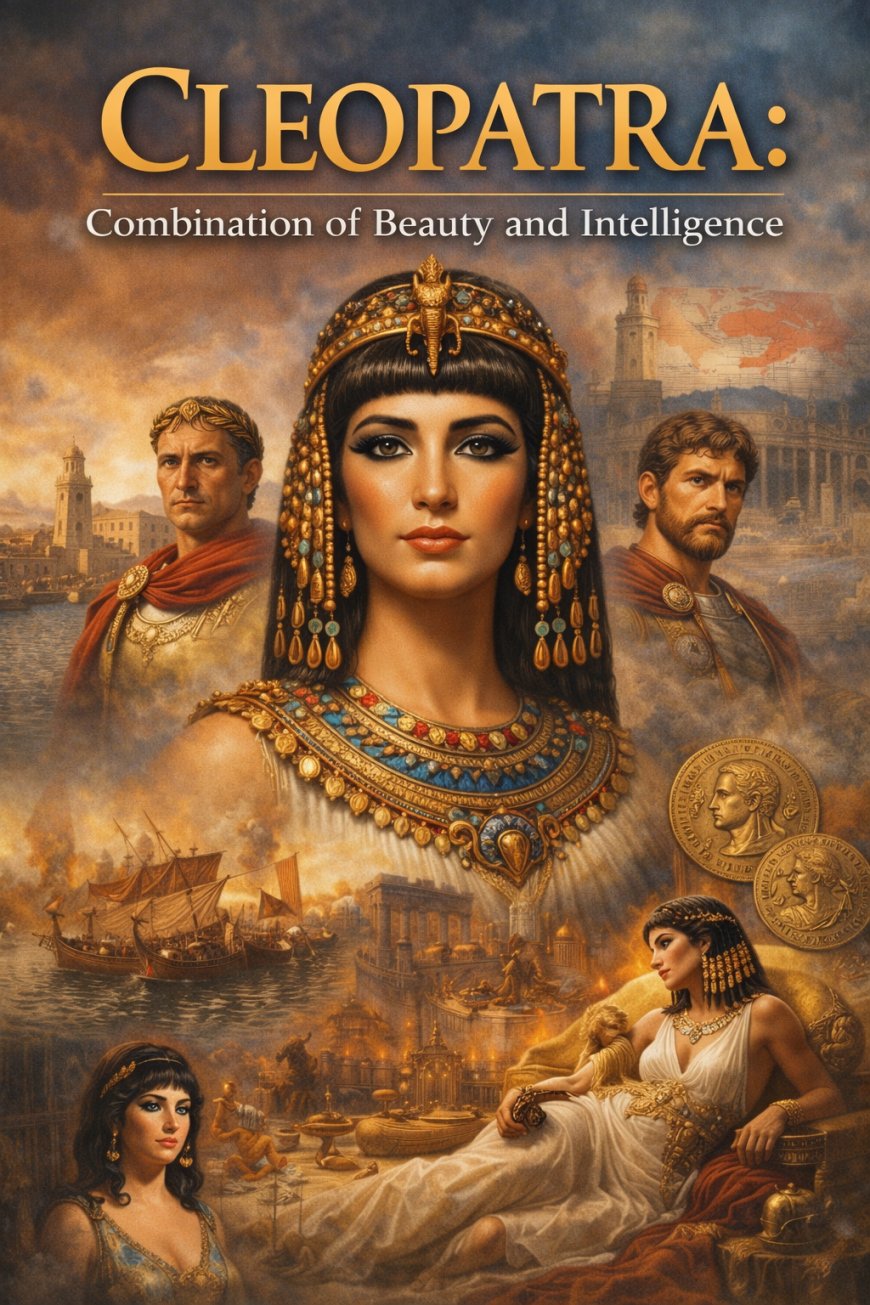
Few historical figures command as much fascination as Cleopatra. Her name evokes images of grandeur, intrigue, political strategy, and enduring mystery. In modern films, literature, and academic debates, she appears as both a romantic icon and a shrewd ruler. Yet beyond the legend lies a complex leader whose story remains strikingly relevant in conversations about power, gender, diplomacy, and cultural identity.
Born in 69 BCE, Cleopatra ruled during a period of intense political turbulence. Egypt was wealthy but vulnerable, and Rome was rising as the dominant force in the Mediterranean. Amid this shifting landscape, Cleopatra navigated alliances, conflicts, and rivalries with remarkable skill. Today, historians and scholars continue to reassess her legacy, challenging simplistic narratives that reduce her to mere charm or beauty.
Cleopatra’s life stands at the crossroads of politics and perception. Was she primarily a strategist, a cultural bridge, or a victim of Roman propaganda? The deeper we explore her story, the more nuanced and compelling it becomes.
Unpacking the Layers of Cleopatra: Combination of Beauty and Intelligence
A Scholar Queen in a Time of Crisis
Cleopatra was not ethnically Egyptian but a member of the Macedonian Greek Ptolemaic dynasty. Unlike many of her predecessors, she learned the Egyptian language and presented herself as a divine ruler aligned with Egyptian traditions.
Her education was extensive. Scholars believe she was fluent in multiple languages and well versed in philosophy, economics, and diplomacy. The Encyclopaedia Britannica provides a detailed overview of her reign and policies:
https://www.britannica.com/biography/Cleopatra-queen-of-Egypt
Strategic Alliances and Political Intelligence
Cleopatra formed high profile alliances with Roman leaders such as Julius Caesar and later Mark Antony. These relationships were not merely romantic but deeply strategic. They aimed to secure Egypt’s independence amid Roman expansion.
By aligning with powerful Roman figures, Cleopatra strengthened her position and restored economic stability to Egypt. Historical research from institutions such as The British Museum explores the broader context of Egypt under Ptolemaic rule:
https://www.britishmuseum.org/collection/galleries/egypt
Her reign reflects a sophisticated balancing act between charisma, negotiation, and political survival.
Navigating the Challenges and Debates
Myth versus Historical Reality
One of the greatest challenges in understanding Cleopatra lies in separating fact from Roman propaganda. Much of what is known comes from Roman sources that often portrayed her as manipulative or dangerous. Octavian, later known as Augustus, had political reasons to frame her negatively after defeating Mark Antony at the Battle of Actium.
Modern historians reexamine these narratives, considering how gender bias and political rivalry shaped historical accounts. The Stanford Encyclopedia of Philosophy provides context on ancient political rhetoric and representation:
https://plato.stanford.edu/
Ethical and Political Dilemmas
Cleopatra’s alliances brought both opportunity and controversy. Critics question whether her reliance on Roman power compromised Egypt’s sovereignty. Others argue that her actions were pragmatic responses to unavoidable geopolitical pressures.
Her death in 30 BCE marked the end of the Ptolemaic dynasty and the absorption of Egypt into the Roman Empire. The ethical dilemma remains compelling. Was she defending her kingdom against overwhelming odds, or did her strategies accelerate Egypt’s fall?
These debates continue to shape discussions about female leadership, statecraft, and the influence of narrative in shaping history.
Real-world Echoes: Case Studies and Applications
Cultural Influence and Leadership Lessons
Cleopatra’s legacy extends far beyond her reign. She has inspired countless artistic representations, from classical art to Hollywood cinema. The 1963 film starring Elizabeth Taylor introduced her story to new generations, demonstrating her lasting cultural magnetism.
In leadership studies, Cleopatra is often analyzed as an early example of strategic diplomacy and image management. Key lessons include:
-
The power of communication in international relations
-
The importance of cultural awareness in governance
-
The role of narrative in shaping public perception
-
The resilience required to lead during political instability
Her reign also highlights economic strategy. Alexandria remained a vital center of trade and scholarship during her rule, underscoring her attention to economic infrastructure and intellectual growth.
Institutions such as Harvard University publish research exploring women in leadership and historical governance models:
https://womensleadership.harvard.edu/
Cleopatra’s story illustrates how intelligence, adaptability, and cultural fluency can influence global power structures.
Conclusion: A Queen Beyond the Legend
Cleopatra’s life is far richer than legend alone. She was a multilingual ruler, a political strategist, and a symbol shaped by competing narratives. Her story encourages us to question inherited assumptions and examine how power, gender, and storytelling intersect.
In a world that continues to debate leadership, cultural identity, and political autonomy, Cleopatra remains strikingly relevant. Her legacy challenges us to look beyond surface impressions and embrace the complexity of history.
To discover more insightful biographies and professional historical content, contact https://biography.com.bd/ and explore expertly crafted narratives that bring the past into focus.
Q&A Section
1. Was Cleopatra primarily known for beauty or intelligence?
While popular culture often emphasizes her beauty, historical evidence suggests her intelligence, diplomatic skill, and political strategy were central to her influence. Ancient coins portray her realistically, suggesting leadership mattered more than physical idealization.
2. Why did Cleopatra ally with Roman leaders?
Her alliances with Julius Caesar and Mark Antony were strategic efforts to secure Egypt’s independence during Rome’s expansion. These relationships strengthened her political position, even though they eventually drew Egypt deeper into Roman conflicts.
More detailed analysis can be found at Britannica:
https://www.britannica.com/biography/Cleopatra-queen-of-Egypt
3. What led to Cleopatra’s downfall?
After defeat at the Battle of Actium by Octavian, Cleopatra’s political options narrowed significantly. Facing annexation and loss of sovereignty, her death marked the end of Egyptian independence.
4. Why is Cleopatra still studied today?
She embodies themes of leadership, diplomacy, gender politics, and media portrayal. Scholars continue to reassess her role in shaping Mediterranean history, making her an enduring figure of academic interest.
What's Your Reaction?
 Like
0
Like
0
 Dislike
0
Dislike
0
 Love
0
Love
0
 Funny
0
Funny
0
 Angry
0
Angry
0
 Sad
0
Sad
0
 Wow
0
Wow
0