Scientist · Russian Empire
Mikhail Lomonosov
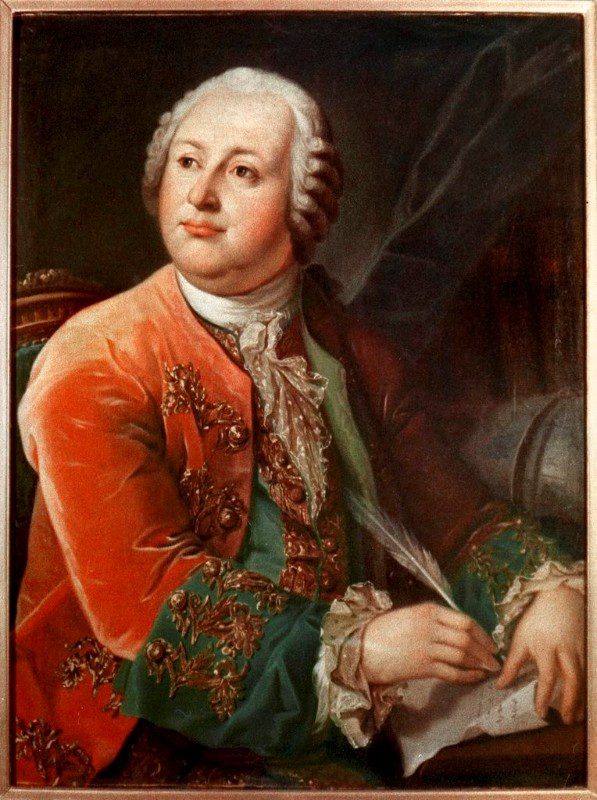
**Mikhail Lomonosov** (1711–1765) was a Russian polymath, scientist, poet, and educator who made significant contributions to chemistry, physics, astronomy, linguistics, and literature. He is widely regarded as one of the founders of Russian science and a key figure in the development of Russian education. His research included early ideas about the conservation of matter, the nature of heat, and the atmosphere of Venus. He also helped establish Moscow University, which was later named in his honor.
 Wikimedia Commons
Mikhail Lomonosov: Biography, Scientific Discoveries, and Legacy
Biography
1. Introduction
Mikhail Vasilyevich Lomonosov was a Russian scientist, writer, educator, and polymath whose work influenced several areas of knowledge during the eighteenth century. He contributed to chemistry, physics, astronomy, geography, mineralogy, linguistics, and literature.
Lomonosov is remembered for his scientific investigations, his efforts to improve education in Russia, and his role in developing the Russian literary language. He is often regarded as one of the most influential intellectual figures in Russian history.
2. Early Life and Family Background
Mikhail Lomonosov was born on November 19, 1711, in the village of Denisovka, near Kholmogory, in the Russian Empire. The village is now known as Lomonosovo and is located in the Arkhangelsk region of Russia.
His father, Vasily Dorofeyevich Lomonosov, was a fisherman and small-scale trader. Lomonosov grew up in a family that depended heavily on fishing and maritime activities.
From an early age, he developed an interest in learning. Despite having limited access to formal education in his childhood, he became determined to pursue knowledge and scientific study.
3. Education and Academic Journey
In 1730, at approximately 19 years old, Lomonosov left his home village and traveled to Moscow to continue his education.
He enrolled at the Slavic Greek Latin Academy, where he studied subjects including Latin, philosophy, and mathematics.
His academic abilities helped him gain admission to further studies in Saint Petersburg. In 1736, he was selected to study abroad in Germany.
He attended the University of Marburg, where he studied philosophy, mathematics, and natural sciences under the influence of the German scholar Christian Wolff. He later studied metallurgy and mining in Freiberg.
His education in Germany gave him a strong foundation in experimental science and European intellectual traditions.
4. Return to Russia and Scientific Career
Lomonosov returned to Russia in 1741 and joined the Saint Petersburg Academy of Sciences.
He became involved in scientific research and teaching, working across several disciplines. His interests included chemistry, physics, mineralogy, geology, and astronomy.
In 1745, he became a professor of chemistry at the academy. He later established a chemical laboratory where he conducted experiments and promoted the use of systematic laboratory methods.
His work helped strengthen experimental science in Russia at a time when scientific institutions were still developing.
5. Contributions to Chemistry
Lomonosov made important contributions to the development of chemistry as an experimental science.
He emphasized the importance of careful measurement, observation, and experimentation. In 1748, he formulated an early statement of the principle of conservation of matter, arguing that matter was neither created nor destroyed in ordinary physical and chemical processes.
His experiments also challenged explanations of heat based on an invisible fluid. He proposed that heat was associated with the motion of particles, an idea that anticipated aspects of later kinetic theories.
Lomonosov's research helped encourage a more quantitative and experimental approach to chemistry.
6. Contributions to Physics
Lomonosov investigated the nature of heat, light, electricity, and matter.
He proposed that matter consisted of very small particles and that their motion was related to thermal phenomena. Although his ideas differed from later atomic and molecular theories, they anticipated important developments in physical science.
He also studied the relationship between physical processes and the behavior of materials.
His work reflected an effort to explain natural phenomena through mechanical principles and experimental evidence.
7. Astronomical Discoveries
Lomonosov also made important contributions to astronomy.
In 1761, during the transit of Venus across the Sun, he observed a bright atmospheric effect near the edge of the planet. He interpreted this observation as evidence that Venus possessed an atmosphere.
This was an important early contribution to planetary astronomy.
He also supported the development of scientific instruments and encouraged astronomical observation in Russia.
8. Contributions to Literature and Language
In addition to his scientific work, Lomonosov made significant contributions to Russian literature and language.
He wrote poetry, essays, and works on grammar and rhetoric. His 1755 work Russian Grammar helped establish a more systematic approach to the study of the Russian language.
He also developed ideas about the appropriate use of different styles of Russian in literature and formal writing.
His literary work helped shape the development of modern Russian literary language.
9. Founding of Moscow University
One of Lomonosov's most important achievements in education was his role in establishing Moscow University.
Working with Ivan Shuvalov, he helped develop the proposal for a new university, which was officially founded in 1755.
The institution later became known as Lomonosov Moscow State University in recognition of his contribution.
The university played an important role in expanding higher education and scientific research in Russia.
10. Personal Life
Lomonosov married Elisabeth Christine Zilch in 1740 while he was studying in Germany. They had children, although not all survived into adulthood.
His personal life was closely connected to his academic and scientific activities. He devoted much of his time to research, writing, education, and the development of scientific institutions.
He was known for his broad intellectual interests and his determination to advance knowledge in Russia.
11. Later Years and Death
During his later years, Lomonosov continued working in science, literature, and education.
He remained active at the Saint Petersburg Academy of Sciences and pursued research in chemistry, astronomy, and other fields.
Mikhail Lomonosov died on April 15, 1765, in Saint Petersburg, Russian Empire, at the age of 53.
His death was widely regarded as a major loss to Russian science and intellectual life.
12. Awards, Honors, and Recognition
Lomonosov received recognition during his lifetime for his scientific and academic achievements.
His lasting honors include:
- Election as a professor of chemistry at the Saint Petersburg Academy of Sciences in 1745.
- Membership and recognition within European scholarly circles.
- The naming of Lomonosov Moscow State University in his honor.
- The naming of the town of Lomonosov, near Saint Petersburg, after him.
- Recognition as a pioneering figure in Russian science and literature.
His name is also associated with scientific institutions, geographical features, and educational awards.
13. Scientific Contributions and Legacy
Mikhail Lomonosov's achievements extended across many disciplines.
His most important contributions include:
- Formulating an early statement of the conservation of matter.
- Promoting experimental and quantitative methods in chemistry.
- Developing early particle-based explanations of heat.
- Providing evidence for the atmosphere of Venus.
- Advancing Russian grammar, poetry, and literary style.
- Helping establish Moscow University in 1755.
- Promoting scientific education and research in Russia.
Lomonosov's work helped strengthen the foundations of Russian science and education. His interdisciplinary approach also made him an important example of the eighteenth-century polymath.
14. Conclusion
Mikhail Lomonosov was one of the most influential intellectual figures of eighteenth-century Russia. His contributions to chemistry, physics, astronomy, language, literature, and education helped shape the country's scientific and cultural development.
Through his research and educational initiatives, he encouraged the growth of experimental science and higher learning in Russia. His legacy continues through scientific institutions and the university that bears his name.
Did you know?
**Did You Know?** 1. Mikhail Lomonosov left his fishing village as a teenager to pursue education in Moscow. 2. He studied in Germany before returning to Russia to begin his scientific career. 3. In 1748, he formulated an early statement of the conservation of matter. 4. In 1761, he observed the transit of Venus and identified evidence of the planet's atmosphere. 5. He helped establish Moscow University in 1755 alongside Ivan Shuvalov. 6. Lomonosov wrote poetry and developed influential ideas about Russian grammar and literary style. 7. Moscow State University was later named after him in recognition of his contributions. 8. He worked in many fields, including chemistry, physics, astronomy, geography, and literature.