Scientist · German Reich
Max Born
**Max Born** (1882–1970) was a German physicist and mathematician who made major contributions to the development of quantum mechanics. He is best known for introducing the probability interpretation of the wave function, which became a fundamental principle of modern quantum physics. In 1954, he received the Nobel Prize in Physics for his fundamental research in quantum mechanics, especially his statistical interpretation of the wave function.
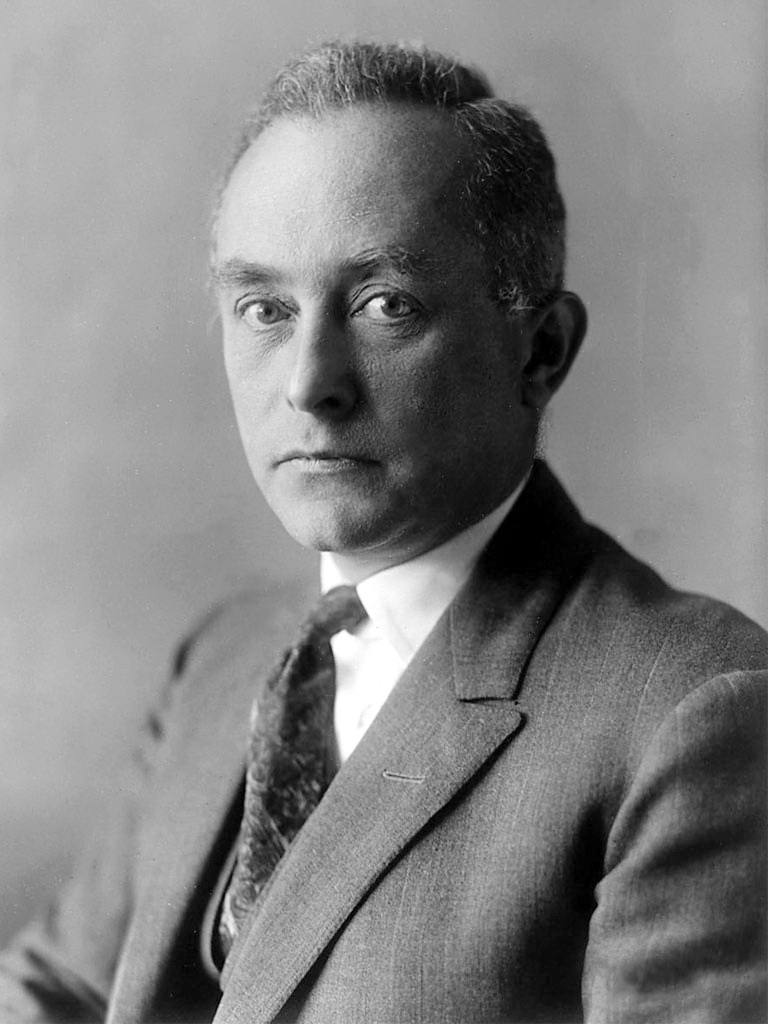 Wikimedia Commons
Max Born: Biography, Scientific Discoveries, and Legacy
Biography
1. Introduction
Max Born was a German theoretical physicist and mathematician whose work helped establish the foundations of modern quantum mechanics. His ideas changed how scientists understand the behavior of particles at the atomic and subatomic levels.
He is particularly famous for the probability interpretation of the quantum-mechanical wave function, commonly known as the Born rule. This interpretation explains that quantum mechanics predicts the probabilities of measurement outcomes rather than always providing definite predictions for individual events.
Born received the 1954 Nobel Prize in Physics for his fundamental research in quantum mechanics, especially his statistical interpretation of the wave function.
2. Early Life and Family Background
Max Born was born on December 11, 1882, in Breslau, in the German Empire. The city is now known as Wrocław, Poland.
He was born into an educated family. His father, Gustav Born, was a professor of anatomy and embryology at the University of Breslau. His mother, Margarethe Kauffmann, came from a family with an interest in the arts and culture.
Growing up in an intellectually active environment helped develop Born's interest in mathematics and science. From an early age, he showed strong academic abilities and became especially interested in understanding the mathematical principles behind the natural world.
3. Education and Academic Training
Born attended the University of Breslau, where he studied mathematics, physics, and astronomy. He later continued his studies at several German universities, including Heidelberg, Zürich, and Göttingen.
At the University of Göttingen, he worked with influential mathematicians and physicists, including David Hilbert and Hermann Minkowski.
He completed his doctoral dissertation in mathematics in 1906. His academic training gave him a strong mathematical foundation that later became essential to his contributions to theoretical physics.
4. Early Scientific Career
After completing his education, Born worked in Germany and spent time at the University of Cambridge in England.
He became increasingly involved in theoretical physics and mathematical approaches to scientific problems.
In 1915, he joined the University of Berlin, where he worked with leading physicists, including Max Planck and Albert Einstein.
Born later returned to Göttingen, where he became a professor of theoretical physics in 1921. During this period, Göttingen developed into one of the most important centers for research in quantum mechanics.
5. Contributions to Quantum Mechanics
Max Born played a central role in the development of quantum mechanics during the 1920s.
At the time, physicists were searching for a mathematical framework that could explain the behavior of atoms and subatomic particles. Born contributed to this effort through his work on the mathematical structure of quantum theory.
One of his most influential contributions was the probability interpretation of the wave function.
In 1926, Born proposed that the squared magnitude of a quantum wave function represents the probability density of finding a particle in a particular location or state.
This idea became known as the Born rule. It remains one of the fundamental principles used in quantum mechanics.
6. Work with Other Physicists
Born worked with several important scientists during the development of modern physics.
He collaborated with Werner Heisenberg and Pascual Jordan on the mathematical formulation of matrix mechanics, an early version of quantum mechanics.
He also contributed to the scientific environment at Göttingen, where researchers including Wolfgang Pauli and Werner Heisenberg helped advance quantum theory.
Born's mathematical expertise was particularly valuable in turning new physical ideas into a consistent theoretical framework.
7. Nobel Prize in Physics
In 1954, Max Born received the Nobel Prize in Physics.
The award recognized his fundamental research in quantum mechanics, especially his statistical interpretation of the wave function.
The Nobel Prize acknowledged the importance of his contribution to the understanding of microscopic physical systems. His probability interpretation remains essential to the standard mathematical formulation of quantum mechanics.
8. Forced Emigration and Life in Britain
Born's career in Germany was disrupted by the political changes that followed the Nazi rise to power.
Because of his Jewish ancestry, he was dismissed from his academic position in Göttingen in 1933 under the Nazi government's racial policies.
He left Germany and moved to Britain. He initially worked at the University of Cambridge and later became a professor of natural philosophy at the University of Edinburgh in Scotland.
Born continued his research and teaching in Britain, helping develop theoretical physics while maintaining connections with the international scientific community.
He became a British citizen in 1939.
9. Personal Life
Max Born married Hedwig Ehrenberg in 1913. They had three children: Irene, Margarethe, and Gustav.
His family supported him through his academic career and his move from Germany to Britain.
Born also maintained friendships and professional relationships with many leading scientists of his generation. His correspondence and discussions with Albert Einstein became particularly well known because of their different views on the interpretation of quantum mechanics.
10. Later Years and Death
After retiring from the University of Edinburgh in 1953, Born returned to Germany.
He continued writing and discussing scientific and philosophical questions, particularly the meaning and implications of quantum mechanics.
Max Born died on January 5, 1970, in Göttingen, West Germany, at the age of 87.
His death marked the passing of one of the most influential figures in the early development of quantum theory.
11. Scientific Legacy and Influence
Max Born's work remains central to modern physics.
His most important contributions include:
- Developing the probability interpretation of the quantum-mechanical wave function.
- Contributing to the mathematical foundations of quantum mechanics.
- Helping develop matrix mechanics with Werner Heisenberg and Pascual Jordan.
- Advancing theoretical physics through his teaching and research at Göttingen and Edinburgh.
- Influencing generations of physicists through his scientific publications and academic work.
The Born rule is still used in quantum physics, quantum chemistry, and many areas of modern scientific research.
His work helped establish the probabilistic framework that distinguishes quantum mechanics from classical physics.
12. Conclusion
Max Born was a pioneering theoretical physicist whose mathematical insights helped shape one of the most important scientific theories of the twentieth century.
His probability interpretation of the wave function remains a cornerstone of quantum mechanics. Despite being forced to leave Germany during the Nazi era, he continued his
Did you know?
**Did You Know?** 1. Max Born received the Nobel Prize in Physics in 1954 for his contributions to quantum mechanics. 2. The Born rule, named after him, explains how quantum wave functions are used to calculate probabilities. 3. He worked closely with Werner Heisenberg during the development of matrix mechanics. 4. Born was a professor at the University of Göttingen, which became a major center for quantum physics. 5. He was forced to leave Germany in 1933 because of the Nazi government's racial policies. 6. Albert Einstein and Max Born exchanged many letters discussing the philosophical meaning of quantum mechanics. 7. Born became a British citizen in 1939 and later taught at the University of Edinburgh.