Scientist · Russian Socialist Federative Soviet Republic
Konstantin Tsiolkovsky
**Konstantin Tsiolkovsky** (17 September 1857 – 19 September 1935) was a Russian and Soviet rocket scientist, mathematician, and pioneer of astronautics. He is widely regarded as one of the founders of modern rocketry and spaceflight theory. His mathematical research, including the famous Tsiolkovsky rocket equation, explained how rockets could travel through space using reaction propulsion. His ideas influenced generations of rocket engineers and helped establish the theoretical foundations of space exploration.
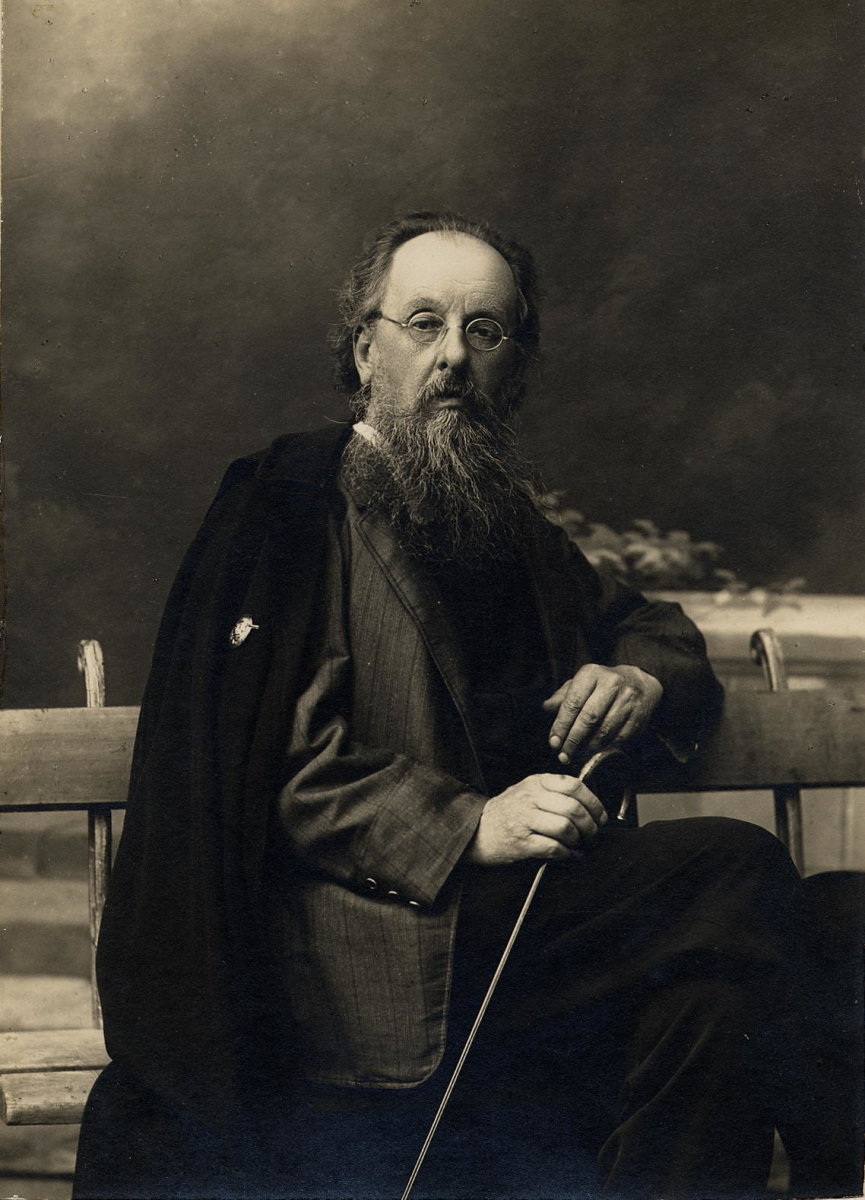 Wikimedia Commons
Konstantin Tsiolkovsky: Biography of the Father of Theoretical Astronautics
Biography
1. Introduction
Konstantin Eduardovich Tsiolkovsky was a Russian and Soviet scientist whose pioneering ideas helped establish the theoretical foundations of modern astronautics. He studied rocket propulsion, space travel, and the possibility of human exploration beyond Earth.
Although he lived before practical spaceflight became possible, his mathematical work demonstrated how rockets could operate in the vacuum of space. His famous rocket equation remains fundamental to spacecraft engineering.
Tsiolkovsky is widely remembered as one of the founding figures of modern astronautics.
2. Early Life and Family Background
Konstantin Tsiolkovsky was born on 17 September 1857 in the village of Izhevskoye, in the Russian Empire, now part of Russia.
His father, Eduard Tsiolkovsky, worked in forestry and government service, while his mother, Maria Yumasheva, came from a family with Polish and Russian ancestry.
At around the age of ten, Tsiolkovsky suffered from scarlet fever, which caused significant hearing loss. This condition made conventional schooling difficult, and he eventually left formal education.
However, he developed a strong interest in science, mathematics, mechanics, and literature. Much of his early learning took place through independent study.
3. Education and Self-Learning
In 1873, Tsiolkovsky travelled to Moscow to continue his education independently. He studied mathematics, physics, astronomy, and other scientific subjects using books and educational materials.
Although he did not attend a traditional university, his self-directed studies gave him a strong foundation in mathematics and the physical sciences.
After returning to Russia, he passed examinations that qualified him to work as a teacher.
His unusual educational journey demonstrated how independent study and determination could lead to important scientific contributions.
4. Teaching Career
Tsiolkovsky began working as a mathematics teacher in Borovsk in 1880. He later moved to Kaluga, where he continued teaching in local schools.
He was known for his interest in scientific experiments and practical demonstrations. Alongside his teaching responsibilities, he conducted research on aeronautics, mechanics, and space travel.
His career as a teacher provided a stable livelihood while allowing him to pursue scientific ideas outside regular working hours.
5. Early Interest in Space Travel
During the late nineteenth century, Tsiolkovsky began exploring the possibility of travelling beyond Earth's atmosphere.
He studied the principles of propulsion and investigated whether rockets could carry people and equipment into space.
In 1903, he published an important paper titled The Exploration of Cosmic Space by Means of Reaction Devices. In this work, he examined the mathematical principles of rocket propulsion and discussed the possibility of using liquid-fuel rockets for spaceflight.
His ideas were far ahead of the available technology of his time.
6. The Tsiolkovsky Rocket Equation
One of Tsiolkovsky's most important achievements was developing the mathematical relationship now known as the Tsiolkovsky rocket equation.
The equation describes the change in a rocket's velocity based on its exhaust velocity and the ratio between its initial and final mass.
It is commonly written as:
Δv = vₑ ln(m₀/mf)
Where:
- Δv represents the change in rocket velocity.
- vₑ is the effective exhaust velocity.
- m₀ is the initial total mass of the rocket.
- mf is the final mass after propellant has been expelled.
- ln represents the natural logarithm.
This equation explains why rockets must carry large quantities of propellant and why multistage rocket designs are useful.
It remains an essential principle in modern rocket engineering.
7. Contributions to Rocket and Spaceflight Theory
Tsiolkovsky developed several ideas that later became important in practical astronautics.
His research included:
- Liquid-fuel rocket propulsion.
- Multistage rocket systems.
- Spacecraft movement in a vacuum.
- Artificial satellites orbiting Earth.
- Space stations and long-duration space habitation.
- Human adaptation to weightlessness.
- The use of rockets for interplanetary travel.
He also considered the possibility of using rotating space structures to create artificial gravity.
Although many of his proposals could not be implemented during his lifetime, they anticipated important developments in space exploration.
8. Scientific Publications and Writings
Tsiolkovsky published numerous scientific and imaginative works about aeronautics and space exploration.
Some of his important publications include:
- The Exploration of Cosmic Space by Means of Reaction Devices (1903).
- The Space Rocket Trains (1929).
- The Goals of Astronautics (1911–1912, published in stages).
His writings combined mathematical analysis with visionary ideas about humanity's future in space.
He also wrote science fiction, using imaginative stories to explore possible technologies and human experiences beyond Earth.
9. Later Life and Recognition
Tsiolkovsky spent most of his later life in Kaluga, where he continued his scientific research and writing.
After the Russian Revolution, his work received increasing attention from Soviet scientific institutions.
In 1919, he became a member of the Socialist Academy, later known as the Communist Academy. He received official recognition for his contributions to science and astronautics.
His research became increasingly influential among Soviet rocket engineers and researchers.
10. Personal Life
Tsiolkovsky married Varvara Yevgrafovna Sokolova in 1880. They had seven children.
Despite his hearing difficulties and limited financial resources during much of his early career, he maintained a lifelong commitment to education and scientific investigation.
He was also interested in philosophy, the future of civilization, and humanity's long-term relationship with the universe.
11. Death
Konstantin Tsiolkovsky died on 19 September 1935 in Kaluga, Soviet Union, two days after his 78th birthday.
His death came before the development of modern space rockets and the beginning of the Space Age.
However, his theoretical work had already influenced the scientific thinking that would help make spaceflight possible.
12. Influence on Modern Space Exploration
Tsiolkovsky's research influenced later generations of rocket scientists and engineers.
His theoretical work became part of the intellectual foundation for Soviet rocketry. His ideas also influenced the broader international development of astronautics.
The Tsiolkovsky rocket equation remains central to calculating spacecraft performance, mission requirements, and propellant needs.
His vision of artificial satellites, space stations, and interplanetary travel became increasingly relevant as space technology advanced during the twentieth century.
13. Legacy
Konstantin Tsiolkovsky is remembered as one of the founding pioneers of theoretical astronautics.
He demonstrated mathematically that rocket propulsion could make space travel possible and developed concepts that later became essential to space engineering.
His name is associated with the Tsiolkovsky rocket equation, and his scientific legacy is honoured in Russia and internationally.
His life illustrates how mathematical imagination and persistent independent research can help shape technologies that emerge many decades later.
14. Conclusion
Konstantin Tsiolkovsky was a visionary scientist whose mathematical research laid important foundations for modern rocketry and space exploration.
From his early struggles with hearing loss and formal education to his pioneering theories of rocket propulsion, his life reflected remarkable determination and scientific curiosity.
Although he never witnessed a human spaceflight, his ideas helped make the dream of travelling beyond Earth a scientific possibility.
Did you know?
- Konstantin Tsiolkovsky lost much of his hearing after suffering from scarlet fever as a child. - He developed his scientific knowledge largely through independent study rather than university education. - His 1903 publication explored the mathematical principles of rocket-powered space travel. - The Tsiolkovsky rocket equation is still used in modern spacecraft and rocket engineering. - He proposed ideas involving multistage rockets, space stations, and artificial satellites long before these technologies became practical. - He worked as a mathematics teacher while conducting his scientific research. - He is widely regarded as one of the founders of theoretical astronautics.