Scientist · United Kingdom of Great Britain and Ireland
James Clerk Maxwell
**James Clerk Maxwell** (13 June 1831 – 5 November 1879) was a Scottish physicist and mathematician best known for developing the classical theory of electromagnetic radiation. His famous Maxwell’s equations unified electricity, magnetism, and light into a single theoretical framework. He also made major contributions to thermodynamics, kinetic theory, and statistical mechanics. Maxwell is widely regarded as one of the most influential physicists in history, and his work laid important foundations for modern physics and electrical technology.
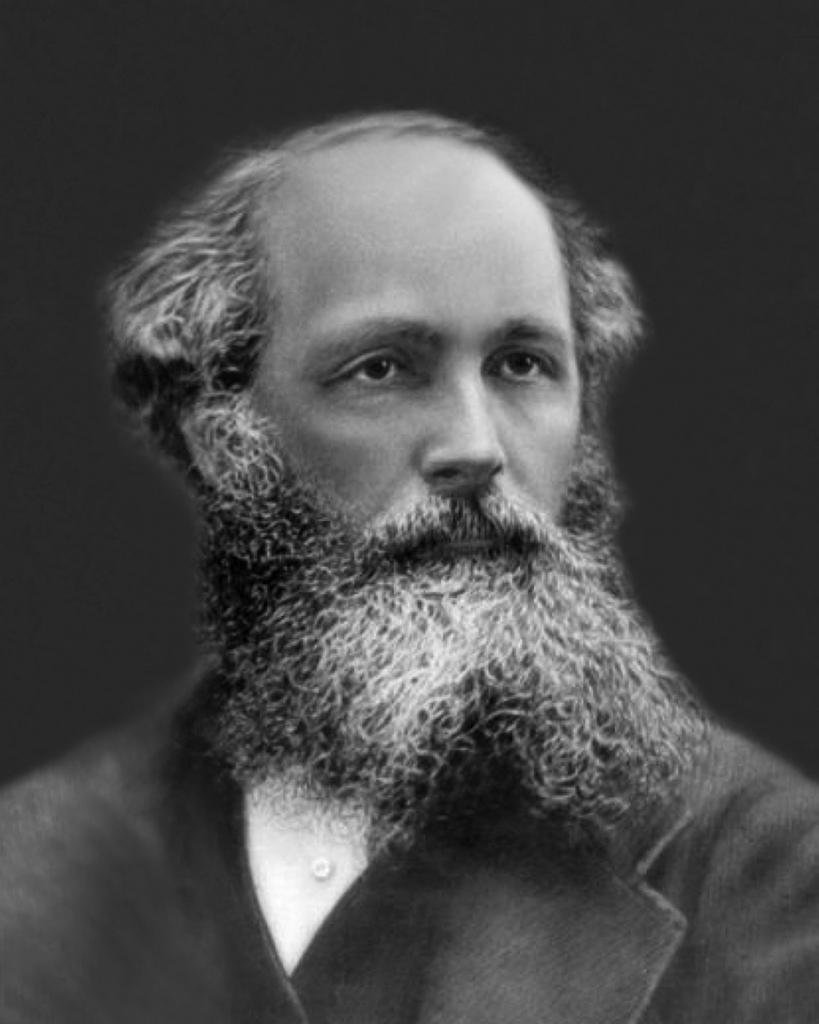 Wikimedia Commons
James Clerk Maxwell: Biography of the Physicist Who Unified Electricity and Magnetism
Biography
1. Introduction
James Clerk Maxwell was a Scottish physicist and mathematician whose discoveries transformed the understanding of electricity, magnetism, light, and heat. Born on 13 June 1831, he developed the mathematical theory of electromagnetism, demonstrating that electricity and magnetism are interconnected aspects of a single physical phenomenon.
His work became a foundation for many later scientific developments, including radio communication, electrical engineering, optics, and modern physics. Maxwell is frequently regarded as one of the greatest theoretical physicists of all time.
2. Early Life and Family Background
James Clerk Maxwell was born in Edinburgh, Scotland, to John Clerk Maxwell and Frances Cay. His family had an estate called Glenlair in Kirkcudbrightshire, where he spent much of his childhood.
Maxwell showed an unusual curiosity about nature from an early age. He enjoyed asking questions about how objects worked and exploring mathematical and scientific ideas.
His mother died when he was young, and his father took an active role in his education. Maxwell initially received private instruction before attending formal schools.
3. Education
Maxwell attended the Edinburgh Academy, where he demonstrated exceptional ability in mathematics and geometry.
In 1847, he entered the University of Edinburgh. There, he studied mathematics and physics and began conducting experiments on subjects such as colour and polarization.
In 1850, Maxwell moved to the University of Cambridge. He studied at Peterhouse before transferring to Trinity College, where he distinguished himself in mathematics.
He graduated in 1854 as a high-ranking mathematics student and continued his academic research.
4. Academic Career
After graduating from Cambridge, Maxwell became a professor of natural philosophy at Marischal College in Aberdeen in 1856.
During this period, he conducted important research on the rings of Saturn. His mathematical analysis helped explain why the rings could not be solid or entirely liquid, proposing instead that they consisted of numerous separate particles.
In 1860, Maxwell became a professor at King's College London. This was one of the most productive periods of his scientific career.
He later retired from regular university teaching and worked at his family estate, Glenlair, while continuing his scientific research.
In 1871, Maxwell became the first Cavendish Professor of Physics at the University of Cambridge. He helped organize the university's Cavendish Laboratory, which became an important centre for experimental physics.
5. Major Scientific Contributions
Electromagnetic Theory
Maxwell's most celebrated achievement was the development of a mathematical theory connecting electricity and magnetism.
Building on earlier discoveries by scientists such as Michael Faraday, he formulated a set of equations describing how electric and magnetic fields interact.
These equations, now known as Maxwell's equations, showed that changing electric and magnetic fields can travel through space as electromagnetic waves.
Electromagnetic Waves and Light
Maxwell demonstrated theoretically that electromagnetic waves travel at the speed of light in a vacuum. This led him to conclude that light itself is an electromagnetic wave.
His discovery unified the study of optics, electricity, and magnetism and became one of the major achievements of nineteenth-century physics.
Kinetic Theory of Gases
Maxwell also made important contributions to the kinetic theory of gases. He investigated how the motion and distribution of gas molecules relate to temperature and other physical properties.
His work introduced the Maxwell distribution, a mathematical description of the distribution of molecular speeds in a gas at thermal equilibrium.
Statistical Mechanics
Maxwell helped establish the statistical approach to understanding large collections of particles. Rather than tracking every molecule individually, this approach uses probability and statistical methods to describe the behaviour of a system.
His research influenced the later development of statistical mechanics.
Colour Photography
Maxwell conducted pioneering experiments on colour vision and colour photography. In 1861, he demonstrated a colour photograph using three separate images taken through red, green, and blue filters.
This experiment helped establish the principles behind additive colour reproduction.
6. Major Publications and Scientific Works
Maxwell produced several influential scientific publications, including:
- A Treatise on Electricity and Magnetism (1873)
- Theory of Heat (1871)
- On Physical Lines of Force (1861–1862)
- Matter and Motion (1876)
His book A Treatise on Electricity and Magnetism presented his electromagnetic theory in a systematic mathematical form and became a landmark in physics.
7. Personal Life
Maxwell married Katherine Mary Dewar in 1858. She supported his work and shared his interest in scientific experiments.
The couple did not have children. Maxwell was known for his intellectual curiosity, sense of humour, religious faith, and interest in literature and poetry.
He maintained close relationships with family members and colleagues throughout his life.
8. Awards and Recognition
During his lifetime, Maxwell received recognition for his scientific achievements. He was elected a Fellow of the Royal Society in 1861.
His work on the electromagnetic theory of light and the kinetic theory of gases earned him lasting recognition among scientists.
Although many of the technological applications of his discoveries emerged after his death, his scientific influence continued to grow.
9. Death
James Clerk Maxwell died on 5 November 1879 in Cambridge, England, at the age of 48. He died from abdominal cancer.
His death ended a relatively short but extraordinarily productive scientific career.
10. Influence on Modern Science
Maxwell's electromagnetic theory became essential to the development of modern electrical and communication technologies.
His equations influenced later scientists, including Albert Einstein, whose work on relativity was deeply connected to the implications of Maxwell's theory.
Maxwell's statistical work also helped shape the foundations of modern thermodynamics and statistical physics.
His contributions continue to be studied in physics, mathematics, engineering, and related scientific disciplines.
11. Legacy
James Clerk Maxwell is remembered as a scientist who changed humanity's understanding of the physical world.
His unification of electricity, magnetism, and light ranks among the most significant achievements in the history of science. The equations bearing his name remain fundamental to electromagnetism and are used in countless scientific and engineering applications.
Maxwell's combination of mathematical insight, experimental curiosity, and theoretical imagination established a lasting standard for scientific research.
12. Conclusion
James Clerk Maxwell was a pioneering Scottish physicist whose discoveries reshaped modern science. His electromagnetic theory, research on gases, and contributions to colour photography established foundations that influenced generations of scientists and engineers.
Although he died at a relatively young age, his ideas continue to play a central role in understanding the universe and developing modern technology.
Did you know?
- James Clerk Maxwell demonstrated an early form of colour photography in 1861 using red, green, and blue filters. - He showed mathematically that light is an electromagnetic wave. - His equations unified electricity and magnetism into one theoretical framework. - Maxwell developed a mathematical distribution describing the speeds of gas molecules. - He conducted influential research on the structure and stability of Saturn's rings. - The Cavendish Laboratory at Cambridge was established under his leadership as its first professor. - Albert Einstein regarded Maxwell's work as one of the major influences on modern physics.