Scientist · Austria
Konrad Lorenz
Konrad Lorenz (November 7, 1903 – February 27, 1989) was an Austrian zoologist, ethologist, and Nobel Prize-winning scientist widely recognized as one of the founders of modern animal behavior research. He studied instinctive behavior, animal communication, and imprinting, particularly through his observations of geese and other birds. In 1973, he shared the Nobel Prize in Physiology or Medicine with Karl von Frisch and Nikolaas Tinbergen for their discoveries concerning individual and social behavior patterns. His scientific legacy is also complicated by his documented involvement with the Nazi Party and his earlier support for eugenic ideas.
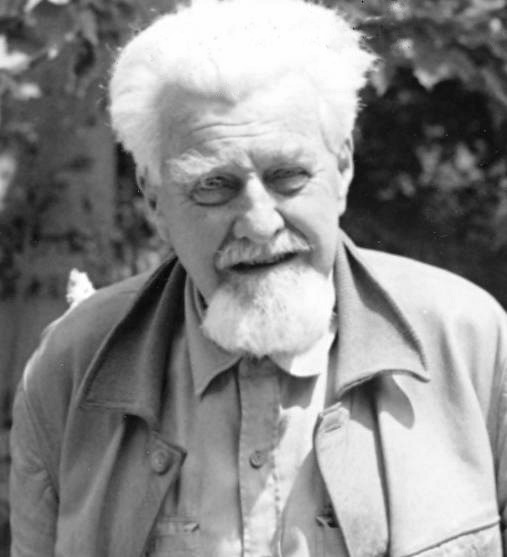 Wikimedia Commons
Konrad Lorenz: Full Biography
Biography
1. Introduction
Konrad Zacharias Lorenz (November 7, 1903 – February 27, 1989) was an Austrian zoologist and ethologist whose research helped establish the scientific study of animal behavior. He is particularly remembered for his work on instinctive behavior, imprinting, and the biological foundations of social behavior.
Lorenz became internationally famous for observing geese, ducks, jackdaws, and other animals. His research helped scientists understand how animals develop attachments, recognize members of their species, and respond to environmental signals.
In 1973, he shared the Nobel Prize in Physiology or Medicine with Karl von Frisch and Nikolaas Tinbergen. However, his historical reputation is also shaped by his involvement with National Socialism and his support for eugenic ideas during the Nazi era.
2. Early Life and Family Background
Konrad Lorenz was born on November 7, 1903, in Vienna, Austria. He was the youngest son of Adolf Lorenz, a well-known orthopedic surgeon and professor, and Emma Lecher Lorenz.
He grew up in Altenberg, near Vienna, in a family environment that encouraged intellectual curiosity. His father was an established medical professional, and his family's home provided space for Lorenz to observe and keep animals.
From childhood, Lorenz showed a strong interest in nature and living creatures. He kept birds, fish, and other animals and became fascinated by their behavior.
His early experiences observing animals played an important role in shaping his future scientific interests.
3. Education
Lorenz attended the Schottengymnasium in Vienna. Although he was deeply interested in zoology, his father encouraged him to study medicine.
He began medical studies at Columbia University in New York in 1922 and later continued his education at the University of Vienna.
He received his medical degree in 1928. However, his interest in animal behavior remained strong, and he continued studying zoology alongside his medical training.
In 1933, he earned a doctorate in zoology from the University of Vienna. His academic work combined observations of living animals with comparative studies of behavior and evolution.
4. Beginning of His Scientific Career
During the 1930s, Lorenz began conducting systematic research into animal behavior.
He observed birds and other animals in natural and controlled environments, focusing on instinctive actions, courtship, communication, and social relationships.
His work challenged the idea that animal behavior could be explained entirely through learning and experience. He argued that inherited behavioral patterns also played an important role.
Lorenz became one of the leading figures in the development of ethology, the biological study of animal behavior.
5. Research on Imprinting
One of Lorenz's most famous scientific contributions was his research on imprinting.
Imprinting is a form of early learning in which young animals develop a lasting attachment to a particular moving object or individual during a sensitive period of development.
Lorenz became especially well known for his observations of newly hatched greylag geese. He demonstrated that young birds could form an attachment to him when he became the first suitable moving figure they encountered.
The young geese followed him as if he were their parent.
His research helped scientists understand how early experiences influence animal development and social behavior.
6. Studies of Animal Instincts and Social Behavior
Lorenz investigated instinctive behavior and the ways animals respond to particular environmental signals.
He studied how inherited behavioral patterns develop, how animals communicate, and how social relationships form within different species.
His research also examined territorial behavior, aggression, courtship, and group organization.
Together with other researchers, Lorenz helped establish a scientific framework for studying animal behavior through observation, comparison, and evolutionary explanation.
7. Academic Career
Lorenz held several important academic positions during his career.
In 1937, he received his university teaching qualification in zoology at the University of Vienna.
In 1940, he became a professor at the University of Königsberg in Germany, where he continued his research into animal behavior.
After World War II and his return from captivity, he resumed his scientific career. He later became associated with the Max Planck Institute for Behavioral Physiology in Germany, where he served as a director.
In 1973, he returned to Austria and became involved with the Austrian Academy of Sciences, continuing his research and academic activities.
8. World War II and Nazi Party Involvement
An important and controversial part of Lorenz's biography concerns his involvement with National Socialism.
In 1938, following Germany's annexation of Austria, Lorenz joined the Nazi Party. He also became associated with the party's Office of Racial Policy.
During this period, some of his scientific publications incorporated eugenic ideas and language associated with Nazi racial ideology.
In 1941, he was drafted into the German military and worked as a military psychiatrist and neurologist. During the war, he participated in studies involving people classified by Nazi authorities as having mixed German and Polish ancestry.
In 1944, he was captured by Soviet forces and became a prisoner of war. He was released in 1948.
His Nazi Party membership and support for eugenic policies remain important subjects in historical assessments of his life. Although his later scientific contributions were internationally recognized, his political involvement is an essential part of an accurate account of his legacy.
9. Return to Scientific Research
After returning from captivity in 1948, Lorenz resumed his scientific work in Austria.
He established a research station for comparative behavioral studies at Altenberg, where he continued investigating animal behavior.
In 1950, he became associated with the Max Planck Society and its research activities. He later worked at the Max Planck Institute for Behavioral Physiology in Germany.
His research during the postwar years helped strengthen ethology as an established scientific discipline.
10. Nobel Prize in Physiology or Medicine
In 1973, Konrad Lorenz received the Nobel Prize in Physiology or Medicine jointly with Karl von Frisch and Nikolaas Tinbergen.
The three scientists were honored for their discoveries concerning the organization and elicitation of individual and social behavior patterns.
Their research provided important insights into how animals communicate, learn, recognize one another, and respond to their environments.
The award brought international recognition to ethology and confirmed the importance of studying animal behavior through biological and evolutionary approaches.
11. Books and Publications
Lorenz was also a successful science writer. He wrote books that introduced complex scientific observations to general readers.
Some of his best-known publications include:
- King Solomon's Ring (1952): A collection of observations and stories about animal behavior and communication.
- Man Meets Dog (1950): An exploration of the relationship between humans and dogs.
- On Aggression (1963): A study of aggression and its biological and social dimensions.
- Studies in Animal and Human Behaviour: A collection of writings examining behavior across species.
- The Foundations of Ethology (1981): A major work presenting the scientific foundations of his field.
His writing helped make animal behavior research accessible to a broad international audience.
12. Environmental Activism
During his later years, Lorenz became increasingly concerned about environmental destruction and the effects of industrial development.
He criticized pollution, excessive urbanization, and the destruction of natural habitats.
In 1978, he became involved in public opposition to the planned Zwentendorf nuclear power station in Austria.
He also supported efforts to protect the Hainburg wetlands and helped draw attention to the importance of conserving natural ecosystems.
His environmental activities made him a prominent public figure in Austria's emerging environmental movement.
13. Personal Life
Lorenz married Margarethe Gebhardt in 1927. She shared his interest in animals and supported aspects of his scientific work.
The couple had three children.
Lorenz spent much of his personal and professional life observing animals. His home and research environments often included birds and other creatures that became subjects of his studies.
He was particularly fascinated by greylag geese and maintained a lifelong interest in understanding animal behavior.
14. Death
Konrad Lorenz died on February 27, 1989, in Vienna, Austria, at the age of 85.
His death marked the end of a long scientific career that had helped shape modern behavioral biology.
He was remembered internationally for his work on imprinting, instinctive behavior, and animal social relationships.
15. Scientific Legacy and Historical Assessment
Lorenz remains an important figure in the history of ethology and behavioral science.
His research on imprinting and instinctive behavior influenced zoology, psychology, evolutionary biology, and the study of animal development.
His work also helped establish animal observation as an important method for understanding biological behavior.
At the same time, his involvement with the Nazi Party and his support for eugenic ideas have led to critical reassessments of his life. Modern historical scholarship treats these activities as significant aspects of his biography rather than separating them from his scientific career.
His legacy therefore includes both influential scientific contributions and a deeply troubling political history.
16. Conclusion
Konrad Lorenz was an Austrian zoologist whose research transformed the scientific understanding of animal behavior. His studies of imprinting, instinct, and social patterns helped establish ethology as a major field of biological research.
His Nobel Prize in 1973 recognized his contributions to science, while his books introduced animal behavior research to millions of readers.
A complete understanding of Lorenz requires recognizing both his scientific achievements and his documented involvement with Nazi ideology. His life remains an important subject in the history of biology, science, and twentieth-century Europe.
Did you know?
**Did You Know?** - Konrad Lorenz shared the 1973 Nobel Prize in Physiology or Medicine with Karl von Frisch and Nikolaas Tinbergen. - He became famous for studying greylag geese and their behavior. - His research helped explain imprinting, a form of early learning in young animals. - His book *King Solomon's Ring* introduced animal behavior research to a wide general audience. - He was one of the founders of modern ethology. - He joined the Nazi Party in 1938, and his support for eugenic ideas remains a significant part of his historical legacy. - In his later years, he became involved in environmental protection campaigns in Austria.