Engineer · Scotland
James Watt
James Watt was a Scottish inventor, mechanical engineer, and instrument maker best known for developing major improvements to the steam engine. Born on January 19, 1736, in Greenock, Scotland, he played a central role in the Industrial Revolution by making steam power more efficient and practical for industrial use. His separate condenser innovation significantly reduced fuel consumption and helped transform factories, mines, and transportation. Watt also worked with businessman Matthew Boulton to establish Boulton & Watt, a company that manufactured and supplied improved steam engines. His contributions influenced modern engineering and industrial development. The unit of power, the watt, was named in his honor. He died on August 25, 1819, in Handsworth, England.
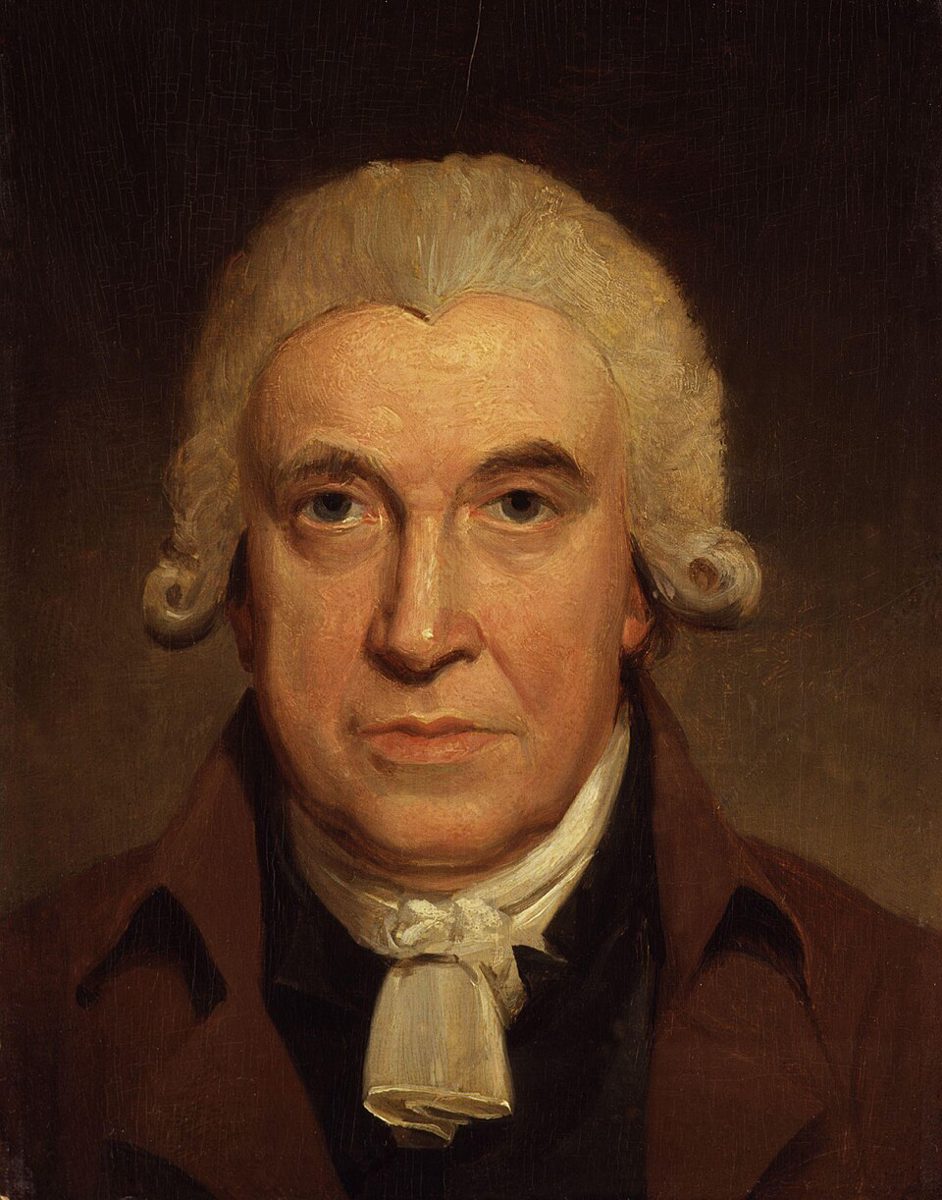 Wikimedia Commons
James Watt: Full Biography
Biography
1. Introduction
James Watt was a Scottish inventor, mechanical engineer, and instrument maker whose improvements to the steam engine helped accelerate the Industrial Revolution. Although he did not invent the first steam engine, his engineering innovations made steam power considerably more efficient and useful for industrial applications.
His most important contribution was the development of a separate condenser, which reduced the amount of heat lost during the engine's operation. This improvement helped make steam engines more economical and encouraged their use in factories, mines, and other industries.
Watt's partnership with businessman Matthew Boulton helped turn his inventions into commercially successful technology. His work influenced mechanical engineering, industrial production, and the development of modern power systems.
2. Early Life and Family Background
James Watt was born on January 19, 1736, in Greenock, a coastal town in Renfrewshire, Scotland. His father, James Watt Sr., was a merchant, shipwright, and local civic figure. His mother, Agnes Muirhead, came from a respected Scottish family.
As a child, Watt experienced periods of poor health and did not always attend school regularly. Much of his early education came from his parents and private instruction.
His father introduced him to tools, construction, and mechanical work. Watt became interested in mathematics, scientific instruments, and the operation of machines.
His early curiosity about mechanical devices eventually developed into a lifelong interest in improving machinery and understanding how energy could be used more efficiently.
3. Education and Technical Training
Watt attended school in Greenock, where he studied subjects including mathematics and languages. His interest in practical science and mechanical instruments grew during his teenage years.
At approximately 18, he traveled to Glasgow to learn instrument-making. He later went to London in 1755 to receive more advanced training from a mathematical instrument maker.
Watt spent about a year developing his technical skills before returning to Scotland. In 1757, he established himself as a maker and repairer of scientific instruments at the University of Glasgow.
His work brought him into contact with university scientists and scholars. These relationships exposed him to contemporary scientific ideas and provided opportunities to experiment with mechanical devices.
4. Early Career as an Instrument Maker
Watt initially worked as a maker and repairer of scientific instruments, including equipment used in mathematics, surveying, and laboratory research.
At the University of Glasgow, he became familiar with scientific instruments and the practical challenges faced by researchers. His work required accuracy, careful observation, and an understanding of mechanical principles.
He also developed friendships with members of the university's scientific community, including chemist Joseph Black, whose research on heat influenced Watt's understanding of energy and thermal processes.
These experiences provided the technical foundation for his later work on steam engines.
5. The Steam Engine and Watt's Interest
During the eighteenth century, steam engines were already being used to pump water from mines and support industrial operations. One widely used design was the Newcomen atmospheric engine.
Although useful, Newcomen engines consumed large quantities of fuel. Their design required the engine cylinder to be repeatedly heated and cooled during operation, resulting in substantial energy loss.
In 1763, Watt was asked to repair a model of a Newcomen engine used for teaching at the University of Glasgow. While examining it, he became interested in why the machine consumed so much steam and fuel.
His investigation led him to recognize that repeatedly cooling and reheating the cylinder wasted considerable energy. This observation became the starting point for his most important invention.
6. The Separate Condenser Invention
In 1765, Watt developed the idea of using a separate condenser for the steam engine.
Instead of cooling the main cylinder to condense steam, his design allowed steam to move into a separate chamber where it could be condensed. This kept the working cylinder hot and reduced energy loss.
The improvement made the steam engine more efficient and reduced its fuel consumption.
Watt received a patent for his separate condenser design in 1769. However, developing a practical engine required considerable financial support, engineering work, and manufacturing expertise.
His invention became one of the most important technological developments of the Industrial Revolution.
7. Partnership with Matthew Boulton
Watt faced financial difficulties while trying to develop and commercialize his steam engine. His early business arrangements did not provide enough resources to manufacture the technology on a large scale.
In 1774, he entered into a partnership with English industrialist Matthew Boulton. Boulton operated the Soho Manufactory near Birmingham and had the financial resources and manufacturing facilities needed to support Watt's work.
Their partnership became known as Boulton & Watt. It helped develop, manufacture, install, and maintain improved steam engines for industrial customers.
The partnership combined Watt's engineering knowledge with Boulton's business experience and manufacturing capabilities.
Together, they helped establish steam power as a practical and commercially valuable source of energy.
8. Improvements to Steam Engine Technology
Watt continued improving his steam engine after developing the separate condenser.
Among his important innovations were:
- Double-acting engine: Designed to use steam pressure alternately on both sides of the piston, improving power output.
- Sun-and-planet gear: A mechanism that converted reciprocating motion into rotary motion.
- Centrifugal governor: A device used to regulate engine speed automatically.
- Steam indicator: An instrument that helped measure pressure changes inside the engine cylinder.
- Improved engine design: Refinements that increased efficiency and made engines more useful for industrial applications.
These innovations helped expand the use of steam engines beyond mine drainage. Factories and manufacturing facilities could use them to power machinery and support more consistent industrial production.
9. Role in the Industrial Revolution
Watt's improved steam engines contributed significantly to the Industrial Revolution, a period of major economic and technological change that began in Britain during the eighteenth century.
Before the widespread adoption of efficient steam engines, many factories depended heavily on water power, animal power, and manual labor.
Improved steam engines provided a more flexible source of mechanical energy. They could operate machinery in locations that were not necessarily close to rivers or streams.
This development helped support industrial expansion in textiles, mining, metalworking, and manufacturing.
Watt's work was not the only factor behind industrialization, but his innovations made steam power more practical and economically attractive.
10. Business Success and Later Career
Boulton & Watt became one of the most influential engineering businesses of its time. The company supplied engines to mines, factories, and other industrial customers.
Watt and Boulton developed a business model that included charging customers partly according to the fuel savings achieved by their improved engines compared with older designs.
Watt also continued working on engineering improvements and developing new ideas. He was interested in mechanical movement, measurement, and the broader applications of scientific knowledge.
He retired from active business involvement during the early nineteenth century, although he continued to pursue intellectual interests and technical projects.
11. Personal Life and Family
Watt married his cousin Margaret Miller in 1764. They had several children, although not all survived into adulthood. Margaret died in 1773 following the birth of their sixth child.
In 1776, Watt married Ann MacGregor. They had two children together, Gregory and Janet.
His family life was shaped by the demands of engineering work and business responsibilities. Despite his professional commitments, Watt maintained interests in literature, science, and intellectual discussion.
He was also known for his friendships with scientists, engineers, and influential figures of the Scottish Enlightenment.
12. Scientific Recognition and Achievements
Watt's contributions received recognition during his lifetime. He became a Fellow of the Royal Society of Edinburgh in 1784 and was elected a Fellow of the Royal Society of London in 1785.
He also received honorary recognition from academic institutions, including the University of Glasgow.
His major achievements included:
- Developing the separate condenser for steam engines.
- Improving the efficiency of steam-powered machinery.
- Helping commercialize practical industrial steam engines.
- Developing the double-acting steam engine.
- Contributing to mechanisms for converting reciprocating motion into rotary motion.
- Working with Matthew Boulton to expand the use of steam power.
His inventions became important foundations for later developments in mechanical engineering and industrial technology.
13. Final Years and Death
During his later years, Watt spent more time at his home in Heathfield, near Birmingham. He continued reading, experimenting, and pursuing intellectual interests even after retiring from regular business activities.
He remained interested in scientific developments and mechanical invention. His later projects included experiments with machines and other engineering ideas.
James Watt died on August 25, 1819, at Heathfield Hall in Handsworth, near Birmingham, England. He was 83 years old.
His death was widely recognized as the loss of one of the most influential engineers of the Industrial Revolution.
14. Legacy and the Unit of Power
James Watt's influence on engineering and industry extended far beyond his lifetime.
His steam engine improvements helped make industrial power more efficient and practical. The technology supported the growth of factories, mining operations, and manufacturing systems during a period of rapid economic change.
In 1882, the British Association for the Advancement of Science adopted the watt as a unit of power in his honor. The unit later became part of the International System of Units.
One watt represents one joule of energy transferred or converted per second. The name remains widely used in electricity, engineering, physics, and everyday technology.
Watt is also remembered through monuments, educational institutions, and historical collections that preserve his contributions to science and industry.
15. Conclusion
James Watt was one of the most influential engineers of the Industrial Revolution. His development of the separate condenser and subsequent improvements to steam engines helped transform steam power into a more efficient and commercially useful technology.
Through his partnership with Matthew Boulton, his inventions reached factories and industrial operations across Britain and beyond. His work influenced manufacturing, mechanical engineering, and the wider development of industrial society.
Although he did not invent the steam engine itself, his improvements changed its capabilities and helped shape the modern industrial world. His name continues to live on through the watt, the internationally recognized unit of power.
Did you know?
## Did You Know About James Watt? - James Watt was born on January 19, 1736, in Greenock, Scotland. - He did not invent the first steam engine; he developed important improvements that made it more efficient. - His idea for the separate condenser came in 1765 after he examined a model of a Newcomen engine. - He received a patent for his separate condenser design in 1769. - He partnered with businessman Matthew Boulton in 1774 to develop and manufacture improved steam engines. - Watt's innovations helped expand steam power beyond mining into factories and manufacturing. - The term "horsepower" became associated with Watt's efforts to compare the output of steam engines with the power of working horses. - The unit of power called the watt was named in his honor. - The watt was adopted as a unit of power by the British Association for the Advancement of Science in 1882. - He was elected a Fellow of the Royal Society of London in 1785.