Scientist · United States
James Watson
**James Dewey Watson** (1928–2025) was an American molecular biologist, geneticist, and zoologist best known for co-discovering the double-helix structure of DNA with Francis Crick in 1953. Their discovery transformed modern biology and helped establish the foundations of molecular genetics. Watson shared the 1962 Nobel Prize in Physiology or Medicine with Crick and Maurice Wilkins for discoveries concerning the molecular structure of nucleic acids and its significance for information transfer in living material.
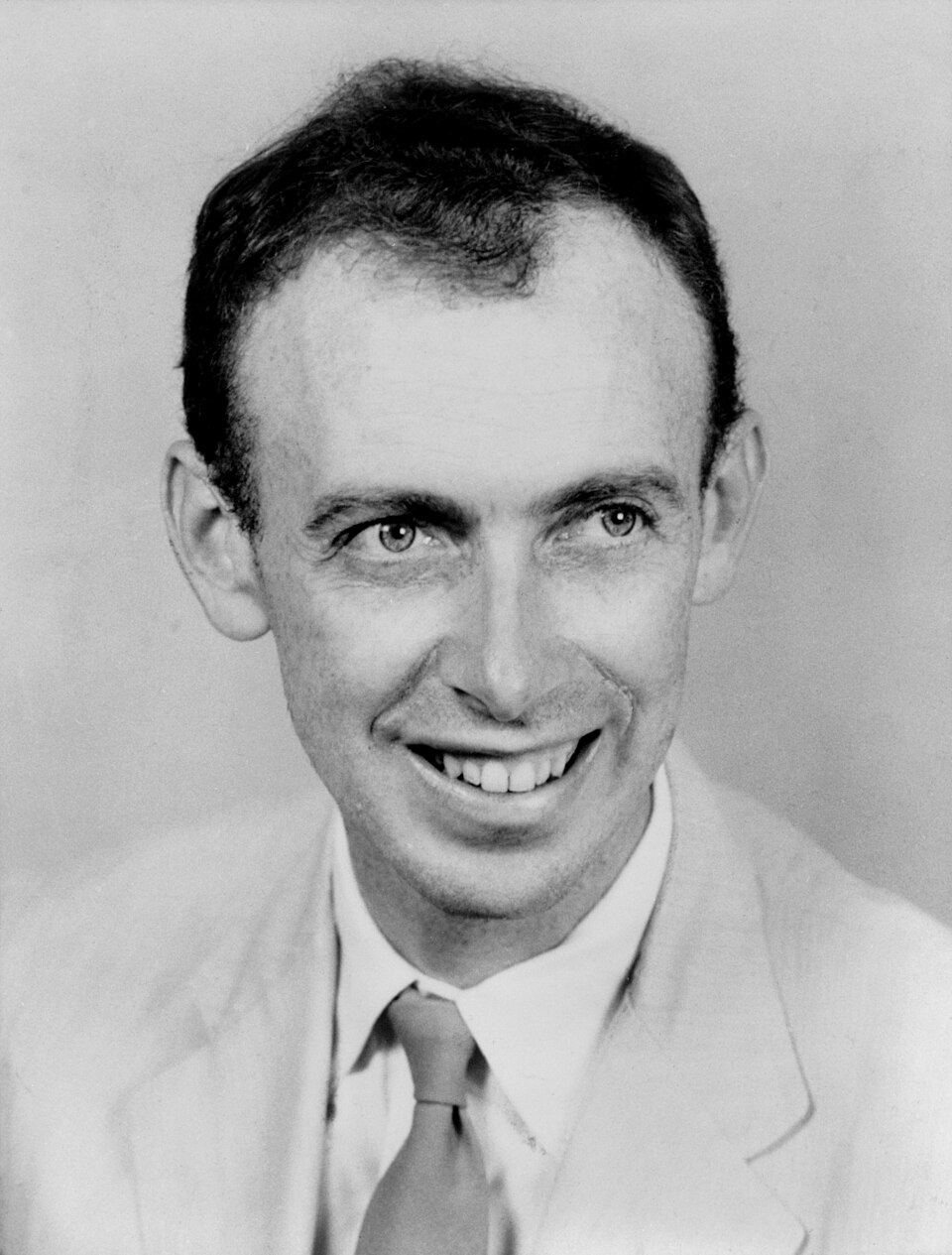 Wikimedia Commons
James Watson: Biography, DNA Discovery, and Scientific Legacy
Biography
1. Introduction
James Dewey Watson was an American molecular biologist, geneticist, and zoologist who became internationally recognized for co-discovering the double-helix structure of DNA with Francis Crick in 1953.
Their discovery transformed the study of genetics by explaining how hereditary information is stored and copied. Watson later became an influential scientific educator and research administrator, helping advance molecular biology and the Human Genome Project.
In 1962, Watson shared the Nobel Prize in Physiology or Medicine with Francis Crick and Maurice Wilkins. Despite his scientific achievements, his later career was also marked by controversy over discriminatory public statements and questions about the recognition given to other researchers involved in the DNA discovery.
2. Early Life and Family Background
James Dewey Watson was born on April 6, 1928, in Chicago, Illinois, United States.
His father, James D. Watson, was a businessman, and his mother was Jean Mitchell. Watson grew up in Chicago and developed an early interest in nature, particularly birdwatching.
His curiosity about living organisms gradually developed into an interest in biology and genetics. He was an academically gifted student and entered the University of Chicago at just 15 years old.
His early education helped establish the scientific interests that would eventually lead him toward molecular biology.
3. Education and Academic Training
Watson studied zoology at the University of Chicago and received his Bachelor of Science degree in 1947.
He continued his education at Indiana University in Bloomington, where he studied under microbiologist Salvador Luria. In 1950, he earned a PhD in zoology.
His doctoral research examined the effects of X-rays on the multiplication of bacteriophages, viruses that infect bacteria.
During his graduate studies, Watson became increasingly interested in genetics and the molecular basis of heredity. He wanted to understand how biological information was stored and passed from one generation to another.
4. Early Scientific Career
After earning his doctorate, Watson undertook postgraduate research in Copenhagen, Denmark.
In 1951, he joined the Cavendish Laboratory at the University of Cambridge in England. There, he met British physicist and molecular biologist Francis Crick.
The two scientists shared an interest in understanding the molecular structure of DNA. They began working together on possible models of the molecule, using available experimental findings and molecular modeling techniques.
Their collaboration became one of the most significant partnerships in the history of modern biology.
5. Discovery of the DNA Double Helix
Watson's most famous scientific achievement was his role in discovering the double-helix structure of DNA.
In 1953, Watson and Crick proposed that DNA consists of two strands twisted around each other, forming a structure resembling a spiral staircase.
Their model explained how genetic information could be stored and copied. The complementary pairing of chemical bases provided a mechanism through which DNA could replicate and transmit hereditary information.
Their work also drew on important experimental evidence produced by other researchers, particularly Rosalind Franklin and Raymond Gosling's X-ray diffraction studies, as well as research by Maurice Wilkins.
The discovery was published in the scientific journal Nature in 1953 and became a turning point in molecular biology.
6. Nobel Prize in Physiology or Medicine
In 1962, James Watson received the Nobel Prize in Physiology or Medicine alongside Francis Crick and Maurice Wilkins.
The award recognized their discoveries concerning the molecular structure of nucleic acids and its significance for information transfer in living material.
The Nobel Prize brought international recognition to the scientists' work and helped establish molecular biology as a central field of modern biological research.
Their discovery continues to influence genetics, biotechnology, medicine, and the study of inherited diseases.
7. Academic Career and Harvard University
After completing his research at Cambridge, Watson spent time at the California Institute of Technology before joining Harvard University in 1955.
He became a professor in 1961 and contributed to the development of molecular biology as an academic discipline.
At Harvard, he conducted research on RNA, protein synthesis, and the molecular processes involved in gene expression.
In 1965, he published Molecular Biology of the Gene, a textbook that became highly influential in science education. Its clear explanations and modern approach helped introduce generations of students to molecular biology.
8. Cold Spring Harbor Laboratory
In 1968, Watson became director of Cold Spring Harbor Laboratory in New York.
Under his leadership, the institution expanded its research and educational activities and became an internationally recognized center for molecular biology and genetics.
Watson later served as president and chancellor of the laboratory. His work helped strengthen research into cancer, genetics, and molecular biology.
He retired from his leadership roles over several decades, although his association with the institution continued for many years.
9. Involvement in the Human Genome Project
Watson also played an important role in the early development of the Human Genome Project, an international scientific effort to map and sequence human DNA.
From 1988 to 1992, he directed the National Institutes of Health's involvement in the project.
The initiative aimed to identify and map the genes that make up human DNA. It eventually became one of the most significant collaborative scientific projects in modern history.
Watson supported the use of genetic research to improve understanding of inherited conditions and advance medical science.
10. Books and Scientific Writing
Watson was also known for his writing and contributions to science education.
Some of his best-known books include:
- Molecular Biology of the Gene (1965): An influential textbook that helped shape molecular biology education.
- The Double Helix (1968): His personal account of the discovery of DNA's structure.
- The DNA Story (1981): A book introducing the scientific importance of DNA.
- Molecular Biology of the Cell (1983): A major textbook on cell biology.
- Avoid Boring People: Lessons from a Life in Science (2007): A memoir reflecting on his scientific career and experiences.
His book The Double Helix became widely read, although its portrayal of several scientists, particularly Rosalind Franklin, attracted criticism.
11. Personal Life and Family
James Watson married Elizabeth Lewis in 1968. They had two sons, Rufus and Duncan.
Watson maintained a strong interest in scientific research and education throughout much of his life. He also remained connected to the international scientific community through his writing, lectures, and institutional work.
His family life was largely kept separate from his public scientific career.
12. Controversies and Public Criticism
Although Watson made major contributions to science, his reputation was significantly affected by controversial public statements, particularly concerning race and intelligence.
In 2007, comments he made about differences in intelligence among racial groups attracted widespread criticism. He subsequently apologized, but further controversial remarks in later years renewed public condemnation.
In 2019, Cold Spring Harbor Laboratory removed his honorary titles following renewed controversy over his statements.
His account of the discovery of DNA also generated debate about scientific recognition, particularly the treatment and acknowledgment of Rosalind Franklin's contributions.
These controversies remain an important part of discussions about Watson's public legacy and the responsibilities of prominent scientists.
13. Awards and Recognition
Watson received numerous scientific honors during his career.
Some of his major recognitions included:
- Nobel Prize in Physiology or Medicine (1962).
- Albert Lasker Award for Basic Medical Research (1960).
- Presidential Medal of Freedom (1977).
- National Medal of Science (1997).
- Copley Medal (1993).
These honors recognized his scientific contributions, particularly his role in advancing molecular biology and genetics.
14. Death
James Dewey Watson died on November 6, 2025, at the age of 97.
He passed away in New York following a brief illness.
His death marked the end of the life of one of the most prominent and controversial figures in twentieth-century biology.
15. Scientific Legacy and Influence
Watson's contribution to understanding DNA helped transform modern science.
His major contributions include:
- Co-discovering the double-helix structure of DNA with Francis Crick.
- Helping explain how genetic information is stored and replicated.
- Advancing research and education in molecular biology.
- Writing influential textbooks on genetics and cell biology.
- Leading Cold Spring Harbor Laboratory for many years.
- Helping establish and direct the early Human Genome Project.
The discovery of DNA's structure helped create opportunities for advances in genetic testing, biotechnology, molecular medicine, and the study of inherited diseases.
However, a balanced assessment of Watson's legacy must also recognize the controversy surrounding his public statements and the historical recognition of other researchers' contributions.
16. Conclusion
James Watson was a major figure in the history of modern biology. His role in identifying the double-helix structure of DNA helped explain the molecular foundations of heredity and transformed scientific research.
His work influenced generations of scientists and contributed to the development of molecular genetics, biotechnology, and genomic research.
Although his scientific achievements remain historically significant, his later public controversies also form an important part of his legacy. His life illustrates both the lasting impact of scientific discovery and the importance of responsibility in public scientific leadership.
Did you know?
**Did You Know?** 1. James Watson was only 25 years old when he and Francis Crick proposed the double-helix structure of DNA in 1953. 2. He entered the University of Chicago at the age of 15. 3. Watson initially studied zoology and earned his PhD from Indiana University in 1950. 4. He shared the 1962 Nobel Prize in Physiology or Medicine with Francis Crick and Maurice Wilkins. 5. His 1968 book *The Double Helix* became a widely read account of the discovery of DNA's structure. 6. He directed Cold Spring Harbor Laboratory beginning in 1968. 7. He led the National Institutes of Health's involvement in the Human Genome Project from 1988 to 1992. 8. His scientific legacy is also debated because of controversial public statements and questions about the recognition of Rosalind Franklin's research.