Scientist · Kingdom of the Netherlands
Heike Kamerlingh Onnes
Heike Kamerlingh Onnes (September 21, 1853 – February 21, 1926) was a Dutch physicist best known for his pioneering research in low-temperature physics and the discovery of superconductivity. In 1908, he successfully liquefied helium, achieving extremely low temperatures that made new experiments possible. In 1911, he discovered that the electrical resistance of mercury suddenly disappeared when it was cooled to a temperature near absolute zero. This phenomenon became known as superconductivity. He received the 1913 Nobel Prize in Physics for his investigations into the properties of matter at low temperatures.
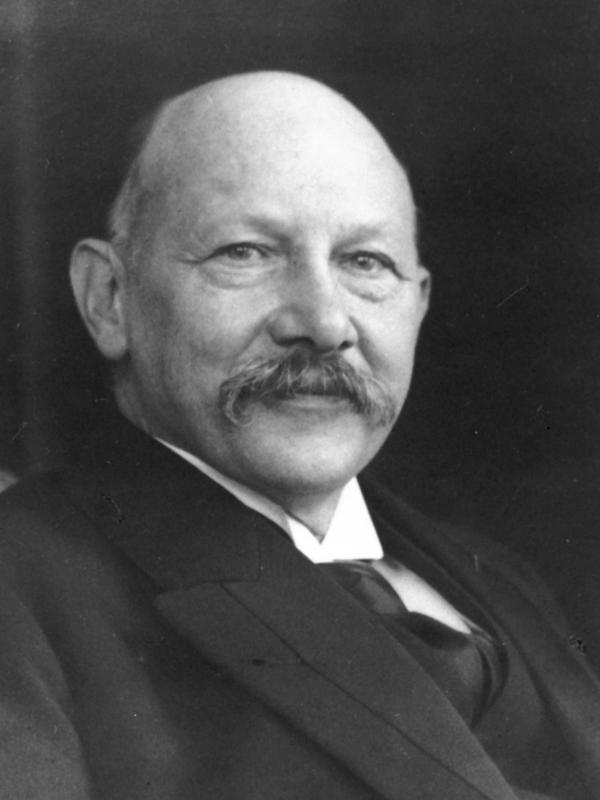 Wikimedia Commons
Heike Kamerlingh Onnes: Full Biography
Biography
1. Introduction
Heike Kamerlingh Onnes (September 21, 1853 – February 21, 1926) was a Dutch experimental physicist whose work transformed the study of matter at extremely low temperatures. He is particularly remembered for liquefying helium and discovering superconductivity, a phenomenon in which certain materials lose their electrical resistance when cooled below a critical temperature.
His experiments helped establish cryogenics as an important scientific field and opened new possibilities for investigating the physical properties of materials.
In 1913, he received the Nobel Prize in Physics for his investigations into the properties of matter at low temperatures, which led to the production of liquid helium.
2. Early Life and Family Background
Heike Kamerlingh Onnes was born on September 21, 1853, in Groningen, Netherlands.
His father, Harm Kamerlingh Onnes, owned a brickworks, while his mother, Anna Gerdina Coers, came from a family with an educational background.
Onnes grew up in a family that valued education and intellectual development. From an early age, he demonstrated an interest in mathematics and the natural sciences.
His curiosity about physical phenomena eventually led him toward a career in experimental physics.
3. Education
Onnes attended the University of Groningen, where he studied physics and mathematics.
In 1871, he received a university scholarship that allowed him to continue his studies at the University of Heidelberg in Germany.
At Heidelberg, he attended lectures and worked with influential physicists, including Robert Bunsen and Gustav Kirchhoff.
He returned to the University of Groningen and completed his doctoral research. In 1879, he earned his doctorate with a dissertation titled Nieuwe bewijzen voor de aswenteling der aarde (New Proofs of the Rotation of the Earth).
His academic training gave him a strong foundation in experimental measurement and the study of physical properties.
4. Early Academic Career
After completing his doctorate, Onnes worked as an assistant at the Polytechnic School in Delft.
He later became a professor of experimental physics at Leiden University in 1882.
At Leiden, he developed a research program focused on studying the behavior of matter under extremely low temperatures.
His work required precise instruments, carefully controlled experiments, and reliable temperature measurements.
5. The Leiden Cryogenic Laboratory
One of Onnes's most important achievements was establishing a laboratory dedicated to low-temperature research at Leiden University.
The laboratory became an internationally recognized center for cryogenic physics.
Onnes believed that reliable experimental results depended on accurate measurement and careful control of laboratory conditions. His approach was reflected in his famous motto:
"Through measurement to knowledge."
His laboratory attracted researchers from different countries and helped advance the scientific study of gases, liquids, and materials at very low temperatures.
6. Liquefaction of Helium
A major challenge in nineteenth-century physics was liquefying gases that remained gaseous even at extremely low temperatures.
Onnes and his research team worked for years to develop equipment capable of reaching these conditions.
In 1908, his laboratory successfully liquefied helium for the first time. This achievement required reaching a temperature of approximately 4.2 kelvin, only a few degrees above absolute zero.
The successful liquefaction of helium was a major breakthrough because it allowed scientists to investigate matter under conditions that had previously been inaccessible.
It also established Onnes as a leading figure in experimental low-temperature physics.
7. Discovery of Superconductivity
Onnes's most famous discovery occurred in 1911.
While studying the electrical resistance of mercury at very low temperatures, he observed that its resistance suddenly dropped to an extremely small value when the temperature fell below approximately 4.2 kelvin.
This unexpected behavior became known as superconductivity.
The discovery showed that electrical resistance did not always behave as scientists had previously expected. It opened a new area of research into the electrical properties of materials at low temperatures.
Superconductivity later became important in the development of technologies such as powerful electromagnets, medical imaging systems, and advanced scientific instruments.
8. Other Research Contributions
Onnes also investigated the properties of different substances at low temperatures.
His research covered:
- Electrical resistance of metals.
- Thermal properties of materials.
- Behavior of gases and liquids.
- Changes in matter near absolute zero.
- Experimental methods for measuring extremely low temperatures.
His laboratory's work helped other scientists explore the relationship between temperature, electrical conductivity, and the physical structure of materials.
9. Nobel Prize in Physics
In 1913, Heike Kamerlingh Onnes received the Nobel Prize in Physics.
The Nobel Committee recognized his investigations into the properties of matter at low temperatures, which led to the production of liquid helium.
The award acknowledged the importance of his experimental achievements and their influence on modern physics.
His work demonstrated how advances in laboratory techniques could reveal previously unknown properties of matter.
10. Scientific Philosophy and Research Methods
Onnes believed that scientific knowledge depended on precise measurement and careful experimentation.
His laboratory emphasized accuracy, reproducibility, and the development of reliable scientific instruments.
He also encouraged collaboration among researchers and helped establish a productive environment for experimental science.
His approach influenced later generations of physicists and contributed to the development of modern laboratory research.
11. Personal Life
Onnes married Maria Adriana Wilhelmina Elisabeth Bijleveld in 1887.
They had one son, Albert.
Although much of his life was devoted to scientific research, Onnes maintained family and social connections in the Netherlands.
His professional life was closely associated with Leiden University, where he spent decades developing his laboratory and research program.
12. Awards and Recognition
Onnes received several honors during his scientific career.
His most notable recognition included:
- Nobel Prize in Physics (1913): For his investigations into the properties of matter at low temperatures.
- Matteucci Medal (1910): In recognition of his contributions to physics.
- Rumford Medal (1912): Awarded by the Royal Society for his work in low-temperature physics.
- Franklin Medal (1915): Recognizing his scientific achievements.
His work earned him international respect as one of the leading experimental physicists of his time.
13. Later Years and Death
Onnes continued his research and academic activities at Leiden University during the later years of his life.
His work helped maintain Leiden's international reputation as a major center for low-temperature physics.
He died on February 21, 1926, in Leiden, Netherlands, at the age of 72.
His death was widely recognized as a significant
Did you know?
**Did You Know?** - Heike Kamerlingh Onnes successfully liquefied helium for the first time in 1908. - He discovered superconductivity in mercury in 1911. - His research laboratory at Leiden University became an internationally important center for low-temperature physics. - He received the Nobel Prize in Physics in 1913. - His scientific motto was "Through measurement to knowledge." - His work helped establish cryogenics as a major field of experimental physics.