Scientist · German Reich
Hans Bethe
Hans Bethe (July 2, 1906 – March 6, 2005) was a German-American theoretical physicist who made major contributions to nuclear physics, quantum mechanics, and astrophysics. He is best known for explaining how nuclear fusion in stars produces their energy. During World War II, he led the Theoretical Division at Los Alamos, where scientists developed the first atomic bomb. In 1967, he received the Nobel Prize in Physics for his work on the energy production of stars. He was also a prominent advocate for nuclear arms control and responsible scientific research.
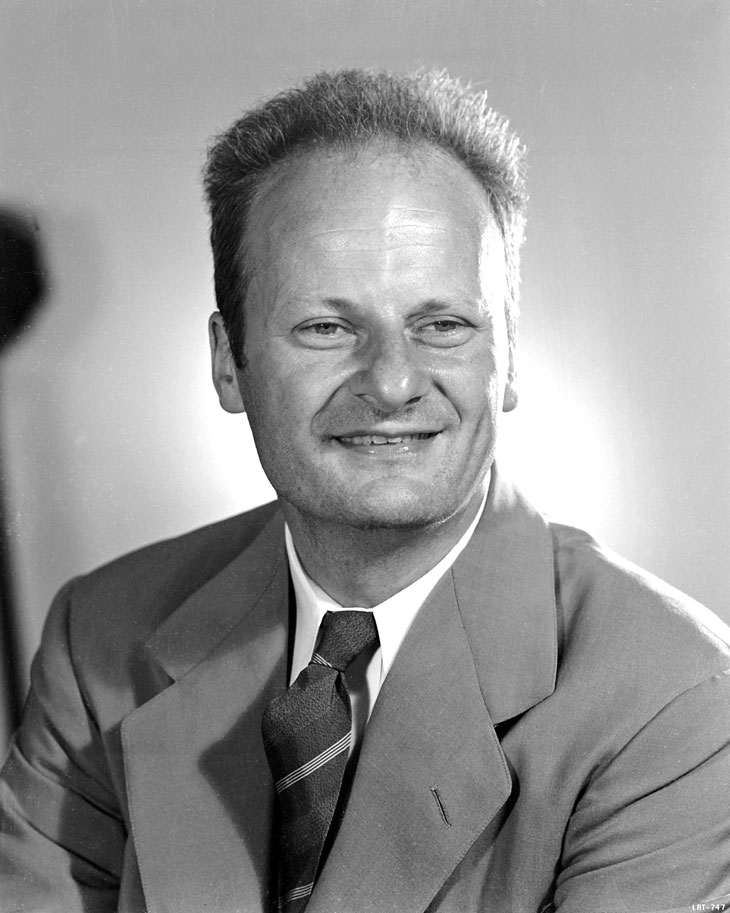 Wikimedia Commons
Hans Bethe: Full Biography
Biography
1. Introduction
Hans Albrecht Bethe (July 2, 1906 – March 6, 2005) was a German-American theoretical physicist whose research helped explain some of the fundamental processes of the universe. He made important contributions to nuclear physics, quantum mechanics, particle physics, and astrophysics.
Bethe is especially remembered for explaining how stars generate energy through nuclear fusion. His research provided a scientific foundation for understanding the processes that power the Sun and other stars.
During World War II, he played a major role in the Manhattan Project, serving as director of the Theoretical Division at Los Alamos. In 1967, he received the Nobel Prize in Physics for his contributions to the theory of nuclear reactions, particularly those involved in energy production in stars.
2. Early Life and Family Background
Hans Bethe was born on July 2, 1906, in Strasbourg, which was then part of the German Empire and is now located in France.
His father, Albrecht Bethe, was a professor of physiology, while his mother, Anna Kuhn, had an interest in music and culture.
Bethe grew up in an intellectually active family environment. His father's academic career exposed him to scientific ideas from an early age.
He attended school in Frankfurt and developed a strong interest in mathematics and physics. His academic ability eventually led him to pursue university studies in theoretical physics.
3. Education
Bethe studied physics at the University of Frankfurt before moving to the University of Munich.
At Munich, he worked under the influential theoretical physicist Arnold Sommerfeld, one of the leading figures in the development of modern quantum theory.
Bethe received his doctorate in physics in 1928. His doctoral research concerned electron diffraction, an important subject in the development of quantum mechanics.
After completing his doctorate, he continued his academic work in Europe and developed a reputation as a talented young theoretical physicist.
4. Early Scientific Career
During the late 1920s and early 1930s, Bethe worked at several European universities and research institutions.
He became involved in research on quantum mechanics, atomic structure, and the interaction between radiation and matter.
His early scientific work included calculations involving electron interactions and the behavior of particles in different physical systems.
In 1930, he received a Rockefeller fellowship that allowed him to spend time conducting research abroad.
By the early 1930s, Bethe had become an established young scientist with a growing international reputation.
5. Emigration from Germany
Bethe's academic career in Germany was disrupted by the rise of the Nazi regime.
Because of his Jewish ancestry, he faced discrimination under the racial policies introduced by the Nazi government. In 1933, he lost his academic position in Germany.
He moved to England, where he continued his scientific research at the University of Manchester.
In 1935, Bethe accepted a position at Cornell University in Ithaca, New York. He settled in the United States and later became an American citizen.
Cornell became his principal academic home for much of his career.
6. Contributions to Nuclear Physics
Bethe made important contributions to the theoretical understanding of atomic nuclei and nuclear reactions.
In 1938, he published influential work on nuclear reactions and the mechanisms through which atomic nuclei interact.
He also developed mathematical methods for calculating nuclear reaction rates and understanding the behavior of subatomic particles.
His research helped establish the theoretical foundations of modern nuclear physics.
Bethe's ability to combine mathematical analysis with physical insight made him one of the leading theoretical physicists of his generation.
7. Explaining the Energy Production of Stars
One of Bethe's greatest scientific achievements was explaining how stars produce energy.
In 1938 and 1939, he published research describing the nuclear reactions responsible for the energy generated inside stars.
He identified two important processes:
- The proton-proton chain: A sequence of nuclear fusion reactions that converts hydrogen into helium and provides much of the energy produced by stars like the Sun.
- The carbon-nitrogen-oxygen cycle: A series of reactions in which carbon, nitrogen, and oxygen help catalyze the conversion of hydrogen into helium in sufficiently hot stars.
These discoveries explained why stars can release enormous amounts of energy over billions of years.
Bethe's work became a foundation of modern stellar astrophysics and helped scientists understand the life cycles of stars.
8. World War II and the Manhattan Project
During World War II, Bethe became involved in research connected with the development of nuclear weapons.
In 1942, he joined the Manhattan Project, the American-led scientific and engineering program established to develop an atomic bomb before Nazi Germany could produce one.
He worked at the Los Alamos laboratory in New Mexico, where he was appointed director of the Theoretical Division.
His division was responsible for important theoretical calculations related to nuclear explosions, including the behavior of neutrons, nuclear reactions, and the physics of the bomb.
Bethe worked alongside several leading scientists, including J. Robert Oppenheimer, Richard Feynman, and other members of the Manhattan Project.
The first successful nuclear test, known as the Trinity test, took place on July 16, 1945, in New Mexico.
9. Postwar Scientific Career
After World War II, Bethe returned to Cornell University and continued his work in theoretical physics.
He became a leading figure in the study of quantum electrodynamics, the theory describing how light and charged particles interact.
One of his major achievements was his contribution to understanding the Lamb shift, a small difference in the energy levels of hydrogen atoms that could not be fully explained by earlier theories.
In 1947, Bethe published an influential calculation that helped establish the theoretical interpretation of this phenomenon.
His work contributed to the development of modern quantum electrodynamics and influenced later research in particle physics.
10. Nobel Prize in Physics
In 1967, Hans Bethe received the Nobel Prize in Physics.
The award recognized his contributions to the theory of nuclear reactions, especially his discoveries concerning energy production in stars.
His research had provided an explanation for how nuclear fusion powers stars and how elements are formed through nuclear processes.
The Nobel Prize recognized work that had become central to astrophysics and the understanding of stellar evolution.
11. Contributions to Science and Public Policy
Bethe was not only a leading scientist but also an influential voice in discussions about nuclear weapons and international security.
After the war, he became increasingly concerned about the dangers of nuclear arms competition.
He supported scientific cooperation, arms-control agreements, and efforts to reduce the risk of nuclear conflict.
Bethe participated in public discussions about nuclear testing, nuclear weapons development, and the responsibilities of scientists.
He also advised government officials on scientific and technological matters.
In later decades, he spoke against the development of certain weapons systems and encouraged the peaceful use of scientific knowledge.
12. Personal Life
Hans Bethe married Rose Ewald in 1939. She was the daughter of physicist Paul Peter Ewald.
The couple had two children, Henry and Monica.
Bethe maintained a close connection with Cornell University throughout his professional life. Outside his scientific work, he enjoyed reading, music, and spending time with his family.
He was known among colleagues for his analytical ability, intellectual curiosity, and willingness to discuss difficult scientific problems.
13. Awards and Recognition
Throughout his long career, Bethe received numerous honors for his scientific contributions.
Some notable recognitions include:
- Nobel Prize in Physics (1967): For his work on the theory of nuclear reactions, especially energy production in stars.
- Albert Einstein World Award of Science (1988): In recognition of his contributions to science.
- National Medal of Science (1989): One of the highest scientific honors in the United States.
- Enrico Fermi Award (1961): Recognizing his contributions to nuclear science.
- Max Planck Medal (1955): Awarded for outstanding achievements in theoretical physics.
These honors reflected his influence across several areas of modern physics.
14. Later Years and Death
Bethe remained scientifically active well into old age. Even after formally retiring from teaching, he continued writing, advising researchers, and participating in scientific discussions.
He also remained involved in public debates about nuclear weapons and international security.
Hans Bethe died on March 6, 2005, at his home in Ithaca, New York, at the age of 98.
His death was widely recognized as the loss of one of the twentieth century's most influential theoretical physicists.
15. Scientific Legacy
Hans Bethe's scientific contributions continue to influence modern physics and astrophysics.
His explanation of nuclear fusion in stars remains central to the study of stellar energy and evolution.
His research in nuclear physics and quantum electrodynamics also helped shape the development of modern theoretical physics.
Beyond his scientific achievements, Bethe became an example of a scientist who used his public standing to discuss the ethical and political consequences of scientific discoveries.
His legacy includes both his fundamental contributions to understanding the universe and his efforts to encourage responsible scientific and technological development.
16. Conclusion
Hans Bethe was one of the most influential physicists of the twentieth century. His research explained how stars generate energy, advanced the theory of nuclear reactions, and contributed to the development of quantum electrodynamics.
His leadership at Los Alamos during the Manhattan Project placed him at the center of one of the most consequential scientific programs in history.
Through his Nobel Prize-winning research, academic leadership, and advocacy for nuclear arms control, Bethe left a lasting mark on science and public life.
Did you know?
**Did You Know?** - Hans Bethe was born in Strasbourg in 1906, when the city was part of the German Empire. - He earned his doctorate under the supervision of physicist Arnold Sommerfeld. - His research explained two major processes involved in stellar energy production: the proton-proton chain and the carbon-nitrogen-oxygen cycle. - He directed the Theoretical Division at Los Alamos during the Manhattan Project. - He received the Nobel Prize in Physics in 1967. - He contributed to the theoretical explanation of the Lamb shift in hydrogen. - After World War II, he became an advocate for nuclear arms control and responsible scientific research.