Chef · France
Marie-Antoine Carême
Marie-Antoine Carême, also known as Antonin Carême, was a pioneering French chef, pastry artist, and cookbook author widely regarded as one of the founders of modern French haute cuisine. Born in Paris on June 8, 1783 or 1784, he became famous for elaborate pastry sculptures inspired by classical architecture and for serving influential European leaders. His culinary writings helped organize French cooking techniques and preserve professional knowledge. Carême worked for prominent figures, including Charles-Maurice de Talleyrand and the British Prince Regent. He died in Paris on January 12, 1833, leaving a lasting legacy in French gastronomy. <Cite refs={["turn777039search0","turn777039search3"]}/>
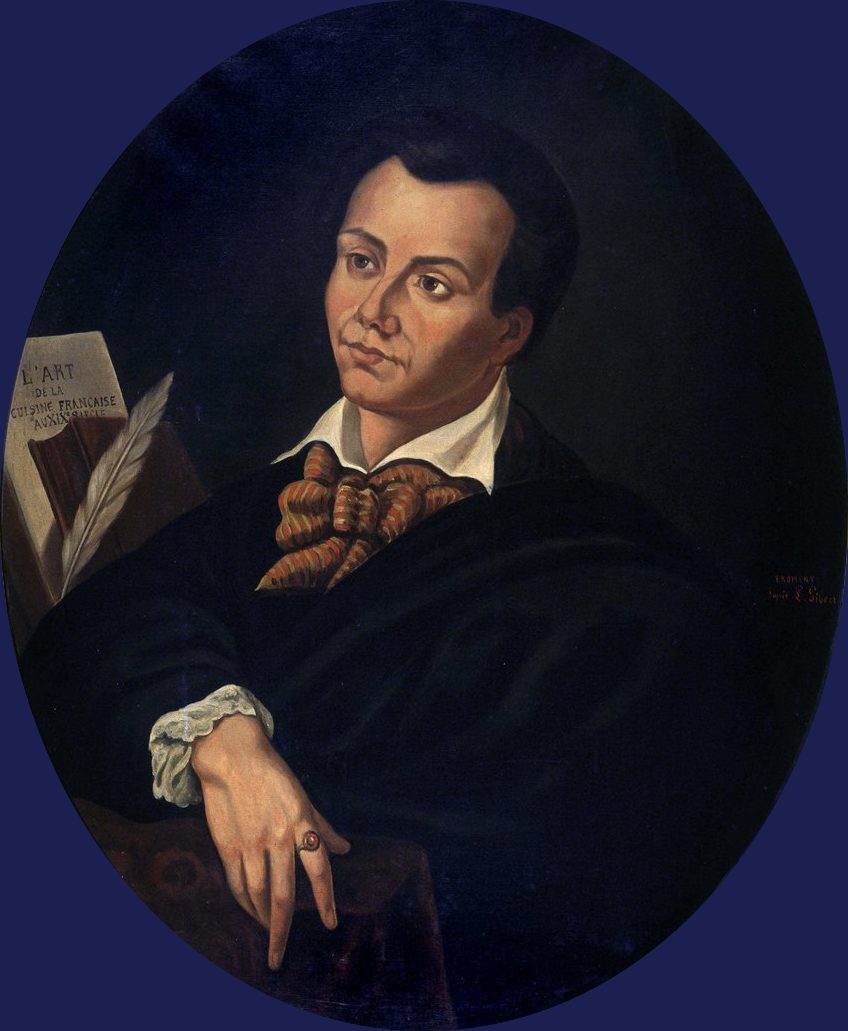 Wikimedia Commons
Marie-Antoine Carême Biography
Biography
1. Introduction
Marie-Antoine Carême was one of the most influential French chefs of the early nineteenth century. Known professionally as Antonin Carême, he helped shape the development of French haute cuisine through his elaborate pastry creations, refined cooking techniques, and influential culinary books.
Carême is often regarded as one of the first internationally celebrated celebrity chefs. His work combined culinary expertise with artistic creativity, particularly in the design of elaborate sugar and pastry sculptures.
He also helped organize French cooking into a more systematic professional discipline, influencing generations of chefs who followed him.
2. Early Life and Childhood
Carême was born in Paris, France, on June 8, 1783 or 1784. Historical sources differ about his exact birth year, although 1784 is commonly used.
He grew up in a poor family during the turbulent period surrounding the French Revolution. Reliable details about his childhood are limited, and some popular stories about his early abandonment have been questioned by historians.
As a boy, he entered the world of restaurant work, where he learned the basics of kitchen life. His early experiences exposed him to the demanding conditions faced by workers in professional food establishments.
Despite these difficulties, he developed the determination and practical skills that eventually helped him become one of Europe's most celebrated chefs.
3. Beginning His Culinary Career
Carême began working in a modest Parisian eating establishment as a young boy. He gradually gained experience in food preparation and learned the discipline required in a professional kitchen.
His talent eventually led him to an apprenticeship with Sylvain Bailly, a respected pastry chef whose shop was located near the Palais-Royal.
This apprenticeship introduced Carême to advanced pastry techniques and the artistic side of confectionery. He learned how to prepare intricate desserts, work with sugar, and create elaborate decorative structures.
His exceptional ability to combine technical precision with visual imagination quickly distinguished him from other young pastry cooks.
4. Apprenticeship Under Sylvain Bailly
Sylvain Bailly played a significant role in Carême's development. Under Bailly's guidance, he gained experience with sophisticated pastries and the standards expected by wealthy Parisian customers.
Carême also developed an interest in architecture and drawing. He studied illustrations of buildings and classical monuments, then used these designs as inspiration for his pastry creations.
His work demonstrated that pastry-making could be more than the preparation of desserts. It could also become a form of edible architecture, combining proportion, structure, decoration, and craftsmanship.
This distinctive approach helped establish his reputation in Paris.
5. His Rise as a Master Pastry Chef
During the early nineteenth century, Carême became famous for his extraordinary pastry displays. He produced elaborate centerpieces known as pièces montées, often shaped like temples, pyramids, fountains, and classical buildings.
These structures were made using ingredients such as sugar, pastry, and almond paste. They were designed to impress guests at formal dinners, celebrations, and diplomatic banquets.
His work attracted the attention of wealthy patrons and influential figures. His pastry shop became associated with creativity, luxury, and technical excellence.
Carême's achievements helped elevate the professional status of pastry chefs and demonstrated the importance of visual presentation in elite dining.
6. Working for Charles-Maurice de Talleyrand
One of the defining stages of Carême's career was his work for Charles-Maurice de Talleyrand-Périgord, a prominent French diplomat and statesman.
Carême worked in Talleyrand's household, where he expanded his skills beyond pastry-making and developed expertise in the organization of elaborate meals.
Talleyrand understood the diplomatic value of dining. Carefully planned meals could bring influential guests together and create an atmosphere for political discussion.
Carême prepared menus that emphasized seasonal ingredients, varied dishes, and sophisticated presentation. His work helped make formal dining an important part of Talleyrand's social and diplomatic activities.
This position transformed Carême into a more complete chef and strengthened his reputation among European elites.
7. Serving European Royalty
Carême's fame eventually spread across Europe. He worked for several powerful figures, including Britain's Prince Regent, who later became King George IV, and Tsar Alexander I of Russia.
His work for these patrons required him to organize grand meals and adapt his culinary skills to the expectations of royal households.
He also became associated with the courts and political elites of his time. These appointments demonstrated that a chef could achieve international recognition through skill, creativity, and professional discipline.
Carême's career helped establish the chef as an important figure in elite households and diplomatic society.
8. Contributions to French Haute Cuisine
Carême played a major role in the development of haute cuisine, the elaborate and refined style of French cooking associated with formal dining.
He emphasized high-quality ingredients, technical precision, carefully planned menus, and sophisticated presentation.
He also sought to document and organize culinary knowledge. At a time when much professional training depended on apprenticeship and observation, his books helped preserve techniques in written form.
His efforts made French cooking more systematic and contributed to the development of professional culinary standards.
9. Nouvelle Ideas in Pastry and Food Presentation
Carême's pastry work was among his most distinctive contributions to gastronomy.
His pièces montées demonstrated how pastry and confectionery could be transformed into impressive architectural displays. He carefully considered shape, balance, structure, and decoration.
He also contributed to the refinement and popularization of numerous pastry preparations and desserts.
His legacy is associated with preparations such as elaborate layered pastries, cream-based desserts, and decorative confectionery. However, the exact origins of some dishes later attributed to him remain debated.
His work helped establish the idea that food presentation could be both an artistic achievement and an essential part of fine dining.
10. Influence on French Sauces and Cooking Techniques
Carême worked to classify and systematize French culinary methods, including the preparation of sauces, stocks, soups, and complex dishes.
His writings helped chefs study techniques in a more organized way and understand how individual preparations fitted into a broader culinary tradition.
He is often associated with the historical development of French sauce classifications. The modern system of five mother sauces, however, was established later and is particularly associated with Auguste Escoffier's reforms.
Carême's lasting contribution was his effort to organize culinary knowledge and make professional cooking more structured and teachable.
11. Important Books and Publications
Carême was a prolific culinary author. His publications combined recipes, technical explanations, illustrations, menu planning, and reflections on professional cooking.
His notable works include:
- Le Pâtissier royal parisien (1815), a major work on pastry-making.
- Le Pâtissier pittoresque (1815), which explored pastry designs inspired by architecture.
- Le Maître d'hôtel français (1822), focusing on French dining and menu organization.
- Le Cuisinier parisien (1828), a work on French culinary practice.
- L'Art de la cuisine française au XIXe siècle, his ambitious multivolume work on French cuisine.
These books helped preserve culinary knowledge that might otherwise have been passed down only through kitchen apprenticeships.
His writings also contributed to his public reputation and helped spread his methods beyond the households where he worked.
12. Personal Life and Family
Historical information about Carême's private life is limited compared with the extensive record of his professional achievements.
He married Henriette Sophie Mahy de Chitenay in 1808. Accounts indicate that the couple later separated.
He also had a daughter, Marie-Agathe. His professional commitments and demanding work schedule occupied a substantial part of his life.
Carême remained focused on culinary development and writing, particularly during his later years, when he sought to record the knowledge accumulated throughout his career.
13. Final Professional Years
In 1823, Carême began working for the wealthy banker James Mayer Rothschild and his wife, Betty Rothschild.
The position allowed him to continue preparing sophisticated meals for influential guests while devoting time to his culinary publications.
During this period, he published Le Cuisinier parisien in 1828 and continued working on his larger project documenting French cuisine.
His health gradually declined, and he eventually retired from active professional work. Even as his health deteriorated, he remained committed to recording and preserving his culinary knowledge.
14. Death
Marie-Antoine Carême died in Paris on January 12, 1833. Depending on which birth year is accepted, he was approximately 48 or 49 years old.
He was buried in Montmartre Cemetery.
Historical accounts have suggested that prolonged exposure to smoke from charcoal-burning kitchen stoves may have contributed to his declining health, although the precise medical cause of his death is not definitively established.
His death ended a comparatively short but exceptionally influential career in professional cooking.
15. Awards and Recognition
Carême lived before many of the culinary award systems that are familiar today. His recognition came primarily through royal appointments, wealthy patrons, public reputation, and the publication of his books.
He became known as a chef whose abilities were valued by prominent political and royal figures across Europe.
His reputation as a leading practitioner of French haute cuisine continued after his death. Later culinary writers and chefs recognized his importance in establishing a more organized and documented approach to professional cooking.
His legacy is therefore measured less through formal modern awards and more through his enduring influence on culinary history.
16. Influence on Modern Gastronomy
Carême helped transform French cooking from a collection of inherited practices into a more systematically documented professional tradition.
His publications offered recipes and explanations that chefs could study and reproduce. His emphasis on presentation, menu planning, and technical organization influenced later approaches to restaurant and banquet cooking.
Chefs such as Jules Gouffé and Auguste Escoffier continued to develop French culinary methods in later decades, building on a tradition to which Carême had made important contributions.
His influence remains visible in haute cuisine, professional culinary education, pastry arts, and the continuing importance of French cooking techniques.
17. Legacy
Carême is remembered as a pioneer of French gastronomy and one of the earliest chefs to achieve international celebrity.
His architectural pastry creations showed how food could become an artistic medium. His cookbooks preserved professional knowledge, and his work for prominent European patrons demonstrated the cultural and diplomatic significance of fine dining.
Although French cuisine continued to evolve after his death, Carême helped establish principles of organization, presentation, and technical precision that remained influential.
His career also helped raise the status of chefs as skilled professionals and creative practitioners.
18. Conclusion
Marie-Antoine Carême transformed a difficult childhood into an extraordinary culinary career. Through his pastry artistry, royal appointments, influential books, and systematic approach to cooking, he helped shape the foundations of modern French haute cuisine.
His achievements demonstrated that cooking could unite technical skill, artistic creativity, and intellectual discipline.
Today, Carême remains an important figure in culinary history, remembered for his elaborate pastries, his contributions to French cooking, and his role in establishing the chef as a respected professional and international cultural figure.
Did you know?
## Did You Know About Marie-Antoine Carême? - Marie-Antoine Carême was also known as Antonin Carême. - He was born in Paris in 1783 or 1784; historical sources differ on the exact year. - He became famous for creating elaborate pastry sculptures inspired by classical architecture. - He worked for Charles-Maurice de Talleyrand, Tsar Alexander I of Russia, and Britain's Prince Regent. - He helped establish French haute cuisine as a more organized and documented culinary tradition. - His book *Le Pâtissier royal parisien* was published in 1815. - His multivolume work *L'Art de la cuisine française au XIXe siècle* was completed after his death by his pupil Armand Plumerey. - He helped popularize the idea that pastry-making could combine architecture, craftsmanship, and fine art. - His work influenced later generations of French chefs, including those who continued developing classical culinary methods. - He died in Paris on January 12, 1833, at approximately 48 or 49 years old.