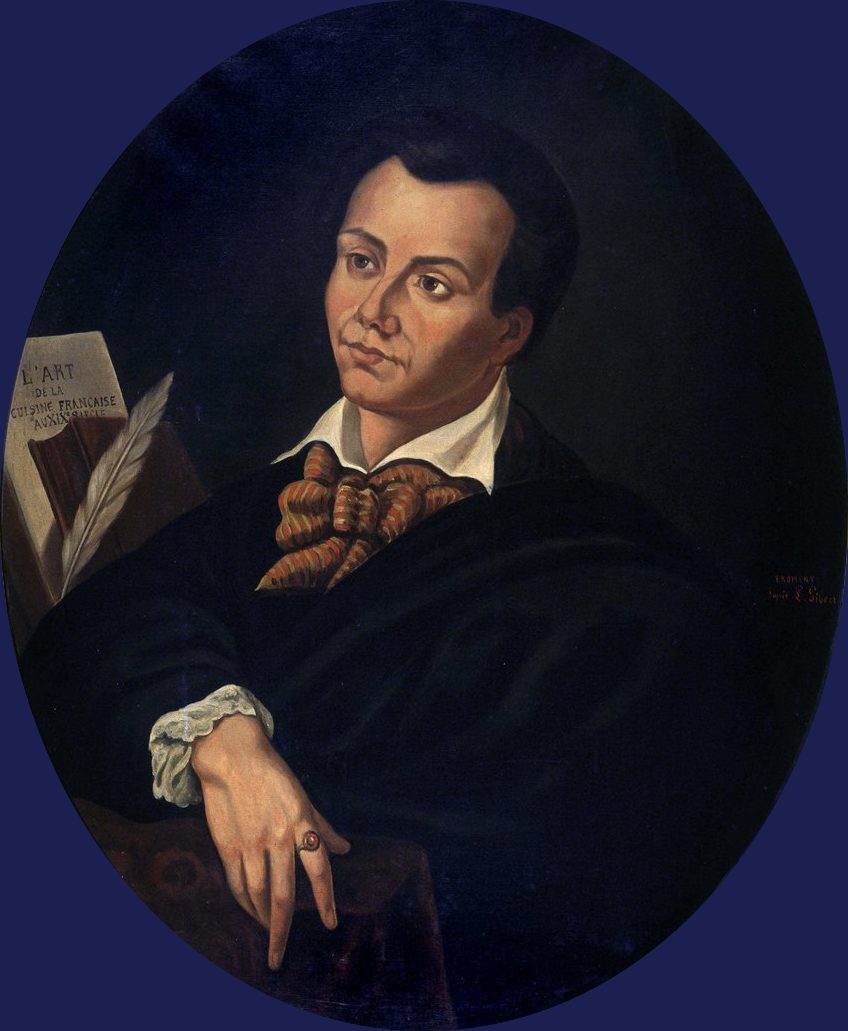
Chef · France
Auguste Escoffier
Auguste Escoffier was a renowned French chef, restaurateur, and culinary writer widely recognized for modernizing French cuisine and professional kitchen management. Born on October 28, 1846, in Villeneuve-Loubet, France, he helped simplify elaborate traditional cooking and organize kitchen teams through the brigade de cuisine system. His influential cookbook, *Le Guide Culinaire*, published in 1903, became an important reference for professional chefs. Escoffier worked closely with hotelier César Ritz at prestigious establishments, including the Savoy Hotel in London. He is also associated with celebrated dishes such as Peach Melba. He died on February 12, 1935, in Monte Carlo. <Cite refs={["turn462505search1","turn462505search4","turn462505search7"]}/>
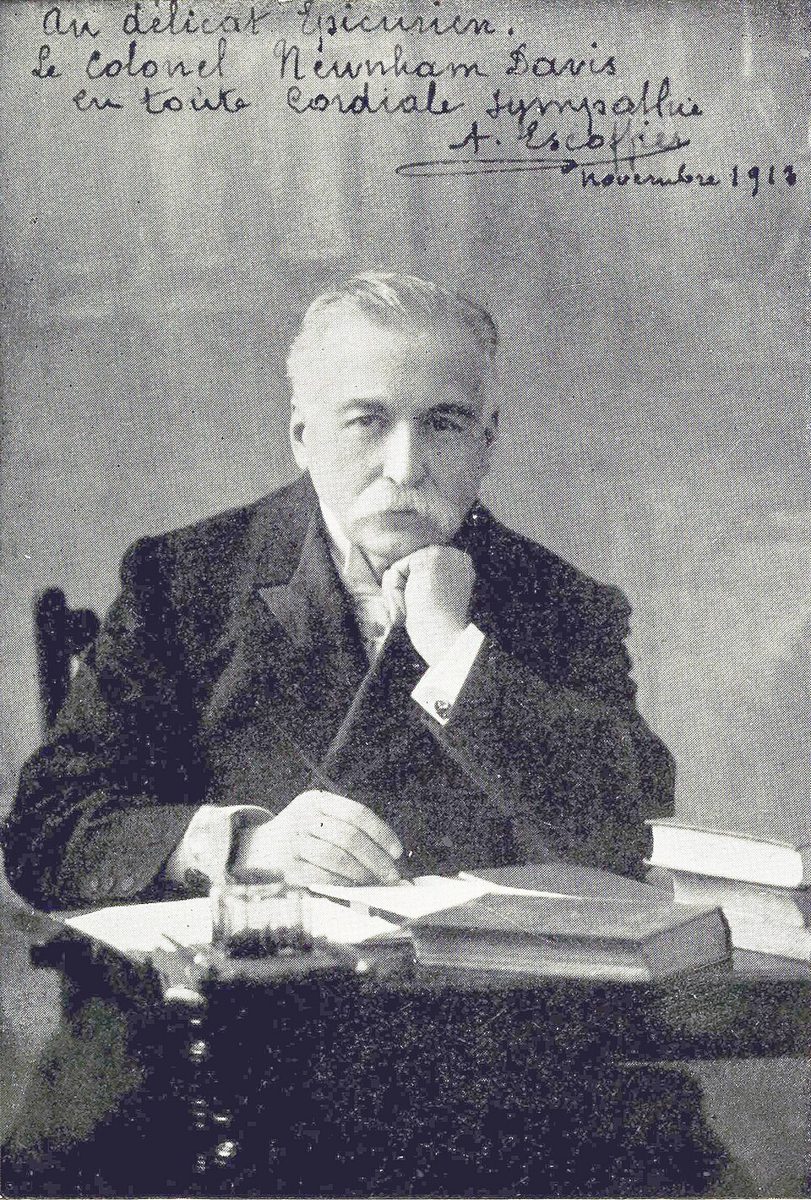 Wikimedia Commons
Auguste Escoffier Biography
Biography
1. Introduction
Auguste Escoffier was one of the most influential chefs in culinary history. He modernized traditional French cooking, improved professional kitchen organization, and helped establish the standards used in fine-dining restaurants and luxury hotels.
Often described as the “King of Chefs and Chef of Kings,” Escoffier became famous for his culinary expertise, disciplined management, and influential cookbooks. His work helped transform cooking into a more organized and respected profession.
His influence continues through classical French cuisine, professional culinary education, restaurant management, and the training of chefs around the world.
2. Early Life and Childhood
Georges Auguste Escoffier was born on October 28, 1846, in Villeneuve-Loubet, a village near Nice in southeastern France.
His father, Jean-Baptiste Escoffier, worked as a blacksmith. As a child, Auguste showed an interest in artistic activities, but his family eventually directed him toward a practical career in cooking.
At approximately 13 years old, he began an apprenticeship at his uncle's restaurant, Le Restaurant Français, in Nice.
The restaurant environment introduced him to food preparation, kitchen discipline, and the demanding nature of professional cooking. His early experiences provided the foundation for a career that would eventually influence restaurants across Europe and beyond.
3. Beginning His Culinary Career
Escoffier learned the fundamentals of professional cooking through apprenticeship and practical experience.
He developed skills in preparing meats, sauces, soups, vegetables, and other dishes central to French cuisine. He gradually progressed through different kitchen responsibilities and gained experience in restaurant operations.
In the early 1860s, he worked at establishments in Nice, including the Hôtel Bellevue. His abilities attracted the attention of people connected to the Paris restaurant industry.
In 1865, he moved to Paris to work at Le Petit Moulin Rouge, a prominent restaurant where he gained further experience with sophisticated dining and high-level kitchen service.
This opportunity marked an important step in his professional development.
4. Military Service and Its Influence
Escoffier's early career was interrupted by the Franco-Prussian War of 1870–1871. During the conflict, he served as a chef in the French army.
Military service exposed him to the challenges of preparing food under difficult conditions, organizing supplies, and feeding large numbers of people.
These experiences encouraged his interest in food preservation and efficient kitchen operations.
He studied methods of preserving food, including canning, which became increasingly important as food distribution and storage developed.
The organizational lessons he learned during military service later influenced his approach to managing professional kitchens.
5. Establishing His Own Restaurant
After returning to civilian life, Escoffier continued developing his culinary career.
By the late 1870s, he had opened his own restaurant, Le Faisan d'Or, in Cannes. The business gave him an opportunity to demonstrate his cooking abilities and develop his understanding of restaurant management.
He also worked in other establishments and continued refining his techniques.
These experiences prepared him for the international opportunities that followed and helped establish his reputation as a chef capable of managing sophisticated kitchens.
6. Marriage and Family
Escoffier married Delphine Daffis on August 28, 1878. She came from a family connected to publishing and had literary interests of her own.
The couple had three children: Paul, Daniel, and Germaine.
Escoffier's demanding professional responsibilities often required him to work long hours and travel for employment. Nevertheless, his family remained an important part of his life.
His son Daniel was killed during the First World War, a personal loss that affected the family.
Delphine died on February 6, 1935, shortly before Escoffier himself passed away.
7. Partnership with César Ritz
One of the most important relationships in Escoffier's career was his professional partnership with Swiss hotelier César Ritz.
The two began working together in the 1880s, combining Ritz's expertise in luxury hospitality with Escoffier's culinary skills and kitchen management.
Their collaboration helped establish a new standard for fine dining in prestigious hotels.
Ritz focused on elegant accommodation, service, and guest experiences, while Escoffier developed the food operations that supported this reputation.
Together, they helped shape luxury hotel dining and influenced the development of international hospitality.
8. The Savoy Hotel in London
Escoffier became chef at the Savoy Hotel in London in 1890, working alongside César Ritz.
The Savoy attracted wealthy travelers, business leaders, entertainers, and members of high society. Its dining rooms provided an international stage for Escoffier's cooking.
He introduced carefully planned menus, sophisticated dishes, and efficient kitchen practices that helped the hotel develop its culinary reputation.
During his time at the Savoy, he became associated with memorable dishes and elaborate dining experiences.
His success in London helped establish French cuisine as a symbol of refinement in international luxury hotels.
9. The Creation of Peach Melba
One of Escoffier's best-known culinary creations is Peach Melba, a dessert associated with Australian opera singer Nellie Melba.
The dessert was developed during the 1890s while Escoffier was working at the Savoy Hotel.
Its classic preparation combines peaches with vanilla ice cream and raspberry sauce. Escoffier created the dish in connection with a tribute to Melba, whose performances he admired.
Peach Melba became internationally popular and remains an example of his ability to create elegant dishes using relatively simple ingredients.
The dessert illustrates his approach to combining flavor, presentation, and a memorable story.
10. The Carlton Hotel and Later Career
In 1898, Escoffier and Ritz became associated with the Carlton Hotel in London.
Escoffier led its kitchens for many years, helping make the hotel a major destination for fine dining.
His menus demonstrated the balance he sought between classical French techniques and a more practical, streamlined approach to restaurant service.
He continued to refine kitchen organization, supervise professional cooks, and develop recipes that could be reproduced consistently.
His work at the Carlton became one of the defining periods of his career.
11. Modernizing French Cuisine
Escoffier's most significant contribution was his modernization and organization of traditional French cooking.
Earlier haute cuisine could involve elaborate preparations, complex garnishes, and rich sauces. Escoffier retained classical techniques but sought to make dishes more practical, balanced, and consistent.
He emphasized the quality of ingredients, careful preparation, and the importance of presenting food at the correct temperature and in the proper sequence.
His approach helped make sophisticated restaurant cooking more manageable for professional kitchens.
Rather than rejecting tradition, he reorganized and refined it for the needs of modern restaurants and hotels.
12. The Brigade de Cuisine System
Escoffier helped formalize the brigade de cuisine system, which divides kitchen responsibilities among specialized positions.
This structure improved coordination and efficiency in large professional kitchens.
Common roles include:
- Chef de cuisine: Leads the kitchen and oversees food preparation.
- Sous-chef: Assists the head chef and supervises daily operations.
- Saucier: Prepares sauces and related dishes.
- Rôtisseur: Oversees roasts and other assigned cooking methods.
- Garde manger: Manages cold dishes, salads, and certain preparations.
- Pâtissier: Prepares pastries, desserts, and other baked items.
The exact structure varies between kitchens, but the brigade model helped establish clear responsibilities, communication, and professional discipline.
Its influence remains visible in restaurants and hotels around the world.
13. The Five Mother Sauces
Escoffier is strongly associated with the organization and codification of French sauce-making.
The five mother sauces commonly taught in classical French cuisine are:
- Béchamel: A white sauce made with milk and a roux.
- Velouté: A light sauce made with stock thickened using a roux.
- Espagnole: A rich brown sauce traditionally made with brown stock and other flavoring ingredients.
- Hollandaise: An emulsified sauce made primarily with egg yolks and butter.
- Tomate: A tomato-based sauce.
These sauces serve as foundations for many derivative sauces and culinary preparations.
Although the development of French sauce traditions involved many chefs over time, Escoffier helped establish the system that became widely used in culinary education.
14. Famous Dishes and Culinary Creations
Escoffier is associated with several dishes that became important parts of classical French and international restaurant cuisine.
His most famous creations and associations include:
- Peach Melba: Peaches, vanilla ice cream, and raspberry sauce.
- Melba toast: Thin, crisp toast associated with his work for Nellie Melba.
- Tournedos Rossini: A celebrated preparation of beef associated with classical French fine dining and named for composer Gioachino Rossini.
Escoffier's wider contribution was not limited to inventing individual dishes. He refined recipes, documented techniques, organized menus, and promoted consistency in professional kitchens.
15. Books and Publications
Escoffier believed that culinary knowledge should be organized and shared with other chefs.
His most influential publication was Le Guide Culinaire, first published in 1903. The book compiled recipes, cooking techniques, sauces, stocks, and methods of organizing professional culinary work.
Other notable publications include:
- Le Traité sur L'art de Travailler les Fleurs en Cire (1886)
- Le Guide Culinaire (1903)
- Le Livre des Menus (1912)
- L'Aide-mémoire culinaire (1919)
- Le Riz (1927)
- La Morue (1929)
- Ma Cuisine (1934)
His books became valuable references for professional chefs and students. Le Guide Culinaire remains historically important because of its systematic approach to French cooking.
16. Humanitarian Work and Support for Chefs
Escoffier was concerned about the working conditions and financial difficulties faced by people in the culinary profession.
He supported charitable initiatives and efforts to assist cooks and their families during periods of hardship.
He also encouraged the idea that professional chefs deserved respect, proper working conditions, and greater recognition for their skills.
His approach to kitchen management emphasized cleanliness, discipline, organization, and responsibility.
These principles helped contribute to a more professional working environment in restaurants and hotels.
17. Awards and Honors
Escoffier received significant recognition for his contribution to French cuisine and hospitality.
In 1919, he was appointed a Knight of the Legion of Honour, one of France's best-known national distinctions.
In 1928, he was promoted to Officer of the Legion of Honour.
These honors reflected his role in raising the status of chefs and promoting French culinary culture internationally.
His reputation also grew through his work with luxury hotels, his influential publications, and the many cooks who learned from his methods.
18. Retirement and Final Years
Escoffier retired from his demanding hotel position around 1920, after decades of professional work.
However, retirement did not end his involvement in culinary writing and professional activities. He continued contributing to publications, refining recipes, and sharing his knowledge.
His later works included books designed to make cooking more accessible to home cooks, including Ma Cuisine, published in 1934.
His writing demonstrated that culinary excellence did not need to be limited to luxury restaurants. Well-organized methods and careful preparation could also help ordinary households prepare satisfying meals.
19. Death
Auguste Escoffier died on February 12, 1935, in Monte Carlo, Monaco, at the age of 88.
His wife, Delphine, had died only days earlier.
He was buried in the family vault in his birthplace, Villeneuve-Loubet, France.
His death marked the end of a career that had transformed restaurant kitchens and influenced the development of modern professional cooking.
His books, organizational methods, and culinary traditions continued to be used long after his passing.
20. Legacy and Influence
Escoffier's influence on the culinary world remains substantial.
He helped modernize French cuisine, establish systematic kitchen organization, and make professional cooking more consistent and teachable.
His partnership with César Ritz also helped shape the relationship between luxury hotels and fine dining.
The brigade de cuisine system remains a foundation of many professional kitchens, while Le Guide Culinaire continues to be recognized as a major historical culinary reference.
His work influenced generations of chefs and helped establish the professional standards that underpin contemporary restaurant operations.
21. Conclusion
Auguste Escoffier was more than a celebrated French chef. He was an innovator, author, mentor, and organizer whose work changed the way professional kitchens operate.
Through his collaboration with César Ritz, his influential cookbooks, his modernization of French cuisine, and his support for professional standards, he helped shape the modern culinary profession.
His legacy continues through classical French cooking, culinary education, restaurant management, and the chefs who carry forward the techniques he helped organize.
Did you know?
## Did You Know About Auguste Escoffier? - Auguste Escoffier was born on October 28, 1846, in Villeneuve-Loubet, France. - He began his culinary apprenticeship at approximately 13 years old in his uncle's restaurant in Nice. - He served as a chef during the Franco-Prussian War, an experience that influenced his interest in food preservation. - He worked with hotelier César Ritz at prestigious establishments, including the Savoy and the Carlton in London. - His cookbook *Le Guide Culinaire* was first published in 1903. - He helped formalize the brigade de cuisine system used to organize professional kitchen teams. - He helped codify the five mother sauces of classical French cuisine. - Peach Melba was created in association with Australian opera singer Nellie Melba. - He received the French Legion of Honour in 1919 and was promoted to Officer in 1928. - His book *Ma Cuisine*, aimed at home cooks, was published in 1934. - He died in Monte Carlo on February 12, 1935, at the age of 88.