Writer · Kingdom of France
Voltaire
Voltaire (1694–1778), born François-Marie Arouet, was a French Enlightenment writer, philosopher, historian, and satirist. He became one of the leading intellectual figures of the Enlightenment through his writings on freedom, reason, religious tolerance, and political reform. His famous works include *Candide*, *Letters on the English*, and *Treatise on Tolerance*. His sharp wit and criticism of intolerance and authoritarianism made him one of the most influential thinkers of eighteenth-century Europe.
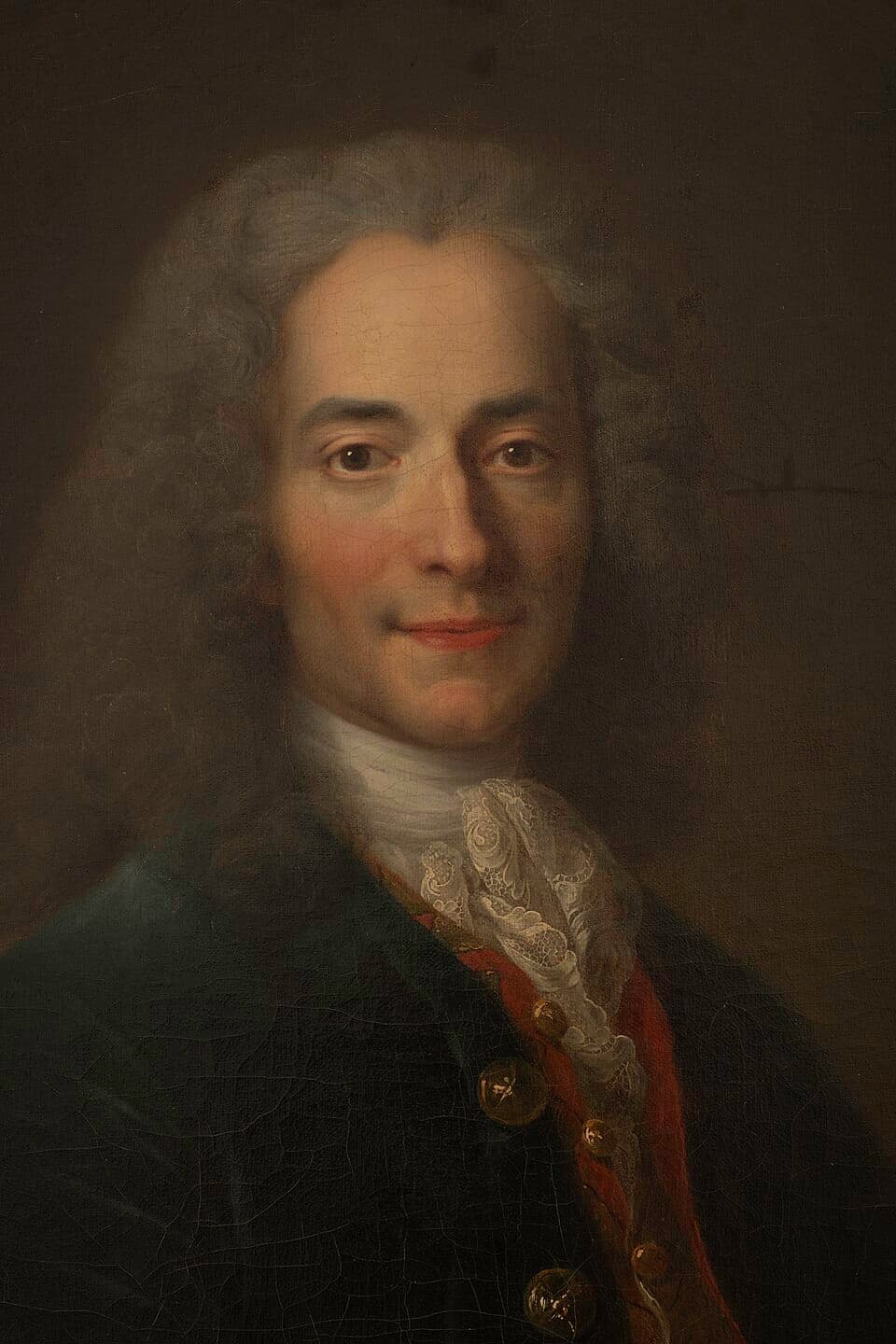 Wikimedia Commons
Voltaire Biography
Biography
Early Life
François-Marie Arouet, better known by his pen name Voltaire, was born on November 21, 1694, in Paris, France.
He was the youngest child of François Arouet, a lawyer and government official, and Marie Marguerite Daumard. Voltaire received an education at the Jesuit Collège Louis-le-Grand in Paris, where he studied literature, rhetoric, philosophy, and classical languages.
From an early age, he demonstrated a strong interest in writing and developed a reputation for his sharp wit.
Adoption of the Name Voltaire
Voltaire began using his famous pen name in the early eighteenth century. The exact origin of the name has been debated, but it became the identity under which he achieved international fame.
He used the name while producing poetry, plays, philosophical works, historical studies, letters, and satire.
Early Literary Career
Voltaire initially gained recognition as a poet and playwright.
His tragedy Œdipe was performed successfully in Paris in 1718 and helped establish his reputation as a literary figure.
His writing often combined humor, satire, and criticism of social and political institutions.
Imprisonment in the Bastille
Voltaire's sharp criticism of powerful individuals eventually caused serious problems.
In 1726, after a dispute with the aristocrat Guy Auguste de Rohan-Chabot, Voltaire was imprisoned in the Bastille.
He was later released on the condition that he leave France and travel to England.
Years in England
Voltaire spent several years in England, where he encountered a political and intellectual environment that differed significantly from that of France.
He studied English political institutions and became interested in the writings of John Locke, Isaac Newton, and other English thinkers.
His experiences in England strongly influenced his views on religious tolerance, freedom of expression, science, and government.
Letters on the English
Voltaire published Letters Concerning the English Nation, later known as Letters on the English, in 1733.
The work compared English and French institutions and praised aspects of English religious tolerance, philosophy, science, and political life.
The book was controversial in France and contributed to Voltaire's growing reputation as a critic of established authority.
Enlightenment Philosophy
Voltaire became one of the leading figures of the European Enlightenment.
He strongly supported reason, empirical inquiry, freedom of thought, and religious tolerance.
He criticized censorship, arbitrary government, religious persecution, and abuses of institutional power.
Although he criticized organized religion, Voltaire generally believed in a form of deism and maintained that belief in a creator could be compatible with reason.
Candide
Voltaire's most famous literary work, Candide, was published in 1759.
The satirical novella follows the young Candide as he experiences war, disaster, persecution, and other forms of suffering.
Through humor and irony, Voltaire challenged optimistic philosophical ideas and exposed what he regarded as the absurdities and injustices of society.
Candide remains one of the most widely read works of Enlightenment literature.
Religious Tolerance
Religious tolerance was one of Voltaire's central concerns.
He strongly opposed religious persecution and defended the right of people to practice their beliefs without coercion.
His Treatise on Tolerance, published in 1763, criticized religious fanaticism and argued for greater tolerance between different religious communities.
Criticism of Authority
Voltaire frequently challenged political and religious authorities.
He criticized arbitrary imprisonment, censorship, judicial abuses, and persecution.
His famous association with the phrase “Écrasez l'infâme” reflected his campaign against what he considered fanaticism, intolerance, and oppressive institutional practices.
Historical Works
Voltaire was also an important historian.
His works included The Age of Louis XIV and Essay on the Manners and Spirit of Nations.
He attempted to move historical writing beyond the traditional focus on kings and military events by examining culture, economics, science, customs, and intellectual development.
Relationship with Frederick the Great
Voltaire developed a close intellectual relationship with Frederick II of Prussia, commonly known as Frederick the Great.
Voltaire spent time at the Prussian court in Potsdam, where he interacted with the king and other intellectuals.
Their relationship eventually deteriorated because of personal and financial disputes, and Voltaire left Prussia in 1753.
Life at Ferney
In his later years, Voltaire lived primarily at Ferney, near the French-Swiss border.
Ferney became a center for intellectual correspondence and attracted visitors from across Europe.
From there, Voltaire continued writing, corresponding with political leaders and intellectuals, and campaigning against injustice.
Advocacy for Justice
Voltaire became involved in several famous cases involving individuals whom he believed had been victims of religious prejudice or judicial injustice.
His campaign surrounding the case of Jean Calas became particularly important. Calas, a Protestant merchant, was executed in 1762 after being accused of murdering his son.
Voltaire argued that the case had been influenced by religious prejudice and helped bring attention to the issue.
His efforts contributed to wider discussions about judicial reform and religious tolerance.
Return to Paris
In 1778, Voltaire returned to Paris after many years away.
He received a highly enthusiastic public reception and attended performances of his tragedy Irène.
By this time, he had become one of the most celebrated intellectuals in France.
Death
Voltaire died on May 30, 1778, in Paris, at the age of 83.
Because of his conflicts with the Catholic Church and religious authorities, arrangements for his burial were complicated. He was eventually buried at the Abbey of Scellières.
During the French Revolution, his remains were transferred to the Panthéon in Paris in 1791.
Legacy
Voltaire became one of the defining figures of the Enlightenment.
His writings influenced debates about freedom of speech, religious tolerance, civil liberties, judicial reform, and the relationship between religion and government.
His influence extended across Europe and beyond. He inspired later generations of writers, philosophers, political reformers, and advocates of civil rights.
Voltaire's combination of satire, philosophical criticism, and political commentary made him a distinctive voice of the Enlightenment.
His works, particularly Candide and Treatise on Tolerance, continue to be widely read and studied for their criticism of intolerance, fanaticism, and abuses of power.
Did you know?
Voltaire wrote under more than 100 different names and pseudonyms during his lifetime, using them for different types of writing and correspondence.