Writer · United States
Thomas Paine
Thomas Paine was an English-born political writer, philosopher, revolutionary, and one of the influential voices behind the American and French revolutions. Born on January 29, 1737, in Thetford, England, he became famous for his powerful arguments in favor of independence, republican government, and individual rights. His influential pamphlet *Common Sense*, published in 1776, helped persuade many American colonists to support independence from Britain. Other important works include *The American Crisis*, *Rights of Man*, and *The Age of Reason*. Paine's writings challenged inherited authority and helped shape debates about democracy, liberty, religion, and human rights.
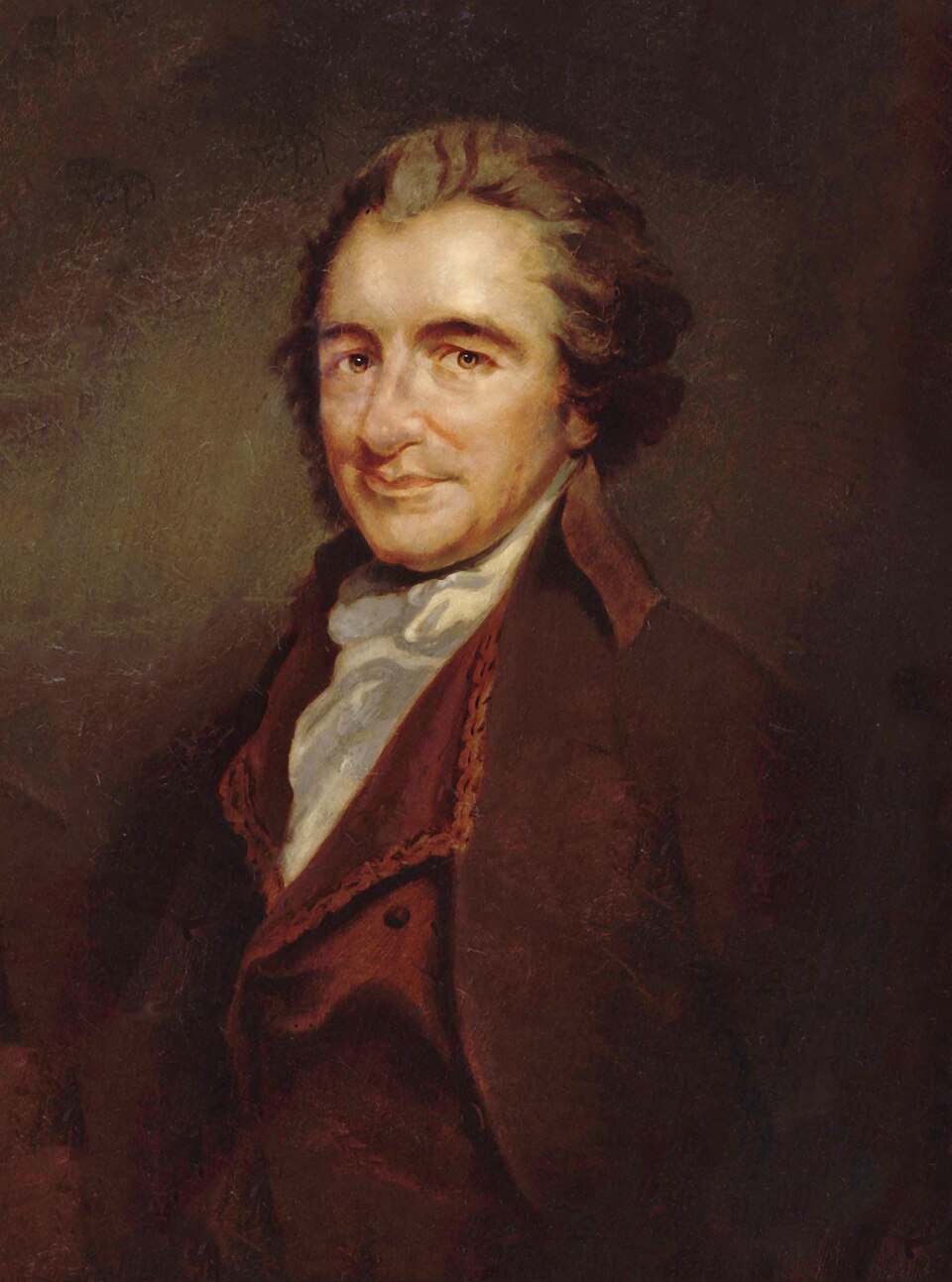 Wikimedia Commons
Thomas Paine: Full Biography, Political Ideas, Major Works, and Legacy
Biography
1. Introduction
Thomas Paine was an English-born political writer, philosopher, and revolutionary whose writings influenced major political changes in America, France, and Britain during the late eighteenth century. He became famous for presenting complex political ideas in clear, direct language that ordinary readers could understand.
Paine's pamphlet Common Sense played an important role in building public support for American independence from Britain. His later work, Rights of Man, defended the principles of political equality and republican government, while The Age of Reason challenged established religious authority and promoted independent inquiry.
His writings addressed liberty, democracy, human rights, government, economic inequality, and freedom of thought. Although his ideas attracted both admiration and intense opposition, his work remains an important part of the history of political philosophy and revolutionary movements.
2. Early Life and Family Background
Thomas Paine was born on January 29, 1737, in Thetford, Norfolk, England. His father, Joseph Paine, was a Quaker who worked as a stay-maker, producing stiff supports used in clothing. His mother, Frances Cocke, belonged to the Anglican tradition.
Paine grew up in a family of modest means. His background gave him firsthand exposure to the lives and concerns of ordinary working people, an experience that later influenced his writing about economic fairness and political representation.
He received limited formal education but learned to read, write, and perform arithmetic. As a teenager, he began working with his father and later explored other occupations.
His early life was not marked by immediate success. He experienced financial difficulties and professional setbacks before discovering the writing and political advocacy that would eventually make him internationally known.
3. Education and Early Career
Paine did not attend university. Much of his intellectual development came from reading, personal experience, and engagement with the political and social debates of his time.
He worked in several occupations, including stay-making and maritime service. In 1762, he became an excise officer, a government official responsible for collecting taxes on certain goods. He later lost his position, regained employment, and experienced further professional difficulties.
During this period, Paine became concerned about the working conditions and pay of excise officers. In 1772, he wrote a pamphlet advocating improved compensation for his fellow officers.
This early publication demonstrated his interest in public argument and political reform. It also helped develop the writing skills he would later use to address much larger questions about government, liberty, and society.
4. Arrival in America
In 1774, Paine met Benjamin Franklin in London. Franklin provided him with a letter of introduction that helped him travel to America.
Paine arrived in Philadelphia in November 1774, a time when tensions between Britain's North American colonies and the British government were increasing.
He initially worked in journalism and became involved with the Pennsylvania Magazine. Through writing and discussions with people involved in colonial politics, he developed a deeper understanding of the conflict between the colonies and Britain.
Paine increasingly came to believe that the American colonies should seek complete independence rather than continue attempting to reconcile with the British government. His ability to express these ideas in accessible language soon made him a significant voice in the independence movement.
5. Common Sense and the American Revolution
Paine published Common Sense in January 1776. The pamphlet argued that the American colonies should separate from Britain and establish an independent republic.
At the time, some colonists continued to hope for reconciliation with the British Crown. Paine challenged that position by arguing that hereditary monarchy was an unjust form of government and that a distant island should not rule a vast continent.
His arguments were direct, forceful, and designed for a broad readership rather than only political elites. The pamphlet circulated widely and helped strengthen public discussion of independence.
Common Sense became one of the most influential political publications of the American Revolution. It contributed to the intellectual climate in which the Declaration of Independence was adopted in July 1776, although it was not the declaration's sole cause.
Paine did not formally write the Declaration of Independence, but his arguments for independence, republican government, and political self-determination helped shape the wider revolutionary debate.
6. The American Crisis Papers
During the American Revolutionary War, Paine wrote a series of essays known as The American Crisis. The first appeared in December 1776, when the Continental Army faced serious military difficulties.
The essays encouraged American soldiers and supporters to continue resisting British rule. Paine argued that the struggle required perseverance and that the future of independence depended on the willingness of people to endure hardship.
The opening words of the first essay became particularly famous: “These are the times that try men's souls.”
General George Washington reportedly ordered the first essay to be read to his troops to help strengthen their morale during a difficult period of the war.
Paine continued writing the series through the revolutionary period. His work helped establish him as more than a political theorist; he also became a writer who attempted to influence public morale during a national crisis.
7. Public Service and Contributions to the Revolutionary Cause
Paine contributed to the American cause through writing and public service. During the Revolutionary War, he served as an aide to General Nathanael Greene and undertook responsibilities connected with the Continental Congress.
From 1777 to 1779, he served as secretary to the Congressional Committee for Foreign Affairs. He later worked as chief clerk of the Pennsylvania General Assembly from 1779 to 1780.
Paine also supported efforts to finance the revolutionary government and helped promote ideas about public institutions and economic development.
Despite his contributions, his relationships with political figures were sometimes difficult. He could be outspoken in disputes and did not always enjoy the trust or popularity of those with whom he worked.
His career demonstrates how revolutionary movements depended not only on military leaders and officeholders but also on writers who helped explain and defend their political objectives.
8. Return to Europe and the Rights of Man
After the American Revolution, Paine spent time working on scientific and engineering projects, including the design of an iron bridge. In 1787, he traveled to Europe to promote his bridge design.
Events in France soon drew his attention. The French Revolution, which began in 1789, raised questions about monarchy, political authority, social hierarchy, and the rights of citizens.
When British writer Edmund Burke criticized the French Revolution in Reflections on the Revolution in France, Paine responded with Rights of Man. The work appeared in two parts in 1791 and 1792.
In Rights of Man, Paine defended the revolution and argued that governments should protect people's natural rights rather than preserve hereditary privilege. He supported representative government and political equality and criticized systems that concentrated power in inherited aristocratic institutions.
He also proposed social measures to reduce poverty, including support for education, assistance for disadvantaged people, and financial provisions for the elderly.
The book became widely read and helped stimulate debates about parliamentary reform, citizenship, and democracy in Britain. However, its radical political arguments also brought Paine into conflict with the British authorities.
9. Involvement in the French Revolution
Paine became actively involved in the French Revolution and was elected to the French National Convention in 1792, despite being born in England and having played a major role in the American independence movement.
His involvement reflected his belief that the principles of liberty and representative government could extend beyond national boundaries.
However, the revolution became increasingly divided as political factions competed for control. Paine opposed the execution of King Louis XVI and argued for a more restrained approach to the former monarch's punishment.
This position placed him at odds with influential revolutionaries. His political associations and opposition to the execution contributed to his increasingly vulnerable position during the period of radical political repression.
In December 1793, Paine was imprisoned in France. He spent approximately eleven months in detention and narrowly avoided execution. He was released in November 1794, following the fall of Maximilien Robespierre and the intervention of American diplomat James Monroe.
His experience of imprisonment profoundly affected the later years of his life.
10. The Age of Reason and Religious Thought
Paine wrote The Age of Reason while facing political persecution and religious controversy. Its first part appeared in 1794, followed by a second part in 1795 and a third part in 1807.
In the work, Paine criticized organized religion when it relied on unquestioned authority, institutional power, or claims that could not be independently examined. He argued that people should use reason and observation when considering religious questions.
Paine was a deist rather than a conventional atheist. He expressed belief in a creator while rejecting many doctrines and institutional claims associated with established religions.
His views were controversial, especially in societies where Christian beliefs played a central role in public life. Some readers regarded his writing as an important defense of freedom of thought, while others considered it an attack on religious faith.
The Age of Reason became one of his most discussed works and remains part of debates about religion, rational inquiry, and the relationship between belief and evidence.
11. Agrarian Justice and Economic Equality
Paine's political ideas extended beyond constitutional rights and independence. He also considered how wealth, property, and social institutions affected economic opportunity.
In Agrarian Justice, published in 1797, he argued that private ownership of land created social obligations because the earth had originally been a common inheritance of humanity.
He proposed a system of compensation funded through taxes on inherited property. Under his plan, young adults would receive a capital payment upon reaching adulthood, while older people would receive financial support.
Paine's proposal was intended to address poverty without abolishing private property. He viewed social assistance as a way to compensate people for the disadvantages created by the concentration of land and wealth.
These ideas anticipated some later discussions about social insurance, public pensions, and the economic responsibilities of government. They also demonstrated that Paine's interest in equality included material conditions as well as formal political rights.
12. Personal Life and Relationships
Paine married Mary Lambert in 1759. Their marriage was brief, and Lambert died in 1760. In 1771, he married Elizabeth Ollive, but the relationship later broke down, and they separated.
Paine did not have any children known to have survived him. Much of his adult life was spent traveling, writing, and becoming involved in political controversies across different countries.
His friendships and professional relationships included prominent figures such as Benjamin Franklin, George Washington, Thomas Jefferson, and James Monroe. However, his relationships with some of these individuals became strained, particularly during his later political and religious controversies.
Paine's outspoken style often made him a divisive figure. While admirers valued his willingness to challenge powerful institutions, critics viewed his attacks on established authority as disruptive or disrespectful.
His personal life was closely connected to his public commitments, and he often placed political causes above financial security and social acceptance.
13. Final Years and Death
Paine returned to the United States in 1802 after spending years in Europe. He hoped to resume his life in the country whose independence he had helped advocate.
However, his religious writings and criticism of George Washington had damaged his public reputation among many Americans. He received less recognition than he had during the Revolutionary War and spent his later years in relative isolation.
Despite his declining popularity, Paine continued expressing his views on religion, politics, and society. His writings remained controversial, and his personal circumstances became increasingly difficult.
Thomas Paine died on June 8, 1809, in New York City, at the age of 72. His death attracted comparatively limited public attention, particularly given the influence he had exercised during the American Revolution.
In 1819, British political reformer William Cobbett arranged for Paine's remains to be exhumed and transported to Britain, intending to honor his legacy. The remains were subsequently lost, and their final whereabouts remain uncertain.
14. Major Literary Works
Paine's writings covered political independence, constitutional government, religion, and economic justice. His most influential works include:
- Common Sense (1776): A pamphlet advocating American independence from Britain and criticizing hereditary monarchy.
- The American Crisis (1776–1783): A series of essays supporting the American revolutionary cause and encouraging perseverance during the war.
- Rights of Man (1791–1792): A defense of the French Revolution, natural rights, representative government, and political equality.
- The Age of Reason (1794–1807): A multi-part work criticizing religious institutions and promoting independent inquiry and deism.
- Agrarian Justice (1797): An argument for addressing poverty through social payments funded by taxes on inherited property.
- The English Crisis (1792): A political writing associated with Paine's criticism of Britain's political system and defense of reform.
These works demonstrate the range of Paine's thought and his ability to communicate political arguments to a broad audience.
15. Influence on Democracy and Human Rights
Paine's writings helped popularize ideas about popular sovereignty, natural rights, republican government, and political equality.
He argued that governments derive their legitimacy from the people rather than hereditary rulers. He also maintained that political institutions should serve living generations instead of binding them indefinitely to the decisions of the past.
His work influenced political reform movements on both sides of the Atlantic. In Britain, Rights of Man became an important text among advocates of parliamentary reform. In America, Common Sense helped make the case for independence accessible to a broad readership.
Paine also challenged the idea that freedom meant only protection from government interference. His proposals for education and economic assistance suggested that social conditions could affect people's ability to exercise their rights.
Although his ideas were not universally accepted, they contributed to continuing debates about democracy, citizenship, economic justice, and the responsibilities of the state.
16. Controversies and Public Reputation
Paine's reputation changed significantly throughout his lifetime. His revolutionary writings earned him admiration among supporters of American independence, but his political radicalism and religious views also made him a target of intense criticism.
In Britain, Rights of Man led to a prosecution for seditious libel. Paine avoided trial by remaining in France, where he was elected to the National Convention.
His opposition to the execution of Louis XVI created conflict with powerful French revolutionaries, while The Age of Reason alienated many religious readers in America and Britain.
Paine also criticized George Washington in a published letter after feeling that Washington had failed to assist him during his imprisonment in France. The criticism damaged Paine's standing among Americans who regarded Washington as a central national figure.
These controversies are important to understanding his life. Paine was both an influential advocate of political liberty and a deeply polarizing public figure whose willingness to challenge established beliefs had lasting consequences.
17. Legacy and Historical Significance
Thomas Paine's legacy extends across political philosophy, revolutionary history, religious debate, and social reform.
His writing helped turn abstract arguments about independence and natural rights into accessible public discussions. He demonstrated that pamphlets and essays could influence political events by reaching readers outside traditional circles of power.
Common Sense remains closely associated with the American independence movement, while Rights of Man continues to be studied in connection with republicanism and democratic reform. The Age of Reason remains relevant to discussions of religious authority and freedom of thought.
Paine's proposals in Agrarian Justice also attract attention from scholars examining the history of social welfare and economic equality.
His reputation has been interpreted differently across generations, but his role as a revolutionary writer and advocate of political rights remains historically significant.
18. Conclusion
Thomas Paine's life was shaped by intellectual independence, political activism, and a willingness to challenge powerful institutions. From his modest beginnings in England to his involvement in the American and French revolutions, he became a major voice in debates about liberty and government.
Through works such as Common Sense, Rights of Man, and The Age of Reason, Paine helped popularize ideas that influenced political movements and philosophical discussions for generations.
Although his outspoken positions brought imprisonment, controversy, and periods of public rejection, his writings continued to circulate after his death. Today, Thomas Paine remains an important historical figure whose work illuminates the development of modern democratic thought, human rights, and freedom of expression.
Did you know?
- Thomas Paine published *Common Sense* in January 1776, several months before the Declaration of Independence was adopted. - He moved to America in 1774 after meeting Benjamin Franklin in London. - His *American Crisis* essays were written to encourage supporters of American independence during the Revolutionary War. - Paine served as secretary to the Continental Congress's Committee for Foreign Affairs from 1777 to 1779. - He became a member of the French National Convention despite being born in England. - He opposed the execution of Louis XVI during the French Revolution. - His book *The Age of Reason* promoted deism and challenged established religious authority. - In *Agrarian Justice*, he proposed payments for young adults and financial support for older people. - Paine died in New York City in 1809, but his remains were later exhumed and transported to Britain. - His works continue to be studied in political philosophy, revolutionary history, and debates about individual rights.