Novelist · German Reich
Thomas Mann
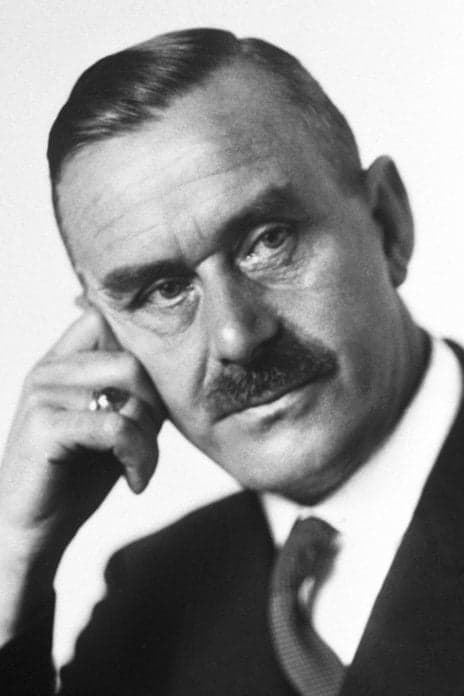
Thomas Mann (1875–1955) was a German novelist, essayist, short-story writer, and social critic whose works became important landmarks of 20th-century German literature. Born in Lübeck, he gained international recognition with *Buddenbrooks* (1901), followed by works including *Death in Venice*, *The Magic Mountain*, and *Doctor Faustus*. Mann received the Nobel Prize in Literature in 1929, with the award recognizing *Buddenbrooks*. He went into exile after the rise of the Nazi regime, later living in the United States before returning to Switzerland, where he died in 1955.
 Wikimedia Commons
Biography
Thomas Mann was born Paul Thomas Mann on June 6, 1875, in Lübeck, Germany, into a prominent merchant family. His father, Thomas Johann Heinrich Mann, was a grain merchant and later a senator, while his mother was Julia da Silva-Bruhns. After his father's death in 1891, the family business was dissolved, and Mann's mother moved with the children to Munich. Mann eventually left formal schooling and began pursuing literature and intellectual interests.
Mann moved to Munich in 1894 and worked briefly for an insurance company while developing his writing career. He also attended lectures at the Technical University of Munich and worked for the satirical magazine Simplicissimus. During the late 1890s, he spent time in Italy with his brother Heinrich Mann. These experiences contributed to his development as a writer.
His first major novel, Buddenbrooks: The Decline of a Family, was published in 1901. The novel follows several generations of a wealthy merchant family and brought Mann significant literary recognition. Other important early works included Tonio Kröger and Tristan. In 1905, he married Katia Pringsheim, and they eventually had six children, including writers Erika Mann, Klaus Mann, and Golo Mann.
Mann continued producing major literary works during the early 20th century. His novella Death in Venice appeared in 1912, while The Magic Mountain was published in 1924. His writing frequently explored themes such as art, illness, intellectual life, morality, social change, time, and the tensions within European culture.
In 1929, Mann received the Nobel Prize in Literature. The Nobel Prize citation stated that the award was given principally for his novel Buddenbrooks, which had gained recognition as a classic of contemporary literature.
Mann's political views changed significantly during the period surrounding the First World War and the rise of the Nazi movement. By 1922, he had publicly expressed support for the democratic Weimar Republic. In 1930, he delivered a speech known as the "Appeal to Reason," warning against the growing Nazi movement.
After the Nazis came to power in 1933, Mann did not return to Germany from a foreign lecture trip and settled in exile. In 1936, the Nazi authorities stripped him of German citizenship. He initially lived in Switzerland and then emigrated to the United States in 1938. He became an American citizen in 1944 and lived for several years in Princeton, New Jersey, and Pacific Palisades, California.
During his American exile, Mann continued writing and speaking about Germany and the Second World War. From 1940 to 1945, he made monthly radio broadcasts to German listeners under the title Deutsche Hörer! ("German Listeners!"). His later major works included Joseph and His Brothers and Doctor Faustus, published in 1947.
Mann returned to Europe in 1952 and settled in Switzerland. He spent his final years near Zürich and died on August 12, 1955. His literary legacy includes novels, novellas, essays, speeches, and other writings that examine European culture, intellectual life, politics, art, and the human condition.
Did you know?
Did you know? Thomas Mann's family became an important literary family: three of his children—Erika Mann, Klaus Mann, and Golo Mann—also became prominent writers and intellectuals.