Writer · Classical Athens
Socrates
Socrates (c. 470–399 BCE) was an ancient Greek philosopher from Athens and one of the foundational figures of Western philosophy. He is best known for his method of questioning, later called the Socratic method, which encouraged people to examine their beliefs and seek clearer understanding. Socrates wrote no philosophical works himself; most knowledge about his ideas comes from the writings of Plato, Xenophon, and other ancient authors.
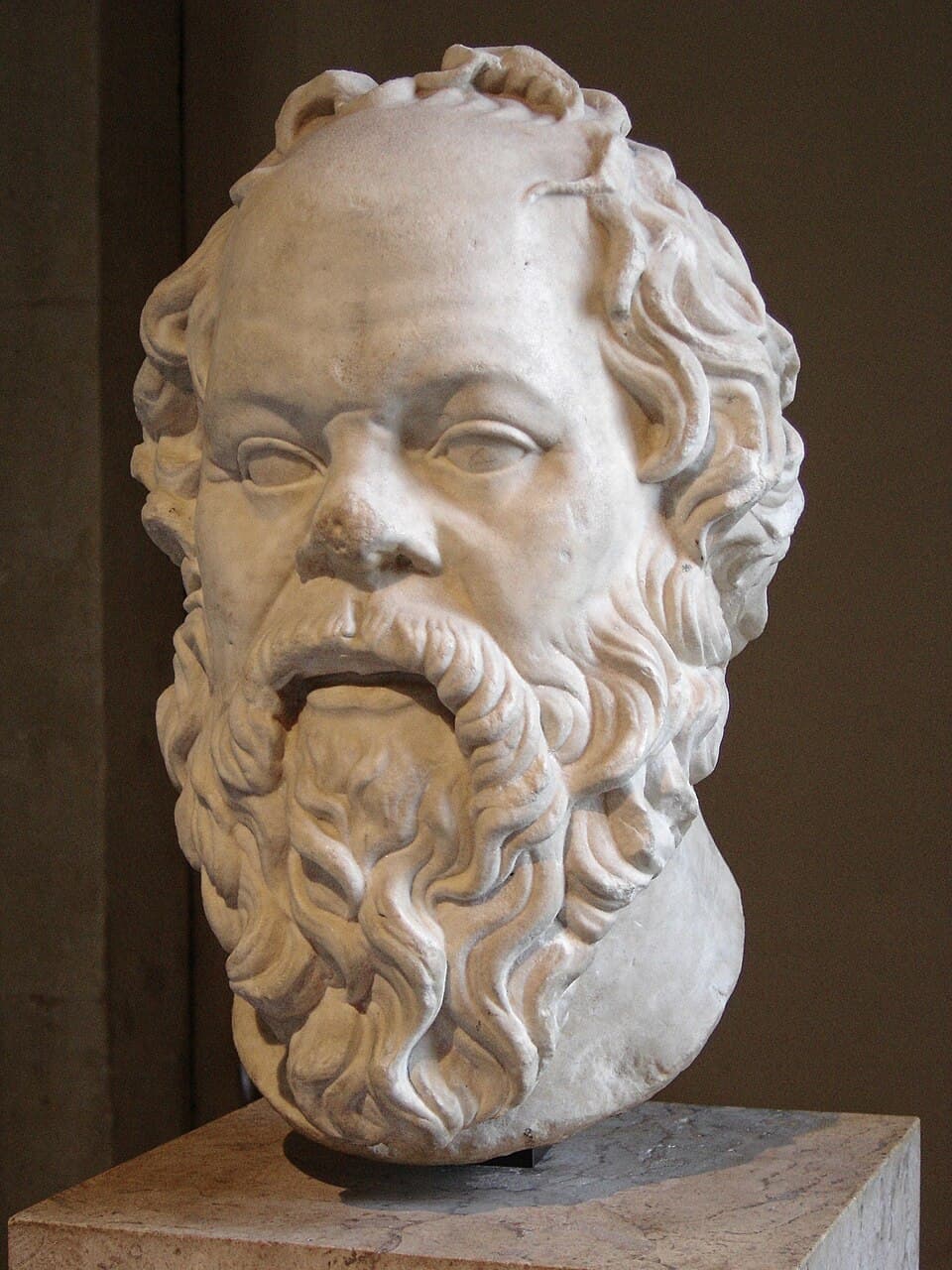 Wikimedia Commons
Socrates Biography
Biography
Early Life
Socrates was born in Athens around 470 BCE. His father, Sophroniscus, was traditionally associated with stoneworking, while his mother, Phaenarete, was a midwife.
Little is known with certainty about his early life because Socrates himself left no written works. Most information about him comes from later writers, particularly Plato and Xenophon.
Education and Intellectual Life
Socrates lived during the height of classical Athens, a period famous for political, artistic, and intellectual development.
Unlike many teachers of his time, Socrates did not establish a formal school or charge regular fees for philosophical instruction. Instead, he spent much of his life speaking with people in public places and engaging them in discussions about morality, knowledge, justice, virtue, and the nature of a good life.
The Socratic Method
Socrates is most closely associated with a style of philosophical questioning now known as the Socratic method.
Rather than simply presenting his own answers, he would ask a series of questions designed to examine the assumptions behind another person's beliefs.
Through dialogue, contradictions or weaknesses in an argument could be revealed. The process encouraged participants to recognize what they knew, what they did not know, and what required further investigation.
This method remains influential in education, law, philosophy, and critical thinking.
Philosophy and the Search for Truth
Socrates believed that examining one's beliefs was essential to living a meaningful life.
He focused heavily on ethical questions such as:
- What is justice?
- What is courage?
- What is virtue?
- What makes a person good?
- What is the nature of knowledge?
- How should a person live?
His philosophy placed greater emphasis on moral character and intellectual self-examination than on material wealth or social status.
“Know Thyself”
The idea of self-knowledge is strongly associated with Socratic philosophy.
Socrates encouraged people to examine their own beliefs, motivations, and moral choices rather than simply accepting conventional opinions.
His approach helped establish philosophical inquiry as a way of examining not only the universe but also human conduct and personal responsibility.
Socrates and the Socratic Paradox
Socrates is often associated with the idea that recognizing one's own ignorance is an important form of wisdom.
In Plato's Apology, Socrates explains his understanding of wisdom through his recognition that he did not possess the kind of certainty claimed by others.
This attitude became central to the Socratic approach: questioning assumptions is necessary because people can easily mistake confidence for knowledge.
Military Service
Socrates served as a soldier in the Athenian army and participated in several military campaigns during the Peloponnesian War.
Ancient accounts portray him as physically resilient and courageous. Plato's writings describe Socrates as remaining calm under difficult circumstances and showing bravery in battle.
Socrates and Athens
Socrates spent most of his life in Athens and interacted with people from many different social and political backgrounds.
His habit of questioning influential figures sometimes made him unpopular.
He challenged people who claimed to possess wisdom and encouraged young Athenians to question traditional assumptions and authority.
Relationship with Plato
One of Socrates' most important intellectual connections was with Plato.
Plato became his student and later wrote numerous philosophical dialogues featuring Socrates as the central character.
Because Socrates left no writings, Plato's dialogues are among the most important sources for understanding how Socrates may have spoken and thought.
However, historians debate how accurately Plato's literary Socrates represents the historical philosopher.
Socrates and Xenophon
Another important source is Xenophon, an Athenian soldier and writer who also knew Socrates.
Xenophon's works, including Memorabilia, Apology of Socrates, Symposium, and Oeconomicus, portray Socrates as a practical moral teacher.
The differences between Plato's and Xenophon's portrayals demonstrate the difficulty of reconstructing the historical Socrates.
Trial of Socrates
In 399 BCE, Socrates was brought to trial in Athens.
He was accused of impiety toward the city's gods and of corrupting the young.
The charges came during a politically tense period following years of war and political instability in Athens.
Socrates defended himself before an Athenian jury.
The Apology
Plato's Apology presents a famous literary account of Socrates' defense.
Socrates argued that his philosophical questioning was not intended to harm Athens. Instead, he believed that encouraging people to examine their lives and beliefs served a valuable purpose.
His famous philosophical principle is commonly summarized as the idea that “the unexamined life is not worth living.”
Death of Socrates
Socrates was found guilty and sentenced to death.
According to Plato's Phaedo, he spent his final days in prison and refused opportunities to escape.
He believed that respecting the laws of Athens was important, even when he personally disagreed with the outcome of the trial.
Socrates died by drinking hemlock, a poisonous preparation, in 399 BCE.
Socrates' Legacy
Socrates had an enormous influence on Western philosophy despite leaving no written works.
His approach inspired Plato, who in turn influenced Aristotle and later generations of philosophers.
The Socratic tradition helped establish philosophical dialogue, critical questioning, ethical reasoning, and the examination of assumptions as central intellectual practices.
Influence on Education and Philosophy
The Socratic method continues to be used in modern education to encourage students to think critically rather than simply memorize information.
Teachers and students use questioning and discussion to examine ideas, identify contradictions, and develop stronger arguments.
Socrates' emphasis on intellectual humility also remains an important principle in philosophy and critical thinking.
Legacy in Western Thought
Socrates is often regarded as one of the founding figures of Western philosophy.
His greatest contribution was not a specific philosophical system but a method of inquiry centered on questioning, dialogue, reason, and moral self-examination.
More than two thousand years after his death, his ideas continue to influence philosophy, education, ethics, political thought, and intellectual culture.
Did you know?
Socrates never wrote a book. Almost everything known about his philosophy comes from later writers, especially Plato and Xenophon.