Painter · Spain
Salvador Dalí
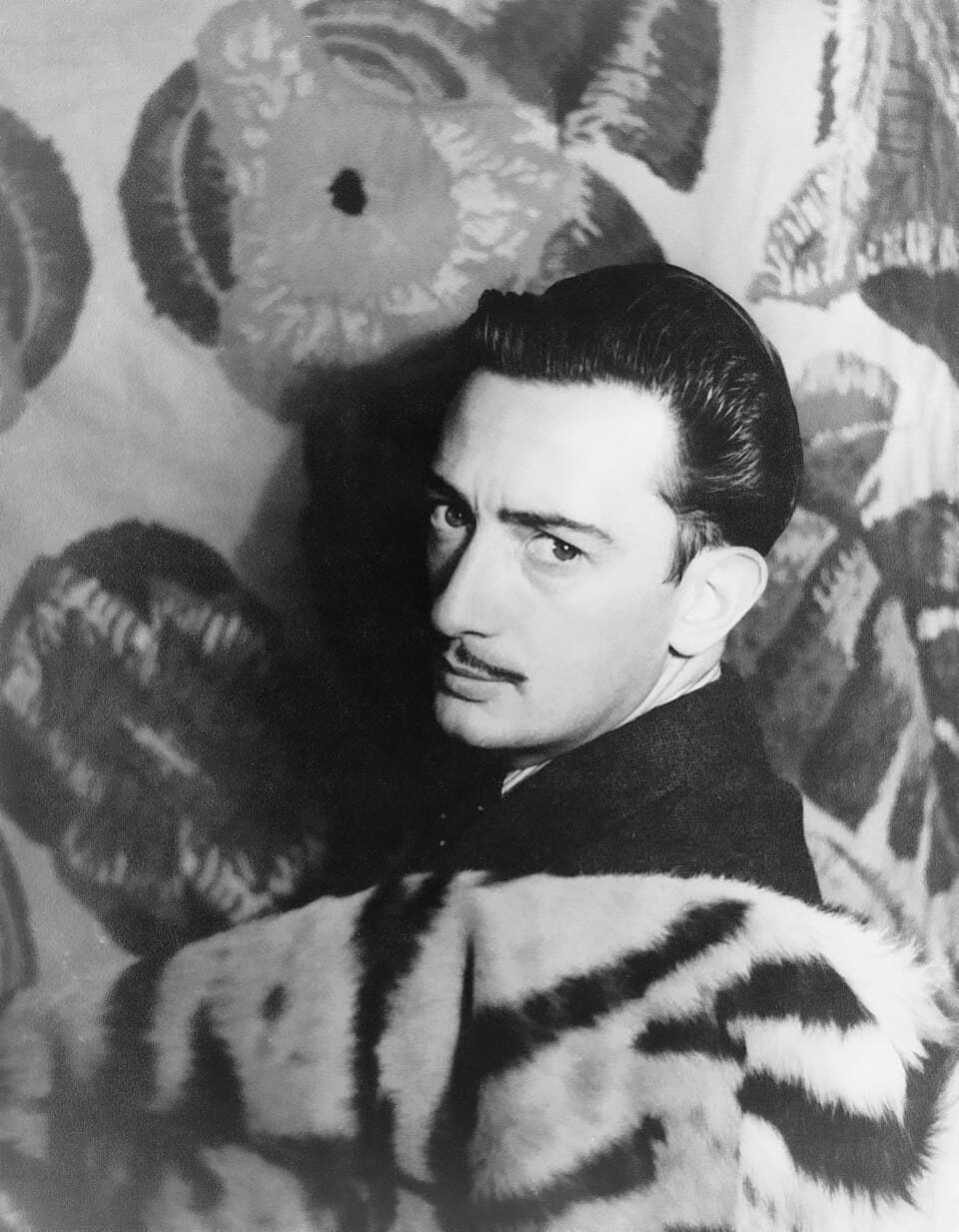
**Salvador Dalí (1904–1989)** was a Spanish painter, sculptor, writer, filmmaker, and one of the most recognizable figures of the Surrealist movement. Born in Figueres, Catalonia, he developed a distinctive artistic style characterized by dreamlike imagery, symbolism, and extraordinary technical precision. His best-known painting, *The Persistence of Memory*, became an iconic work of 20th-century art. Dalí also worked in sculpture, literature, jewelry, film, and design, and created the Dalí Theatre-Museum in his hometown of Figueres.
 Wikimedia Commons
Biography
Salvador Dalí, whose full name was Salvador Domingo Felipe Jacinto Dalí i Domènech, was born on May 11, 1904, in Figueres, Catalonia, Spain. He showed an early interest in drawing and painting and began formal art studies in Madrid in 1922. While living at the Residencia de Estudiantes, he became acquainted with important figures of the Spanish avant-garde, including poet Federico García Lorca and filmmaker Luis Buñuel.
During the 1920s, Dalí experimented with several modern artistic movements, including Cubism, Dadaism, and Metaphysical painting. After traveling to Paris, he became closely associated with the Surrealist movement. Around 1927–1928, he began developing the highly distinctive visual language that would define his mature work.
In 1929, Dalí met Gala, born Helena Ivanovna Diakonova, who became his lifelong companion, muse, and an important figure in his artistic life. That same period saw the creation of some of his most influential Surrealist paintings. His works explored dreams, memory, desire, sexuality, death, and psychological imagery through meticulously painted and often startling combinations of objects and figures.
Dalí's paranoiac-critical method became an important part of his approach to Surrealism. It allowed him to deliberately cultivate multiple interpretations and ambiguous images within a single work. Paintings such as The Great Masturbator, The Metamorphosis of Narcissus, and The Persistence of Memory demonstrate his fascination with the unconscious, transformation, and distorted perceptions of time and space.
Dalí's creative interests extended far beyond painting. He collaborated with Luis Buñuel on the films Un Chien Andalou and L'Âge d'Or, and later contributed to projects connected with filmmakers including Alfred Hitchcock and Walt Disney. His work therefore influenced not only visual art but also cinema and popular visual culture.
During the later decades of his career, Dalí continued working across numerous media, including sculpture, prints, jewelry, photography, installations, and stereoscopic and holographic works. His interests increasingly incorporated science, technology, religion, and classical art. The Gala-Salvador Dalí Foundation describes him as an artist whose work encompassed a wide range of techniques and artistic forms.
One of Dalí's most important later achievements was the creation of the Dalí Theatre-Museum in Figueres. He became involved in the museum project during the 1960s and personally designed many of its spaces and artistic elements. The museum opened in 1974 and was conceived as a large-scale Surrealist environment rather than simply a conventional gallery.
After Gala's death in 1982, Dalí spent time at Púbol Castle and later lived at the Torre Galatea in Figueres. He died on January 23, 1989, and was buried in the crypt of the Dalí Theatre-Museum in his hometown. His legacy continues through major collections, exhibitions, and museums devoted to his work.
Did you know?
**Did you know?** Salvador Dalí personally helped transform an old municipal theatre in Figueres into the **Dalí Theatre-Museum**, designing it as an immersive Surrealist environment. He described the museum as a kind of large Surrealist object and wanted visitors to experience it as something closer to a theatrical dream than an ordinary museum.
