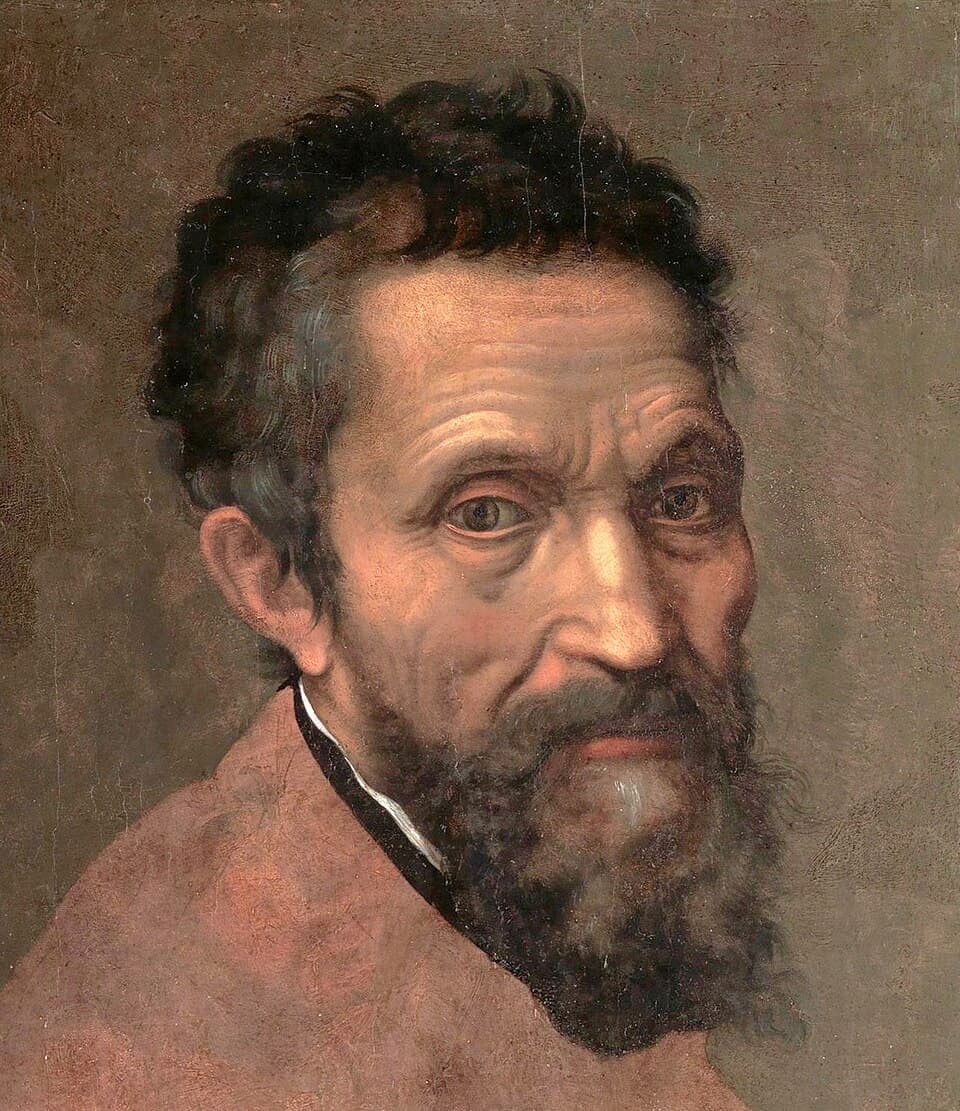
Artist, Sculptor · Republic of Florence
Michelangelo
Michelangelo di Lodovico Buonarroti Simoni (1475–1564) was an Italian Renaissance sculptor, painter, architect, and poet. Widely regarded as one of the greatest artists in Western history, he created masterpieces such as *David*, *Pietà*, and the ceiling of the Sistine Chapel. He also made major contributions to architecture, including work on St. Peter's Basilica in Rome. His art had a lasting influence on Renaissance and Western culture.
 Wikimedia Commons
Michelangelo Biography
Biography
Early Life
Michelangelo di Lodovico Buonarroti Simoni was born on March 6, 1475, in Caprese, in the Republic of Florence. His family belonged to the Florentine minor nobility.
When Michelangelo was still young, his family moved back to Florence. He grew up during the Italian Renaissance, a period of extraordinary artistic, intellectual, and cultural development.
Although his father initially wanted him to pursue a more traditional profession, Michelangelo showed a strong interest in art from an early age.
Artistic Education
As a teenager, Michelangelo became an apprentice to the painter Domenico Ghirlandaio in Florence.
He later studied sculpture in the artistic circle associated with Lorenzo de' Medici, the powerful Florentine patron.
There he encountered important artists, scholars, and philosophers and studied classical sculpture, anatomy, literature, and Renaissance humanism.
Early Sculptures
Michelangelo quickly established himself as a highly talented sculptor.
Among his early works were Madonna of the Stairs and Battle of the Centaurs. These works demonstrated his interest in the human body, movement, and classical artistic traditions.
His ability to represent human anatomy and emotion became one of the defining characteristics of his art.
Pietà
In the late 1490s, Michelangelo created the Pietà for St. Peter's Basilica in Rome.
The marble sculpture depicts the Virgin Mary holding the body of Jesus Christ after the Crucifixion.
The work is celebrated for its technical precision, emotional expression, and harmonious composition. It remains one of Michelangelo's most famous sculptures.
David
Michelangelo returned to Florence and began work on David in 1501.
The enormous marble statue depicts the biblical hero David before his confrontation with Goliath.
Completed in 1504, David became a symbol of Florentine strength and independence and is regarded as one of the greatest masterpieces of Renaissance sculpture.
The sculpture also demonstrates Michelangelo's extraordinary understanding of human anatomy and proportion.
Sistine Chapel Ceiling
In 1508, Pope Julius II commissioned Michelangelo to paint the ceiling of the Sistine Chapel in Vatican City.
Michelangelo initially resisted the project because he considered himself primarily a sculptor. Nevertheless, he undertook the enormous task.
He worked for several years, completing the ceiling in 1512.
The ceiling contains numerous biblical scenes and figures, including the famous The Creation of Adam. The frescoes are among the most celebrated achievements in Western art.
The Creation of Adam
The Creation of Adam is one of the best-known images in the world.
It depicts God reaching toward Adam, representing the biblical creation of humanity.
The composition is famous for its dramatic gesture, monumental human figures, and sophisticated use of space.
Medici Chapel and Later Sculpture
Michelangelo worked on the Medici Chapel in Florence, creating sculptures and architectural elements.
His sculptures Night, Day, Dawn, and Dusk were created for the tombs of members of the Medici family.
These works demonstrate his increasingly expressive and complex approach to the human figure.
Architectural Career
Michelangelo was also an important architect.
In his later career, he worked on major architectural projects in Florence and Rome.
One of his most important assignments was the design and development of the dome of St. Peter's Basilica in Rome.
Although the basilica was completed after his death, Michelangelo's architectural plans had a major influence on its final form.
The Last Judgment
Between 1536 and 1541, Michelangelo painted The Last Judgment on the altar wall of the Sistine Chapel.
The enormous fresco depicts the Second Coming of Christ and the final judgment of humanity.
The work is filled with muscular figures, dramatic movement, and intense emotional expression.
It represents a later stage of Michelangelo's artistic development and differs in tone and composition from his earlier Sistine Chapel ceiling.
Poetry
Michelangelo was also a poet.
He wrote hundreds of poems, many of which explored themes of love, spirituality, beauty, aging, and artistic creation.
His poetry provides additional insight into his personal thoughts and religious concerns.
Artistic Style
Michelangelo's work is characterized by monumental figures, powerful anatomy, dramatic movement, and emotional intensity.
He often treated the human body as the central vehicle for expressing physical and spiritual ideas.
His work helped define the High Renaissance and influenced the later development of Mannerism and European art.
Relationship with Patrons
Throughout his career, Michelangelo worked for some of the most powerful figures of Renaissance Italy, including members of the Medici family and several popes.
His relationships with patrons could be difficult. He was known for his strong personality, independence, and determination to control aspects of his artistic work.
Despite these conflicts, his extraordinary talent ensured continued support from influential patrons.
Later Life
Michelangelo spent much of his later life in Rome.
He continued working on sculpture, painting, architecture, and poetry even as he grew older.
He became increasingly interested in religious themes and produced several late works that reflect a more introspective approach to faith and mortality.
Death
Michelangelo died on February 18, 1564, in Rome at the age of 88.
He was initially buried in Rome, but his body was later moved to Florence and buried in the Basilica of Santa Croce.
His death marked the end of the life of one of the most important artists of the Renaissance.
Legacy
Michelangelo is regarded as one of the greatest artists in Western history.
His achievements in sculpture, painting, architecture, and poetry made him a defining figure of the Renaissance.
Works such as David, Pietà, the Sistine Chapel ceiling, and The Last Judgment continue to attract millions of visitors and remain central to the study of Renaissance art.
His understanding of anatomy, monumental style, and ability to combine technical skill with emotional power influenced generations of artists.
Michelangelo's reputation has remained exceptionally strong for centuries, and his works continue to shape the way the Renaissance and Western art are understood.
Did you know?
Michelangelo's *David* was carved from a single block of marble that had previously been considered difficult to work with by other sculptors.