Writer · Classical Athens
Plato
Plato (c. 428/427–348/347 BCE) was an ancient Greek philosopher and one of the foundational figures of Western thought. A student of Socrates and teacher of Aristotle, he founded the Academy in Athens, one of the earliest institutions of higher learning in the ancient world. Through philosophical dialogues such as *The Republic*, *Symposium*, *Phaedo*, and *Timaeus*, Plato explored justice, knowledge, reality, ethics, politics, education, and the nature of the human soul.
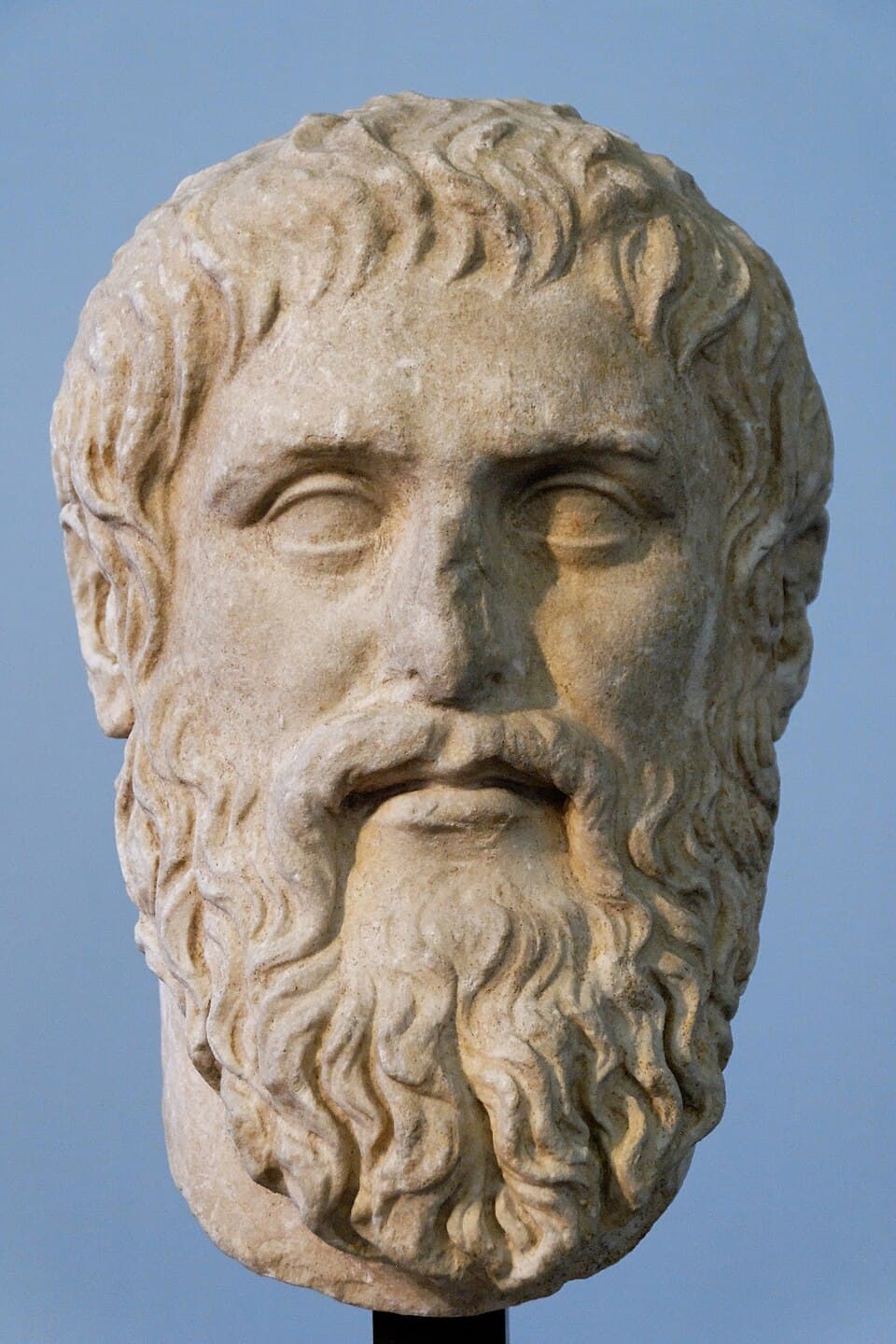 Wikimedia Commons
Plato Biography
Biography
Early Life
Plato was born around 428 or 427 BCE in Athens or nearby in ancient Greece. His original name is traditionally believed to have been Aristocles, while “Plato” was the name by which he became known.
He was born into an aristocratic family and grew up during a period of political and military conflict in ancient Greece. His family had connections to Athenian political life, but Plato ultimately chose philosophy rather than pursuing a conventional political career.
Student of Socrates
One of the most important influences on Plato's life was the philosopher Socrates. Plato became a student and follower of Socrates and was deeply influenced by his method of questioning and his search for ethical truth.
Socrates did not leave behind any writings of his own. Much of what is known about his philosophical ideas comes from later accounts, particularly Plato's dialogues.
After Socrates was executed by the Athenian government in 399 BCE, Plato became increasingly critical of conventional political institutions and devoted himself more deeply to philosophy.
Travels
Following Socrates' death, Plato is believed to have traveled outside Athens. Ancient sources associate him with journeys to places including southern Italy, Sicily, and Egypt, although details of these travels are uncertain.
His encounters with different intellectual traditions and political systems influenced his developing philosophical ideas.
Founding of the Academy
Around 387 BCE, Plato founded the Academy in Athens. It became one of the most important centers of philosophical and mathematical study in the ancient world.
The Academy attracted students and thinkers from different regions. Aristotle later studied there for many years.
The institution continued in various forms for centuries and became an important model for later traditions of higher education.
Philosophy and the Theory of Forms
One of Plato's most famous philosophical ideas is the Theory of Forms.
Plato argued that the physical world perceived through the senses is constantly changing and imperfect, while true knowledge concerns eternal and unchanging realities known as Forms or Ideas.
For example, individual beautiful objects may change or disappear, but Plato proposed that the Form of Beauty represents a higher and unchanging reality.
This distinction between the changing physical world and intelligible reality became one of the central themes of his philosophy.
The Allegory of the Cave
Plato's famous Allegory of the Cave appears in The Republic.
In the allegory, people are imagined as prisoners inside a cave who see shadows projected onto a wall and mistake those shadows for reality. One prisoner eventually escapes and discovers the world outside the cave.
The allegory is commonly interpreted as an illustration of education, philosophical enlightenment, and the movement from appearances toward knowledge and truth.
The Republic
The Republic is one of Plato's best-known works. It examines justice, education, politics, the human soul, and the ideal state.
Plato presents the concept of the philosopher-king, arguing that those who possess genuine philosophical knowledge and understanding should ideally govern society.
The work also discusses different forms of government and explores the relationship between individual justice and political justice.
Political Philosophy
Plato was one of the earliest major philosophers to develop a systematic theory of politics.
He was skeptical of democracy as practiced in ancient Athens, partly because he believed political decision-making could be influenced by ignorance and popular opinion.
His political writings examined how education, law, leadership, and social organization could contribute to a just society.
Other Major Ideas
Plato wrote about a wide range of philosophical subjects, including knowledge, ethics, mathematics, metaphysics, love, art, education, and the soul.
His dialogues frequently use Socrates as the central speaker. Through conversations and questioning, Plato explored philosophical problems rather than presenting his ideas as simple textbook arguments.
Important works traditionally attributed to Plato include Apology, Crito, Phaedo, Symposium, Meno, The Republic, Phaedrus, Timaeus, and The Laws.
Relationship with Aristotle
Aristotle became one of Plato's most famous students at the Academy. He studied and worked within Plato's philosophical environment for many years.
Although Aristotle was deeply influenced by Plato, he eventually developed important philosophical disagreements with his teacher, particularly concerning Forms, knowledge, nature, and metaphysics.
Together, Plato and Aristotle became two of the most influential philosophers in the history of Western thought.
Later Life
Plato remained associated with the Academy for the rest of his life and continued writing and teaching philosophy.
He is believed to have died around 348 or 347 BCE in Athens. The exact circumstances of his death are not known with certainty.
Legacy
Plato's influence on philosophy, education, political theory, mathematics, theology, and Western intellectual history is enormous.
His dialogues became foundational texts for generations of philosophers. His ideas influenced later thinkers in ancient Greece and Rome, medieval Christian and Islamic philosophers, Renaissance scholars, and modern philosophers.
The Academy he founded established an enduring model for organized philosophical and intellectual education.
Plato remains one of the most studied philosophers in history, and questions raised in his works—such as what constitutes knowledge, justice, reality, and a good life—continue to influence philosophical debate today.
Did you know?
Plato founded the Academy in Athens around 387 BCE. Aristotle later became one of its most famous students, creating an intellectual lineage that profoundly shaped Western philosophy.