Monarch · Japan
Naruhito
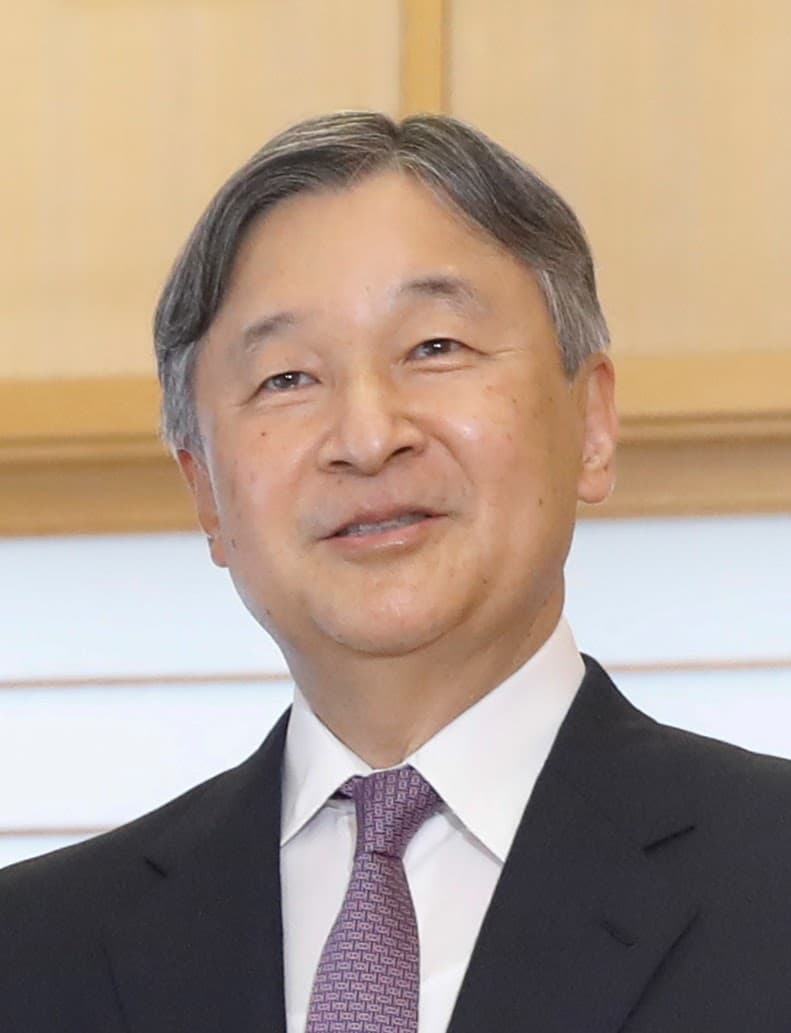
Naruhito is the 126th Emperor of Japan, ascending to the Chrysanthemum Throne on May 1, 2019, after the abdication of his father, Emperor Akihito. Born on February 23, 1960, he is the eldest son of Akihito and Empress Emerita Michiko. His reign is known as the Reiwa era, a name associated with harmony and beauty. Emperor Naruhito is married to Empress Masako, and they have one daughter, Princess Aiko.
 Wikimedia Commons
Naruhito: Full Biography
Biography
Early Life and Birth
Naruhito was born on February 23, 1960, in Tokyo, Japan. He is the eldest son of Emperor Akihito and Empress Emerita Michiko. At birth, he received the traditional imperial title Prince Hiro.
He was born into Japan's imperial family during the reign of his grandfather, Emperor Hirohito. From an early age, he was prepared for the responsibilities associated with becoming the future emperor of Japan.
Family Background
Naruhito belongs to Japan's Imperial House, one of the world's oldest hereditary monarchies. His father, Akihito, became emperor in 1989 and later abdicated in 2019. His mother, Michiko, was the first commoner in modern times to marry a Japanese crown prince.
Naruhito has two younger siblings: Fumihito, Crown Prince Akishino, and Sayako, who left the imperial family after marrying in 2005.
Education
Naruhito attended schools affiliated with Gakushuin in Tokyo, an institution historically associated with the Japanese imperial family. He later studied history at Gakushuin University and graduated in 1982.
His academic interests included medieval Japanese history and the development of transportation and communication systems. He continued his studies in the United Kingdom, broadening his knowledge through international academic experience.
Studies at Oxford University
From 1983 to 1985, Naruhito studied at Merton College, University of Oxford. His research focused on the history of transport on the River Thames, particularly its role in trade and communication.
Studying abroad gave him opportunities to experience life outside Japan and interact with people from different cultural backgrounds. His time at Oxford also strengthened his international outlook.
Becoming Crown Prince
Naruhito formally became Crown Prince of Japan on February 23, 1991. As heir to the throne, he undertook official duties, attended national ceremonies, and represented Japan at international events.
His responsibilities included learning about constitutional monarchy, diplomacy, cultural exchange, and the symbolic role of the imperial institution in Japanese society.
Meeting Masako Owada
Naruhito met Masako Owada, a diplomat with an international education and professional experience, in the 1980s. Masako had studied at Harvard University and worked for Japan's Ministry of Foreign Affairs.
Their relationship attracted significant public attention because Masako had pursued a professional diplomatic career before joining the imperial family.
Marriage to Masako
Naruhito married Masako Owada on June 9, 1993, in a ceremony held in Tokyo. Following the marriage, Masako became Crown Princess of Japan.
As Crown Princess, Masako participated in official ceremonies, diplomatic engagements, and charitable activities. Her transition from a diplomatic career to imperial life drew considerable public interest.
Birth of Princess Aiko
On December 1, 2001, Naruhito and Masako welcomed their only child, Princess Aiko, whose formal title is Princess Toshi.
Naruhito has spoken publicly about the importance of supporting his daughter and raising her with care. Princess Aiko later attended Gakushuin University and graduated from its Faculty of Letters.
Accession to the Throne
On April 30, 2019, Naruhito's father, Emperor Akihito, abdicated the throne. Naruhito became emperor the following day, May 1, 2019.
His accession began the Reiwa era. The era name is commonly associated with the idea of beautiful or harmonious harmony and was intended to express hopes for a peaceful society.
Enthronement Ceremony
Naruhito's formal enthronement ceremony took place on October 22, 2019. Representatives from numerous countries attended, highlighting the international significance of the transition.
The ceremony followed longstanding imperial traditions while taking place within Japan's modern constitutional framework.
The Reiwa Era
Naruhito's reign is known as the Reiwa era. As emperor, he serves as the symbol of the state and of the unity of the Japanese people, in accordance with the Constitution of Japan.
The emperor does not hold independent governing power. His official duties include ceremonies, receiving foreign ambassadors, attending state functions, and undertaking activities that support public and cultural life.
Constitutional Role and Responsibilities
Japan's postwar Constitution defines the emperor as a symbol rather than a political ruler. Governmental authority rests with elected institutions, while the emperor performs specified ceremonial and constitutional acts.
Naruhito's responsibilities include participating in formal state events, meeting visiting dignitaries, and representing the country on appropriate occasions. His role emphasizes continuity and national unity.
Interest in Water and Environmental Issues
Naruhito has shown a longstanding interest in water management, conservation, and access to safe water. Before becoming emperor, he participated in international discussions and conferences concerning water-related challenges.
His interest reflects the importance of water resources in public health, agriculture, disaster prevention, and sustainable development.
International Engagements
As crown prince and later emperor, Naruhito has taken part in international visits and received foreign leaders and dignitaries. These engagements help maintain cultural connections and diplomatic relationships between Japan and other countries.
His international experience, including his studies in Britain, has contributed to his familiarity with different societies and traditions.
The Tokyo Olympic and Paralympic Games
Naruhito served as honorary president of the Tokyo Olympic and Paralympic Games held in 2021, after the events were postponed from 2020 because of the COVID-19 pandemic.
The Games took place under exceptional public-health conditions. They brought international athletes to Japan while also requiring extensive safety measures and changes to normal event operations.
Public Service and National Ceremonies
As emperor, Naruhito attends ceremonies marking national milestones, honors, cultural achievements, and other significant occasions. He also receives reports from government officials and performs duties established by the Constitution.
These activities are part of the modern emperor's role as a public symbol rather than a political decision-maker.
Personal Interests
Naruhito has demonstrated an interest in history, geography, transportation, and water conservation. His academic work on the River Thames reflects his broader curiosity about how infrastructure shapes societies.
His education and public activities have also given him opportunities to engage with international culture, historical research, and environmental concerns.
Family Life
Naruhito's immediate family consists of Empress Masako and their daughter, Princess Aiko. Despite the demands of imperial duties, family life has remained an important part of his public identity.
The family has also attracted attention for navigating the expectations and traditions of Japan's imperial institution in contemporary society.
Imperial Succession
Japan's current imperial succession law restricts the throne to male members of the imperial line. Princess Aiko, despite being Naruhito's only child, is not eligible to inherit the throne under the current law.
Naruhito's younger brother, Crown Prince Akishino, is the heir apparent, followed by Akishino's son, Prince Hisahito. The question of succession has been the subject of public discussion in Japan.
Legacy and Significance
Naruhito represents a new generation of Japan's imperial family. His education abroad, academic interests, and public engagement have shaped his approach to the ceremonial role of emperor.
His reign began with the Reiwa era and continues the modern constitutional tradition in which the emperor serves as a symbol of the state and national unity.
Conclusion
Emperor Naruhito became Japan's 126th emperor on May 1, 2019. Educated in Japan and the United Kingdom, he is known for his interest in history, water conservation, and international exchange. As emperor, he performs ceremonial and constitutional duties while representing continuity within Japan's modern imperial institution.
Did you know?
- Naruhito was born on February 23, 1960, in Tokyo. - He studied at Merton College, University of Oxford, from 1983 to 1985. - His academic research at Oxford examined the history of transport on the River Thames. - He became emperor on May 1, 2019, following his father Akihito's abdication. - His reign is known as the Reiwa era. - His wife, Empress Masako, previously worked as a diplomat for Japan's Ministry of Foreign Affairs. - His daughter, Princess Aiko, was born on December 1, 2001. - He has a longstanding interest in water conservation and water-related issues.