Monarch
Mehmed II
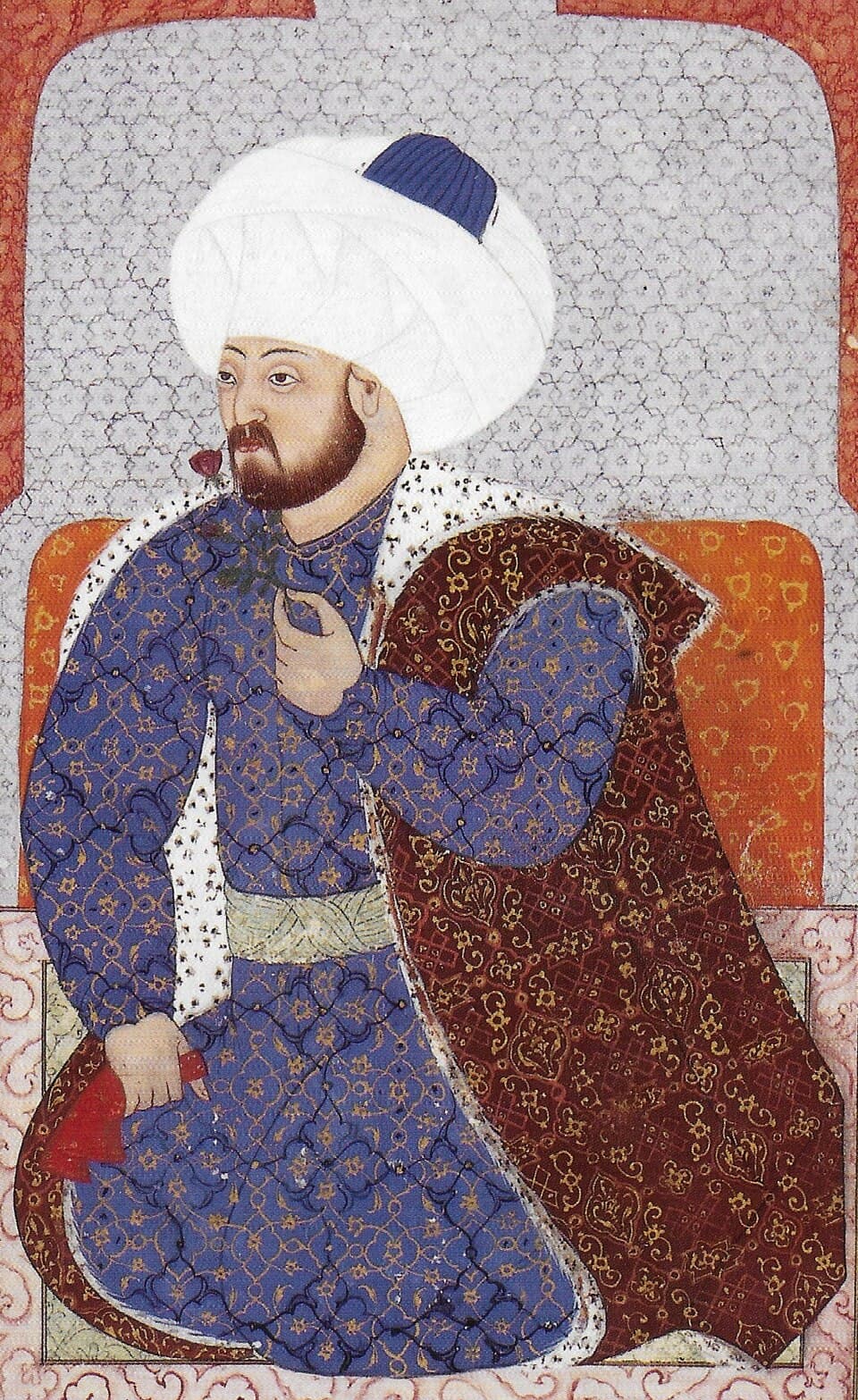
Mehmed II, also known as Mehmed the Conqueror, was an Ottoman sultan famous for capturing Constantinople in 1453 and transforming the Ottoman Empire into a major imperial power. Born on March 30, 1432, he ruled from 1444 to 1446 and again from 1451 until his death in 1481. His conquest of Constantinople ended the Byzantine Empire and established the city as a central capital of the Ottoman state.
 Wikimedia Commons
Mehmed II: Full Biography
Biography
Early Life
Mehmed II was born on March 30, 1432, in Edirne, then an important center of the Ottoman Empire. He was the son of Sultan Murad II and Hüma Hatun. From childhood, he was prepared for leadership in a state that was expanding across Anatolia and southeastern Europe.
Education and Training
Mehmed received an extensive education in religion, history, languages, military strategy, and state administration. His teachers helped prepare him for the responsibilities of ruling an empire. He also developed a strong interest in scholarship, architecture, and classical history.
First Accession to the Throne
In 1444, Murad II temporarily relinquished the throne, and Mehmed became sultan while still a teenager. His first reign was brief and politically challenging. Regional tensions and external threats eventually led Murad II to resume power in 1446.
Return to Power
Following his father's death in 1451, Mehmed became sultan again. He focused on strengthening the Ottoman military, consolidating imperial authority, and preparing for the conquest of Constantinople, the capital of the Byzantine Empire.
The Importance of Constantinople
Constantinople occupied a strategic position between Europe and Asia, controlling important trade routes and access between the Black Sea and the Mediterranean. Despite the decline of the Byzantine Empire, the city remained a significant political, religious, and cultural center.
Preparations for the Conquest
Mehmed carefully prepared for the campaign against Constantinople. He strengthened the Ottoman fleet, organized a large army, and commissioned powerful artillery. He also constructed the fortress of Rumeli Hisarı on the European shore of the Bosporus to help control maritime movement toward the city.
The Siege of Constantinople
The siege began in April 1453. Ottoman forces surrounded Constantinople by land and sea, while the city's defenders attempted to hold its walls against repeated attacks. Mehmed's military planning, artillery, and persistence played major roles in the campaign.
Capture of Constantinople
On May 29, 1453, Ottoman forces captured Constantinople. The conquest marked the end of the Byzantine Empire, which had survived in various forms for more than a thousand years. Mehmed entered the city and made it a principal center of his empire.
Why He Was Called Mehmed the Conqueror
Mehmed became known as Fatih Sultan Mehmed, meaning Mehmed the Conqueror. The title reflected his capture of Constantinople and his subsequent military campaigns, which expanded Ottoman territory and strengthened the sultan's position as a major ruler.
Constantinople as an Imperial Capital
After the conquest, Mehmed worked to restore Constantinople's population and economy. He encouraged migration, supported rebuilding, and developed the city as an administrative, commercial, and cultural center. The city later became widely known as Istanbul, although the official adoption of the name took place much later.
Religious and Cultural Policies
Mehmed sought to establish a functioning imperial capital with communities from different religious backgrounds. The Orthodox Christian Patriarchate continued to operate under Ottoman rule, while Muslim institutions and educational foundations expanded. His policies combined imperial administration with the political realities of ruling a diverse population.
Military Campaigns and Expansion
Following the conquest, Mehmed continued expanding Ottoman territory in the Balkans, Anatolia, and around the Black Sea. His campaigns brought additional regions under Ottoman authority and strengthened the empire's position as a major power in southeastern Europe and western Asia.
Conquest of the Morea
In 1460, Ottoman forces conquered much of the Byzantine-controlled Despotate of the Morea in southern Greece. This campaign further reduced the remaining Byzantine political presence and consolidated Ottoman influence in the eastern Mediterranean region.
Campaigns in Anatolia
Mehmed also worked to strengthen Ottoman control over Anatolia. His campaigns and political arrangements brought rival territories and principalities under Ottoman influence, helping create a more centralized imperial state.
Relations with European Powers
Mehmed's expansion brought the Ottoman Empire into conflict and negotiation with several European powers, including Venice, Hungary, and various Italian states. These relationships involved warfare, diplomacy, trade, and changing political alliances.
Interest in Art and Scholarship
Mehmed was interested in classical history, geography, literature, and art. His court attracted scholars, administrators, and artists from different cultural backgrounds. He also commissioned architectural projects that helped reshape Constantinople into an imperial capital.
Government and Administration
Mehmed strengthened the central administration and developed institutions that supported imperial rule. His government worked to consolidate the authority of the sultan, manage conquered territories, and maintain the military and financial resources needed for continued expansion.
Family and Succession
Mehmed had several sons, including Bayezid II and Cem Sultan. After Mehmed's death, a struggle for succession took place, and Bayezid II eventually became sultan. The succession reflected the political tensions that could accompany leadership transitions in the Ottoman dynasty.
Death
Mehmed II died on May 3, 1481, while preparing for another military campaign. He was approximately 49 years old. His death ended a reign that had fundamentally changed the political map of the eastern Mediterranean.
Legacy
Mehmed II remains one of the most significant rulers in Ottoman history. His conquest of Constantinople transformed the Ottoman Empire's strategic position, while his campaigns, administrative reforms, and cultural patronage strengthened its imperial identity. The city he captured became a major center of Ottoman political and cultural life for centuries.
Conclusion
Mehmed II combined military ambition with an interest in administration, scholarship, and urban development. His conquest of Constantinople in 1453 was a turning point in world history, and his expansion of Ottoman power helped shape relations between Europe and Asia for generations.
Did you know?
- Mehmed II was only about 21 years old when he captured Constantinople in 1453. - His nickname, “the Conqueror,” is commonly rendered in Turkish as *Fatih*. - He ordered the construction of Rumeli Hisarı before the siege to strengthen Ottoman control of the Bosporus. - Constantinople became the principal imperial capital of the Ottoman Empire after its conquest. - Mehmed supported scholars and artists and showed an interest in classical history. - His son Bayezid II succeeded him as Ottoman sultan. - The Byzantine Empire ended with the fall of Constantinople in 1453.