Monarch · United Kingdom of Great Britain and Ireland
George VI
King George VI was King of the United Kingdom and the other Commonwealth realms from 1936 until his death in 1952. Born Albert Frederick Arthur George on December 14, 1895, he became king after his elder brother, Edward VIII, abdicated the throne. George VI led Britain through much of the Second World War and became a symbol of national resilience. He was the father of Queen Elizabeth II and Princess Margaret.
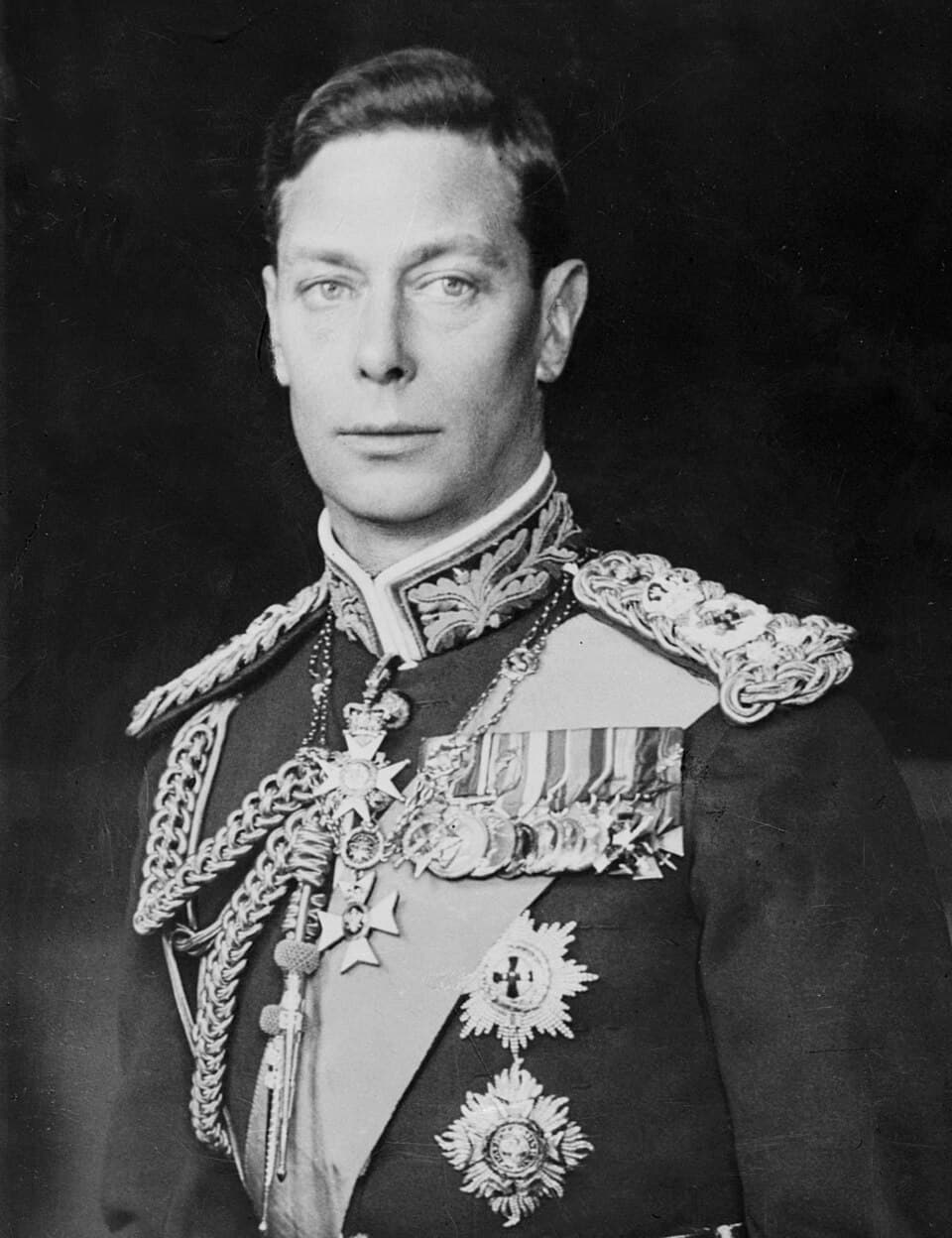 Wikimedia Commons
King George VI: Full Biography
Biography
Early Life
George VI was born Albert Frederick Arthur George on December 14, 1895, at York Cottage on the Sandringham Estate in Norfolk, England. He was the second son of Prince George, Duke of York, and Princess Mary of Teck, who later became King George V and Queen Mary.
Childhood and Education
As a young prince, Albert grew up within the British royal family and received an education appropriate to his royal position. He was known as Bertie among family members. During childhood, he experienced health difficulties and struggled with a stammer that affected his public speaking.
Naval and Military Service
During the First World War, Albert served in the Royal Navy and later with the Royal Naval Air Service. He also served in the Royal Air Force during the later part of the war. His military experience helped prepare him for future royal responsibilities.
Becoming Duke of York
In 1920, Albert was created Duke of York. He began undertaking more public duties and representing the royal family at official events. Over time, he gained experience in public service and developed greater confidence in his official role.
Marriage to Elizabeth Bowes-Lyon
Albert married Elizabeth Bowes-Lyon on April 26, 1923, at Westminster Abbey in London. Elizabeth later became Queen Elizabeth, and their marriage became an important partnership throughout his reign. They had two daughters, Elizabeth and Margaret.
Overcoming His Stammer
Albert's stammer made speeches and public appearances difficult. With the help of speech therapist Lionel Logue, he worked to improve his speaking ability. Their relationship was later portrayed in the film The King's Speech, which brought renewed public attention to this aspect of his life.
Unexpected Accession to the Throne
In December 1936, King Edward VIII abdicated to marry Wallis Simpson, an American divorcee. Albert, as the next in line to the throne, became king. He chose the regnal name George VI in honor of his father, George V, and was crowned on May 12, 1937, at Westminster Abbey.
Early Years as King
George VI became monarch during a period of political uncertainty and growing tensions in Europe. His accession required him to establish public confidence in the monarchy while preparing for the responsibilities of leading the country during a difficult international period.
The Second World War
The Second World War began in September 1939, and George VI became a symbol of British unity during the conflict. He and Queen Elizabeth remained in Britain during the Blitz, visiting bomb-damaged areas and meeting civilians, emergency workers, and members of the armed forces.
Wartime Leadership
George VI delivered radio broadcasts to the nation during the war. His speeches helped communicate solidarity and determination during periods of danger and uncertainty. His public commitment to sharing the wartime experience strengthened the monarchy's connection with the British people.
Visits to the Armed Forces
During the war, George VI visited military personnel and inspected troops at home and abroad. These visits demonstrated his support for the armed forces and allowed him to meet people serving in difficult conditions.
Relationship with Winston Churchill
George VI worked closely with Prime Minister Winston Churchill during the Second World War. Their weekly meetings helped maintain communication between the monarch and the government. Although their roles were different, their relationship became an important part of Britain's wartime constitutional leadership.
Postwar Britain
After the war ended in 1945, George VI presided over a period of reconstruction and major political change. Britain faced economic challenges, while the British Empire began a significant transformation into a new Commonwealth of independent nations.
Independence of India
In 1947, British India gained independence and was partitioned into India and Pakistan. These events marked a major turning point in the history of the British Empire. George VI remained monarch during this transition, and India became a republic in 1950.
Family Life
George VI and Queen Elizabeth raised their daughters, Elizabeth and Margaret, in a close family environment. Their elder daughter became Queen Elizabeth II in 1952, following her father's death, while Margaret became known as Princess Margaret, Countess of Snowdon.
Health Problems
George VI experienced serious health problems during the later years of his reign, including lung cancer and complications associated with his heavy smoking. His declining health reduced his ability to carry out public duties in the early 1950s.
Death
George VI died in his sleep at Sandringham House on February 6, 1952, at the age of 56. His elder daughter succeeded him as Queen Elizabeth II. His death was followed by national mourning and tributes to his wartime leadership.
Funeral and Burial
George VI's funeral took place in February 1952, and he was buried at St George's Chapel at Windsor Castle. In 1969, his remains were moved to the King George VI Memorial Chapel, where other members of the royal family were later laid to rest.
Legacy
George VI is remembered for accepting the throne during an unexpected constitutional crisis and serving as monarch throughout the Second World War. His decision to remain in Britain during the Blitz and his efforts to connect with the public contributed to the modern image of the British monarchy as a source of continuity during national hardship.
Conclusion
King George VI's reign was shaped by war, political transformation, and personal challenges. From his unexpected accession to his wartime broadcasts and support for national recovery, he played a significant role in British history. His legacy continues through the royal family and the historical memory of Britain's wartime experience.
Did you know?
- George VI was originally named Albert, but chose the name George VI when he became king. - He became king after his elder brother, Edward VIII, abdicated in 1936. - He worked with speech therapist Lionel Logue to improve his stammer. - He and Queen Elizabeth remained in Britain during the Second World War and the Blitz. - His elder daughter succeeded him as Queen Elizabeth II in 1952. - He was the last British monarch to be Emperor of India, a title that ended in 1947. - His life and speech therapy were portrayed in the 2010 film *The King's Speech*.
