Monarch · France
Louis XVI of France
Louis XVI of France (1754–1793) was the last king of France before the abolition of the monarchy during the French Revolution. He ruled from 1774 until 1792 and was married to Marie Antoinette of Austria. His reign was marked by financial crisis, political conflict, attempts at reform, and the growing revolutionary movement. After the monarchy was abolished, he was tried by the National Convention and executed by guillotine on January 21, 1793.
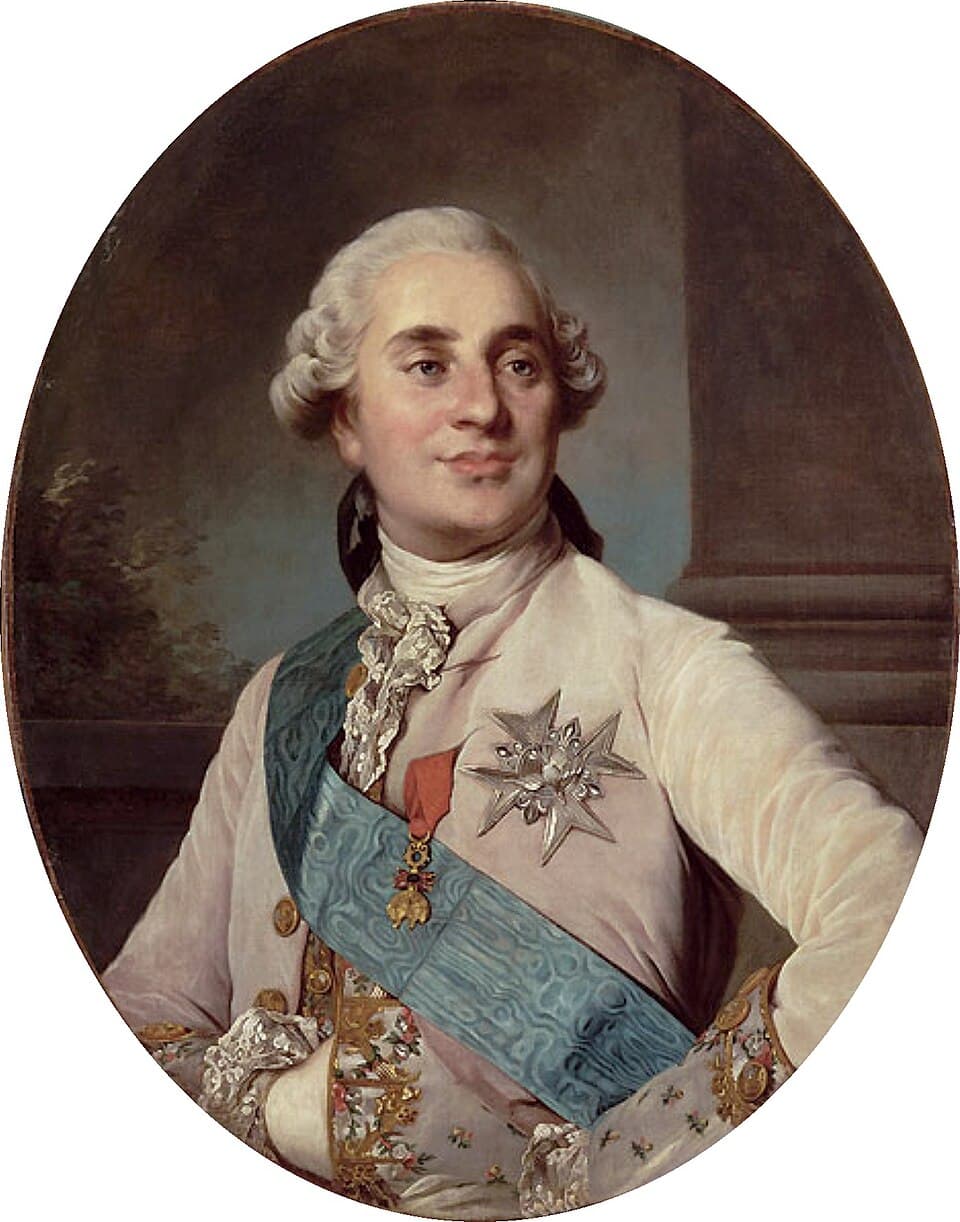 Wikimedia Commons
Louis XVI of France: Full Biography
Biography
1. Introduction
Louis XVI of France was a Bourbon monarch whose reign coincided with one of the most transformative periods in European history. Born Louis-Auguste on August 23, 1754, he became king in 1774 following the death of his grandfather, Louis XV. His rule began with hopes for reform but ended with the collapse of the French monarchy during the French Revolution.
Louis XVI faced a kingdom burdened by financial difficulties, social inequality, and growing dissatisfaction with royal authority. His attempts to address these problems failed to prevent a revolution that ultimately brought an end to his reign and led to his execution.
2. Early Life and Birth
Louis XVI was born at the Palace of Versailles in France on August 23, 1754. His full birth name was Louis-Auguste de France, and he was the son of Louis, Dauphin of France, and Maria Josepha of Saxony.
He belonged to the House of Bourbon, one of Europe's most influential royal dynasties. As a child, Louis lived within the elaborate court environment of Versailles, where royal etiquette, religious observance, and political traditions shaped everyday life.
Initially, he was not expected to become king immediately because he had older brothers ahead of him in the line of succession.
3. Family Background
Louis XVI was the grandson of King Louis XV and became heir to the French throne after his father's death in 1765. His upbringing took place during a period when the French monarchy retained enormous formal authority but faced increasing criticism from intellectuals and reformers.
His parents emphasized religious education and princely responsibilities. However, the young Louis received limited practical preparation for the complex political challenges he would later encounter as king.
4. Education and Interests
Louis received a broad education that included history, geography, languages, religion, and political subjects. He also developed an interest in science, geography, mechanics, and practical craftsmanship.
He particularly enjoyed working with locks and metalworking, activities that offered him a private interest away from the formal demands of court life. He was also interested in maritime exploration and supported France's naval development.
These interests reflected a curious and technically minded side of his personality, although intellectual interests alone could not prepare him for the political crisis that unfolded during his reign.
5. Becoming the Heir to the Throne
Louis became the heir apparent, known as the Dauphin, after his father's death in 1765. This position placed him at the center of the royal succession and made his future marriage an important diplomatic matter.
The French monarchy depended heavily on dynastic alliances to maintain its position in Europe. Louis's marriage was therefore arranged partly to strengthen France's relationship with Austria, a major European power.
6. Marriage to Marie Antoinette
In 1770, Louis married Marie Antoinette, an Austrian archduchess and daughter of Empress Maria Theresa. The marriage was intended to strengthen the alliance between France and Austria.
Marie Antoinette became queen when Louis ascended the throne in 1774. Their marriage produced four children, including Marie-Thérèse Charlotte and Louis-Charles, who became known to royalists as Louis XVII after his father's execution.
The royal couple's public image became increasingly controversial during the years of financial hardship and political unrest. Marie Antoinette, in particular, became a target of hostile pamphlets and popular criticism, much of which mixed political opposition with rumors and personal attacks.
7. Accession to the Throne in 1774
Louis XVI became king on May 10, 1774, following the death of Louis XV. He was about 19 years old and inherited a kingdom facing serious financial and administrative problems.
Many people initially welcomed the new king with hopes that he would govern more fairly and introduce reforms. Louis appeared willing to consider changes to the political and economic system, but he faced resistance from powerful groups that benefited from existing privileges.
His reign would become a prolonged struggle between reform efforts, royal authority, aristocratic interests, and demands for broader political representation.
8. France's Financial Crisis
One of the most serious challenges facing Louis XVI was the French state's financial instability. Government debt had accumulated through previous wars and the expensive administration of the monarchy.
France's support for the American War of Independence further increased the burden on public finances. Although the American struggle weakened Britain's position and strengthened French international influence, it also added substantial costs to an already strained treasury.
The tax system was unequal and inefficient. Many privileged groups enjoyed exemptions or special advantages, while ordinary people carried a considerable share of the burden. Attempts to create a more sustainable system of taxation repeatedly encountered political resistance.
9. Attempts at Reform
Louis XVI appointed several ministers who sought to improve France's finances and administration. Among the most prominent were Anne Robert Jacques Turgot and Jacques Necker.
Turgot proposed economic reforms intended to reduce restrictions and improve the state's financial position. His proposals faced opposition from privileged groups, and he was dismissed in 1776.
Necker later pursued financial measures and sought to strengthen confidence in the government. However, the underlying problems remained unresolved.
These failures exposed the monarchy's difficulty in implementing major changes without broader political cooperation. Louis's willingness to consider reform was often undermined by reversals, resistance at court, and uncertainty over how much authority he was prepared to surrender.
10. Support for the American Revolution
France supported the American colonies during their war for independence from Great Britain. French military, naval, and financial assistance contributed to the American victory.
The conflict had important consequences for France. It weakened Britain's position and enhanced France's international prestige, but it also deepened the French government's debt.
The American Revolution additionally helped circulate ideas about representative government, political rights, and resistance to arbitrary authority. These ideas influenced debates in France, although the country's social and political circumstances differed significantly from those of the American colonies.
11. Social Inequality in France
Before the French Revolution, French society was traditionally divided into three estates: the clergy, the nobility, and the Third Estate, which included the vast majority of the population.
The clergy and nobility possessed various privileges, while commoners faced many taxes and obligations. Peasants, urban workers, and members of the growing middle class experienced different forms of economic and social pressure.
Bad harvests, rising food prices, and hardship intensified public frustration during the late 1780s. Many people increasingly questioned whether the existing political system could respond to their needs.
Although these inequalities had developed over generations, Louis XVI's government was held responsible for failing to resolve them.
12. The Estates-General of 1789
By 1788, the financial crisis had become so severe that the monarchy could no longer easily govern through its traditional institutions. Louis XVI agreed to summon the Estates-General, a representative assembly that had not met since 1614.
The assembly convened at Versailles in May 1789. Its representatives disagreed over voting procedures, political authority, and the extent of reform.
Representatives of the Third Estate eventually declared themselves a National Assembly, claiming the right to represent the French nation. This challenge undermined the traditional structure of royal government and marked a decisive step toward revolution.
13. The French Revolution Begins
On July 14, 1789, revolutionaries in Paris stormed the Bastille, a royal fortress and prison that had become a symbol of royal authority. The event became one of the defining moments of the French Revolution.
Revolutionary developments spread across France. In the countryside, unrest and fear contributed to attacks on feudal records and expressions of opposition to traditional obligations.
The National Assembly abolished many feudal privileges and adopted the Declaration of the Rights of Man and of the Citizen in August 1789. These changes challenged the foundations of the old social and political order.
Louis XVI faced growing pressure to accept reforms that substantially limited the traditional powers of the monarchy.
14. The Royal Family Moves to Paris
In October 1789, a large crowd, including many women concerned about the price and availability of bread, marched from Paris to Versailles. The demonstration forced the royal family to leave the palace and relocate to the Tuileries Palace in Paris.
The move brought the king closer to the political atmosphere of the capital but also placed the royal family under increasing public scrutiny and pressure.
The relationship between the monarchy and revolutionary leaders remained tense. Louis accepted some constitutional changes, but his commitment to the new political order was increasingly questioned.
15. The Flight to Varennes
In June 1791, Louis XVI and his family attempted to escape Paris and reach a region where they hoped to find greater security and support.
Their journey ended at Varennes, where they were recognized and arrested before being returned to Paris. The failed escape severely damaged the king's credibility.
Many revolutionaries interpreted the flight as evidence that Louis was unwilling to accept the constitutional system being established in France. Others feared that the king's escape might encourage foreign intervention or a counterrevolution.
The incident deepened political divisions and weakened the possibility of restoring public trust in the monarchy.
16. The Constitutional Monarchy
In September 1791, France adopted a written constitution that established a constitutional monarchy. Louis XVI accepted the constitution and continued as king, but his powers were restricted by the new political arrangements.
The experiment faced serious difficulties. Political factions disagreed over the future of the revolution, while distrust of the king remained widespread.
International tensions also increased. Revolutionary France entered war with Austria in April 1792, and fears of foreign invasion and domestic conspiracy intensified.
The constitutional settlement failed to stabilize the country, and the monarchy's position continued to deteriorate.
17. The Fall of the Monarchy
On August 10, 1792, revolutionaries and armed insurgents attacked the Tuileries Palace. The royal family sought protection from the Legislative Assembly, but Louis's political authority had effectively collapsed.
He and his family were subsequently imprisoned in the Temple. In September 1792, the National Convention formally abolished the monarchy and established the French Republic.
Louis was no longer recognized by the revolutionary government as a reigning king. He was referred to as Louis Capet, using the name associated with the medieval Capetian dynasty rather than his royal title.
The end of the monarchy marked a major turning point in French and European history.
18. Trial and Execution
The National Convention put Louis XVI on trial in late 1792. The charges included conspiring against public liberty and endangering the security of the state. Revolutionary leaders debated whether a former king could be held accountable for actions committed while ruling.
The Convention found him guilty and voted to impose the death penalty. The decision reflected deep divisions over monarchy, revolution, national security, and the meaning of political justice.
On January 21, 1793, Louis XVI was executed by guillotine in Paris at what was then called the Place de la Révolution, now the Place de la Concorde.
His execution shocked royalists across Europe and intensified the conflict between revolutionary France and several European monarchies.
19. Marie Antoinette and the Royal Children
Louis's family suffered greatly after the fall of the monarchy. Marie Antoinette remained imprisoned and was executed by guillotine on October 16, 1793.
Their surviving daughter, Marie-Thérèse Charlotte, endured imprisonment before eventually leaving France. Their younger son, Louis-Charles, was also held in captivity and died in 1795 at the age of ten.
The fate of the royal children became a powerful symbol of the human consequences of the revolution. The destruction of the immediate royal family also became central to later royalist memory and political debate.
20. Personality and Private Interests
Louis XVI has often been portrayed as a king whose private interests differed from the demands of political leadership. He enjoyed hunting, reading, geography, mechanical work, and technical crafts.
His interest in locks and metalworking was particularly well known. He also supported scientific and maritime projects, reflecting the broader interest in exploration and technology that characterized parts of the eighteenth century.
Historical interpretations of his personality vary. Some emphasize his sincerity and interest in reform, while others focus on his difficulty making consistent decisions during rapidly changing political circumstances. His
Did you know?
**Did you know?** Louis XVI had a strong interest in locks and metalworking and enjoyed working with his hands. He also supported French exploration and naval development. Although he accepted a constitution in 1791, his attempted escape to Varennes that same year seriously damaged public trust in the monarchy. He was executed on January 21, 1793, and his death became one of the defining events of the French Revolution.