Monarch · Spain
Juan Carlos I of Spain
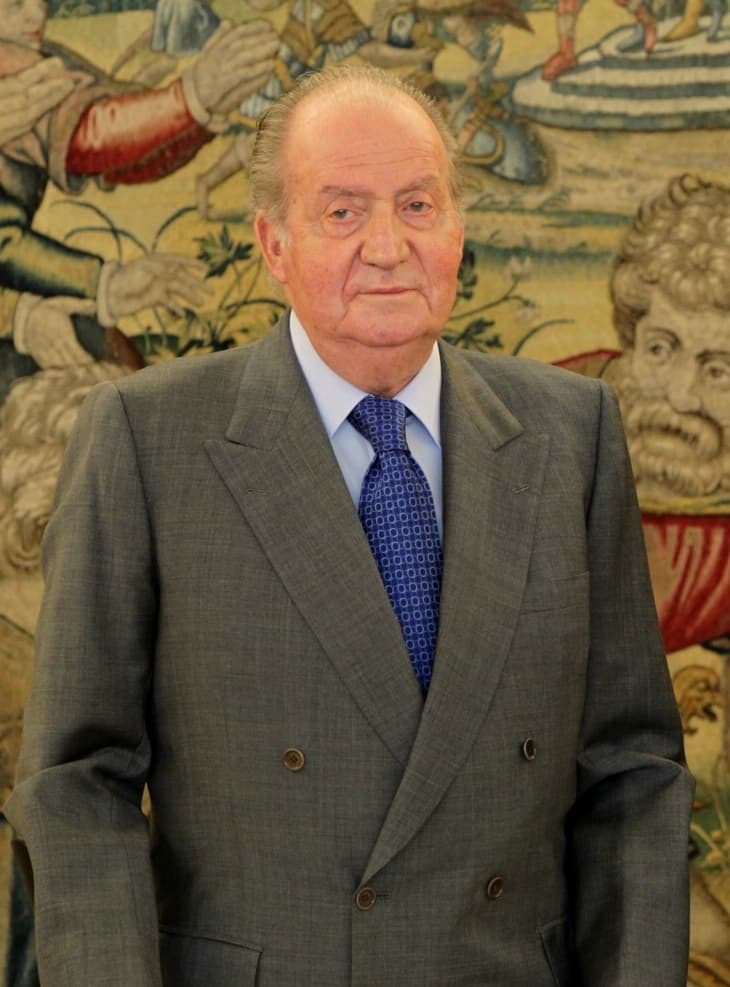
Juan Carlos I of Spain is a former King of Spain who reigned from November 1975 until his abdication in June 2014. Born on January 5, 1938, in Rome, Italy, he played a significant role in Spain’s transition from the Franco dictatorship to parliamentary democracy. During his reign, Spain adopted a democratic constitution in 1978 and strengthened its place in Europe. His later years as king were overshadowed by controversies involving his private life and finances. After abdicating in favor of his son, Felipe VI, Juan Carlos continued to attract public attention while living largely outside Spain.
 Wikimedia Commons
Juan Carlos I of Spain: Full Biography
Biography
1. Introduction
Juan Carlos I is a former King of Spain who played a major role in the country's transition from authoritarian rule to constitutional democracy. He became king in November 1975, following the death of Francisco Franco, who had governed Spain as a dictator for decades.
During Juan Carlos's reign, Spain adopted a democratic constitution, developed parliamentary institutions, and became more integrated into European political and economic life. His role during the attempted military coup of February 1981 helped strengthen his public image as a defender of the constitutional system.
However, his later years on the throne were marked by controversies involving his private life, financial affairs, and public conduct. In 2014, he abdicated in favor of his son, Felipe VI.
2. Early Life and Birth
Juan Carlos was born on January 5, 1938, in Rome, Italy, while his family was living in exile. Spain was then experiencing the Spanish Civil War, which began in 1936 and ended in 1939 with the victory of Franco's Nationalist forces.
His full name is Juan Carlos Alfonso Víctor María de Borbón y Borbón-Dos Sicilias. He belongs to the House of Bourbon, a royal dynasty with a long history in Spain and other European countries.
His parents were Infante Juan, Count of Barcelona, and Princess María de las Mercedes of Bourbon-Two Sicilies. Although Juan Carlos was born outside Spain, his future became closely connected to the country's political development.
3. Family Background
Juan Carlos's grandfather, Alfonso XIII, was king of Spain until the monarchy was overthrown in 1931, leading to the establishment of the Second Spanish Republic.
After leaving Spain, the royal family lived in exile. Juan Carlos's father, Don Juan, became the leading claimant to the Spanish throne after Alfonso XIII's death in 1941.
The family hoped that the monarchy would eventually return. However, the future of Spain's royal institution became closely tied to Franco's political plans and the question of who would succeed him.
These circumstances shaped Juan Carlos's upbringing and his eventual role in the restoration of the monarchy.
4. Education and Training
Juan Carlos spent part of his childhood in Portugal and later received education in Spain. In 1948, an agreement allowed him to travel to Spain for schooling under arrangements associated with Franco's government.
His education included academic subjects, military training, and preparation for public responsibilities. He attended military academies and trained with the Spanish armed forces.
This education helped establish relationships with senior military officers and familiarized him with Spain's institutions.
His training also reflected Franco's intention to prepare Juan Carlos as a potential successor who would preserve the monarchy while operating within the political structure of the dictatorship.
5. Relationship with Francisco Franco
Juan Carlos's relationship with Franco was central to his path to the throne. In 1969, Franco formally designated him as his successor as head of state, bypassing Juan Carlos's father, Don Juan.
This decision created tension within the royal family. Don Juan had long maintained that the monarchy should be restored through a process that respected its dynastic traditions and political legitimacy.
Juan Carlos accepted Franco's designation and took an oath to uphold the principles of the regime. Nevertheless, after becoming king, he supported political reforms that moved Spain toward parliamentary democracy.
Historians continue to discuss the extent to which Juan Carlos's later decisions reflected long-standing personal convictions, political pragmatism, or a response to changing circumstances.
6. Marriage to Queen Sofía
On May 14, 1962, Juan Carlos married Princess Sofía of Greece and Denmark in Athens. Sofía was the daughter of King Paul of Greece and Queen Frederica.
The marriage connected two European royal families and produced three children: Elena, Cristina, and Felipe.
Their eldest child, Infanta Elena, was born in 1963, followed by Infanta Cristina in 1965 and Felipe in 1968.
Sofía became queen when Juan Carlos ascended the throne in 1975. The couple represented the Spanish monarchy during the country's democratic transition, although later public reporting about Juan Carlos's private life placed strain on the royal family's public image.
7. Becoming King in 1975
Francisco Franco died on November 20, 1975. Two days later, Juan Carlos was proclaimed King of Spain.
His accession took place at a decisive moment. Spain had been governed by Franco's authoritarian regime since the end of the Civil War, and the country faced questions about political freedoms, economic development, and the future of its institutions.
Some supporters of the old regime expected the new king to maintain the existing system. Others hoped for democratic reforms.
Juan Carlos's decisions during the following years helped determine the direction of Spain's political transformation.
8. Spain's Transition to Democracy
After becoming king, Juan Carlos supported the political transition away from Francoist rule. He worked with reform-minded officials and appointed Adolfo Suárez as prime minister in 1976.
The government introduced political reforms that permitted the development of a multiparty system and paved the way for competitive elections.
Spain held its first democratic general election since the Second Republic in June 1977. Political parties that had previously been banned or restricted were able to participate in the emerging democratic system.
The transition required negotiations among former regime officials, opposition groups, political parties, trade unions, and regional movements. The process was complex and involved compromises designed to reduce the risk of renewed political violence.
9. The Spanish Constitution of 1978
A major milestone was the approval of Spain's new constitution in 1978. It was endorsed in a national referendum on December 6 and established Spain as a parliamentary monarchy.
The constitution recognized fundamental rights, established democratic institutions, and defined the king's role within a constitutional framework. Executive political authority rested primarily with the government, which was accountable to parliament.
The constitution also provided a framework for regional autonomy, allowing the development of autonomous communities across Spain.
Juan Carlos's support for the constitutional process became a central element of his public legacy, although Spain's democratic transition was the result of efforts by many political and social actors.
10. The Attempted Coup of February 23, 1981
One of the most dramatic events of Juan Carlos's reign occurred on February 23, 1981, when armed members of the Civil Guard entered the Congress of Deputies during a parliamentary vote.
The attempted coup threatened Spain's young democratic system. Military officers and other conspirators sought to overturn the political order, although the plot did not gain sufficient support to succeed.
In a televised address, Juan Carlos, wearing his uniform as commander-in-chief, called for respect for the constitution and opposed the military intervention.
His intervention helped undermine the coup attempt and strengthened his reputation among many Spaniards as a defender of democracy.
The event remains one of the defining moments of his reign.
11. Spain's International Integration
During Juan Carlos's reign, Spain strengthened its relationships with European and international institutions.
Spain joined the North Atlantic Treaty Organization in 1982 and became a member of the European Economic Community in 1986, an important step toward deeper European integration.
Membership in European institutions supported Spain's political consolidation and economic modernization. It also strengthened diplomatic and commercial ties with other European countries.
Juan Carlos undertook numerous official visits abroad and represented Spain at international events. His role as head of state gave the country a visible diplomatic presence during a period of major political change.
12. Economic and Social Transformation
Spain underwent significant economic and social changes during Juan Carlos's reign. The country became more urbanized, expanded its service sector, and developed stronger links with international markets.
Tourism, manufacturing, construction, and services contributed to economic growth. At the same time, Spain experienced periods of unemployment, economic recession, labor conflict, and regional inequality.
Spanish society also became more secular and socially diverse. Democratic governments introduced changes in education, civil liberties, and social policy.
These transformations were driven by governments, businesses, civil society, and ordinary citizens as well as by the constitutional monarchy.
13. The Royal Family and Public Image
For many years, Juan Carlos was regarded as a symbol of Spain's transition to democracy. His public role included ceremonial duties, diplomatic visits, and representing the continuity of the state.
The royal family received considerable public attention, and its image was closely associated with Spain's modern democratic identity.
Over time, however, public perceptions became more complicated. Reporting about family disputes, private relationships, and financial questions weakened confidence in the institution among some Spaniards.
The monarchy faced increasing scrutiny over transparency, accountability, and the relationship between royal privilege and public responsibility.
14. Controversies and Public Criticism
Juan Carlos's later years as king were marked by several controversies. In 2012, criticism intensified after news emerged that he had taken part in an expensive elephant-hunting trip in Botswana while Spain was experiencing severe economic difficulties.
The incident prompted public debate about royal spending and judgment. Juan Carlos issued a public apology.
Other controversies involved his private relationships and questions about financial arrangements associated with him and people close to him. These matters contributed to declining public support for the monarchy.
The controversies became important factors in discussions about the institution's credibility and the need for greater transparency.
15. Abdication in 2014
On June 2, 201
Did you know?
**Did you know?** Juan Carlos I was born in Rome while the Spanish royal family was living in exile. Before becoming king, he was selected by Francisco Franco as his successor in 1969. In 1981, Juan Carlos publicly opposed an attempted military coup, helping defend Spain's new democratic constitutional order. He abdicated in 2014 in favor of his son, Felipe VI.