Playwright · Norway
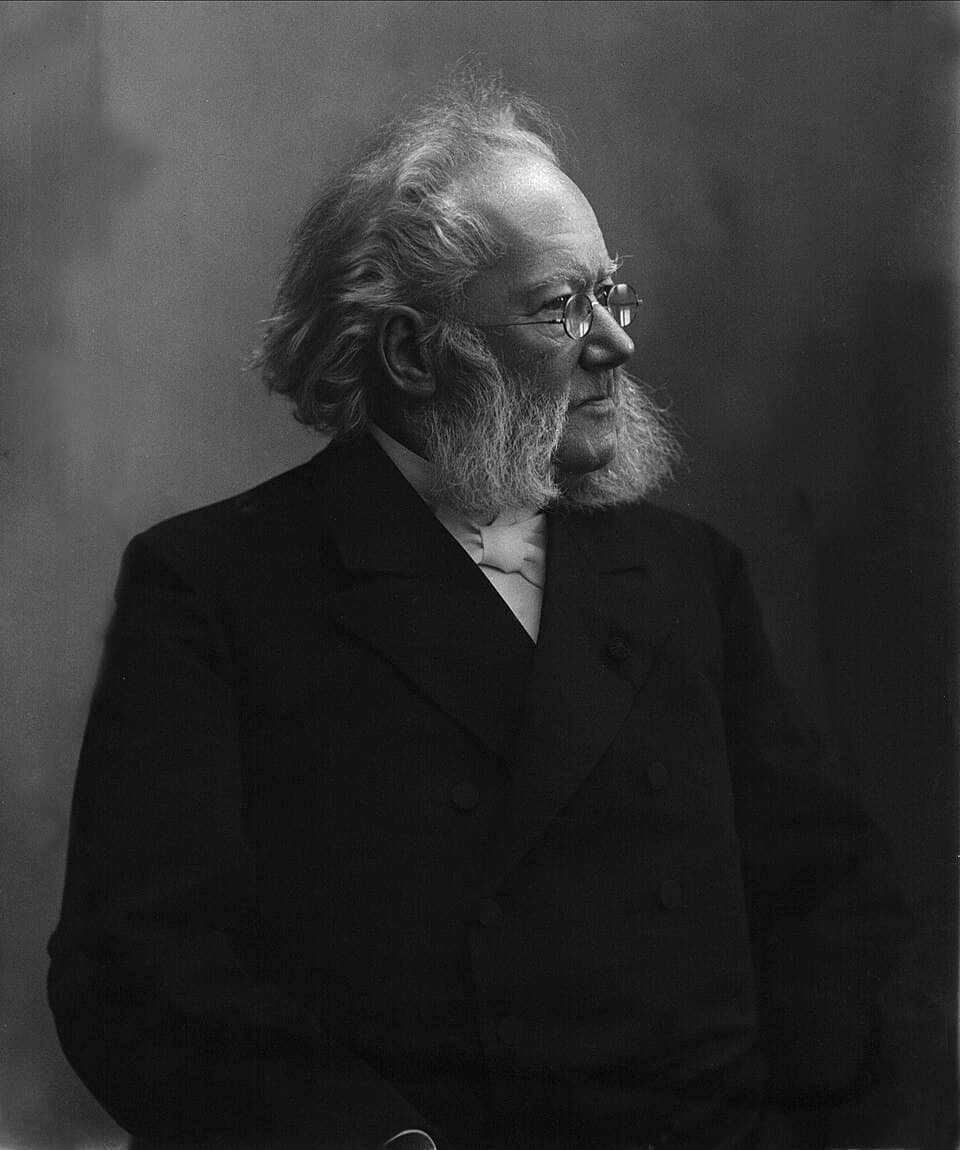
Henrik Ibsen
Henrik Ibsen (1828–1906) was a Norwegian playwright and poet who became one of the most influential dramatists in world literature. Born in Skien, Norway, he helped develop modern realistic drama and became internationally known for works such as *Brand*, *Peer Gynt*, *A Doll's House*, *Ghosts*, *The Wild Duck*, and *Hedda Gabler*. His plays frequently explored individual freedom, family relationships, social expectations, morality, and conflicts between individuals and society. Ibsen spent 27 years abroad, mainly in Italy and Germany, before returning to Norway in 1891. He died in Kristiania, now Oslo, in 1906.
 Wikimedia Commons
Biography
Henrik Johan Ibsen was born on March 20, 1828, in Skien, Norway, to merchant Knud Ibsen and Marichen Altenburg. His family initially lived in comfortable circumstances, but his father's business failed when Henrik was still a child, and the family's financial situation changed significantly. At the age of 15, Ibsen left Skien for Grimstad, where he became an apprentice pharmacist.
While living in Grimstad, Ibsen developed his interest in literature and began writing poetry and drama. In 1850, he published his first play, Catilina, under the pseudonym Brynjolf Bjarme. The same year, he moved to Kristiania, now Oslo, where he continued writing and became involved in literary and theatrical circles.
In 1851, Ibsen joined Det norske Theater in Bergen, founded by violinist Ole Bull. His work there gave him extensive practical experience in theater production, staging, and dramatic writing. He later worked at Christiania Theater and married Suzannah Thoresen in 1858. Their son, Sigurd Ibsen, was born in 1859.
Ibsen's early writing included historical and romantic drama, but his career changed significantly with Brand (1866) and Peer Gynt (1867). These works established him as an important Norwegian writer. In 1864, he had left Norway and spent the next 27 years abroad, mainly in Italy and Germany, where he wrote many of his best-known plays.
In the late 1870s, Ibsen developed the realistic social drama for which he became particularly well known. A Doll's House, published in 1879, examined marriage, individual identity, and social expectations through its central character, Nora Helmer. The play generated extensive discussion and became one of Ibsen's most internationally recognized works.
He followed it with works including Ghosts (1881), An Enemy of the People (1882), The Wild Duck (1884), Rosmersholm (1886), The Lady from the Sea (1888), and Hedda Gabler (1890). These plays often focused on difficult moral choices, family relationships, social conventions, truth, and the tension between individual desires and social pressures.
Ibsen returned to Norway in 1891 and settled in Kristiania. His later plays included The Master Builder, Little Eyolf, John Gabriel Borkman, and When We Dead Awaken, his final drama, published in 1899. His later works combined elements of realism, symbolism, and modernist drama.
Ibsen suffered a series of strokes beginning in 1900 and died on May 23, 1906, in Kristiania, now Oslo. His plays continued to be performed internationally, and Norwegian literary institutions describe him as a central figure in Norwegian literature and a major influence on modern drama.
Did you know?
Did you know? Henrik Ibsen spent about 27 years living abroad, mainly in Italy and Germany, and wrote many of his best-known plays during this period, including *Brand*, *Peer Gynt*, and *A Doll's House*.