Writer · Kingdom of Prussia
Friedrich Nietzsche
Friedrich Nietzsche (1844–1900) was a German philosopher, cultural critic, and classical philologist whose writings profoundly influenced modern philosophy, literature, psychology, and cultural thought. He challenged traditional ideas about morality, religion, truth, and human existence. His major works include *Thus Spoke Zarathustra*, *Beyond Good and Evil*, *On the Genealogy of Morality*, and *The Birth of Tragedy*.
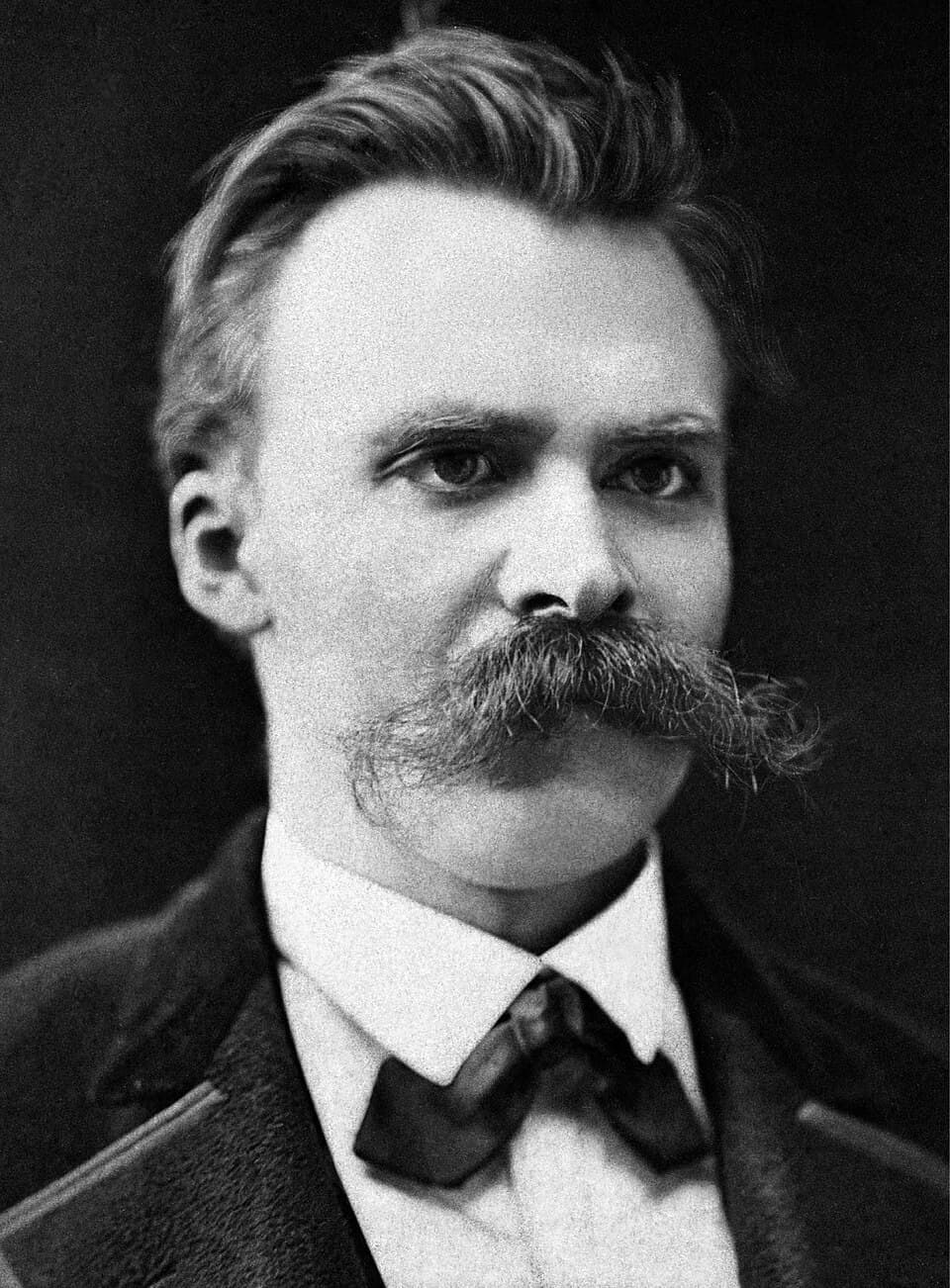 Wikimedia Commons
Friedrich Nietzsche Biography
Biography
Early Life
Friedrich Wilhelm Nietzsche was born on October 15, 1844, in Röcken, in the Kingdom of Prussia. His father, Carl Ludwig Nietzsche, was a Lutheran pastor who died when Friedrich was still a child.
After his father's death, Nietzsche grew up with his mother, sister, grandmother, and other relatives. His early environment was strongly influenced by Christianity and Lutheran traditions.
From an early age, Nietzsche showed exceptional ability in languages, music, literature, and classical studies.
Education
Nietzsche attended the prestigious Schulpforta boarding school, where he received an intensive classical education.
He later studied theology and classical philology at the University of Bonn before transferring to the University of Leipzig.
At Leipzig, Nietzsche became particularly interested in the philosophy of Arthur Schopenhauer and the works of the classical Greek world.
Academic Career
In 1869, at only 24 years old, Nietzsche was appointed professor of classical philology at the University of Basel in Switzerland.
He taught Greek and Latin literature and developed his own ideas about ancient Greek culture, tragedy, art, and philosophy.
His academic career was unusually short. Increasing health problems eventually forced him to resign from his professorship in 1879.
The Birth of Tragedy
Nietzsche's first major book, The Birth of Tragedy, was published in 1872.
The work examined ancient Greek tragedy and argued that Greek culture combined two contrasting forces, which Nietzsche called the Apollonian and Dionysian.
The book challenged conventional approaches to classical scholarship and established Nietzsche as an unconventional thinker.
Break with Schopenhauer and Wagner
Nietzsche was strongly influenced by Arthur Schopenhauer during his early intellectual development.
He also developed a close relationship with composer Richard Wagner. Nietzsche initially admired Wagner's music and regarded him as an important cultural figure.
However, their relationship eventually deteriorated. Nietzsche became increasingly critical of Wagner's nationalism, cultural views, and later religious tendencies.
The intellectual break with Wagner marked an important stage in Nietzsche's philosophical development.
Philosophy
Nietzsche's philosophy challenged many established assumptions about morality, religion, truth, and human nature.
Rather than presenting a conventional philosophical system, he often used aphorisms, metaphors, literary characters, and provocative arguments.
His writings frequently ask how values arise, why people believe certain ideas, and whether inherited moral systems actually promote human flourishing.
“God Is Dead”
One of Nietzsche's most famous statements is “God is dead.”
The phrase does not simply mean that Nietzsche believed a deity had literally died. It refers to what he saw as the decline of traditional Christian belief and the growing cultural consequences of secularization.
Nietzsche was deeply concerned about what would happen to morality and meaning when traditional religious foundations lost their authority.
Übermensch
The concept of the Übermensch, often translated as “Overman” or “Superman,” is central to Thus Spoke Zarathustra.
Nietzsche presented the Übermensch as an ideal of self-overcoming and the creation of new values rather than simply following inherited conventions.
The concept has been interpreted in many different ways and has sometimes been distorted by later political and cultural movements.
Will to Power
Another important idea associated with Nietzsche is the “will to power.”
Nietzsche used the concept in different contexts, but it broadly concerns the drive toward growth, self-overcoming, expression, achievement, and the exercise of one's capacities.
It should not be reduced simply to a desire for political domination or physical power.
Critique of Morality
Nietzsche questioned traditional concepts of good and evil.
In On the Genealogy of Morality, he investigated the historical and psychological origins of moral values.
He argued that moral systems develop through complex interactions involving culture, social structures, psychological motivations, and historical circumstances.
His approach encouraged later philosophers to examine morality historically and psychologically rather than simply accepting inherited moral categories.
Thus Spoke Zarathustra
Thus Spoke Zarathustra, published between 1883 and 1885, is one of Nietzsche's most famous works.
Written in a highly literary and poetic style, it follows the fictional figure Zarathustra as he reflects on humanity, self-overcoming, morality, and the future of human values.
The book contains many of Nietzsche's most famous ideas, including the Übermensch and the concept of eternal recurrence.
Eternal Recurrence
Nietzsche's idea of eternal recurrence asks readers to imagine that they would have to live their entire lives repeatedly, exactly as they have lived them.
The thought experiment challenges individuals to consider whether they could affirm their lives completely, including their difficulties and suffering.
It became one of the most distinctive ideas in Nietzsche's philosophy.
Beyond Good and Evil
Published in 1886, Beyond Good and Evil continued Nietzsche's criticism of traditional philosophy and morality.
He challenged philosophers who assumed that their ideas were purely objective and argued that philosophical beliefs can be connected to psychological motives and cultural assumptions.
The book also examined morality, religion, truth, and the nature of philosophical inquiry.
On the Genealogy of Morality
Published in 1887, On the Genealogy of Morality is one of Nietzsche's most influential works.
It investigates the historical development of moral concepts such as guilt, punishment, conscience, and good and evil.
The book's genealogical approach influenced later philosophers and social theorists who studied how values and institutions develop historically.
Later Life and Health
Nietzsche suffered from serious and recurring health problems throughout much of his adult life, including severe headaches and visual difficulties.
After leaving Basel, he lived in various European cities and spent long periods writing and thinking in relative isolation.
His financial circumstances were often modest, and his books initially attracted only a limited readership.
Mental Collapse
In January 1889, Nietzsche experienced a severe mental breakdown in Turin, Italy.
After this episode, he was unable to continue his philosophical work. He spent the remainder of his life under the care of his mother and later his sister, Elisabeth Förster-Nietzsche.
During this period, he did not return to his previous level of intellectual activity.
Death
Friedrich Nietzsche died on August 25, 1900, in Weimar, Germany, at the age of 55.
He was buried in the family cemetery at Röcken, where he had been born.
Nietzsche's Sister and His Legacy
After Nietzsche's mental collapse, his sister Elisabeth became an important figure in managing his literary estate.
Elisabeth had nationalist and antisemitic political views that differed from many aspects of Nietzsche's own writings. She later helped shape the public presentation of his work.
Some of Nietzsche's writings were subsequently interpreted in ways that connected him to political ideologies he did not straightforwardly endorse. Modern scholarship has emphasized the need to distinguish Nietzsche's own texts from later ideological appropriations.
Influence on Modern Thought
Nietzsche's influence expanded significantly after his death.
His ideas influenced existentialist philosophers, psychologists, literary writers, theologians, cultural critics, and political thinkers.
His writings contributed to later discussions about nihilism, morality, identity, psychology, language, culture, and the meaning of human existence.
Philosophers and writers influenced by or engaged with Nietzsche include Martin Heidegger, Karl Jaspers, Sigmund Freud, Albert Camus, Jean-Paul Sartre, and Michel Foucault, although their relationships to his thought differed considerably.
Legacy
Friedrich Nietzsche remains one of the most widely discussed philosophers of the modern era.
His distinctive writing style and challenging ideas transformed philosophical discussion. Rather than offering easy answers, he encouraged readers to question inherited beliefs and examine the origins of their values.
His concepts of the Übermensch, will to power, ete
Did you know?
Nietzsche was appointed professor of classical philology at the University of Basel when he was only 24 years old, making him exceptionally young for such an academic position.