Monarch · Anshan Persia
Cyrus the Great
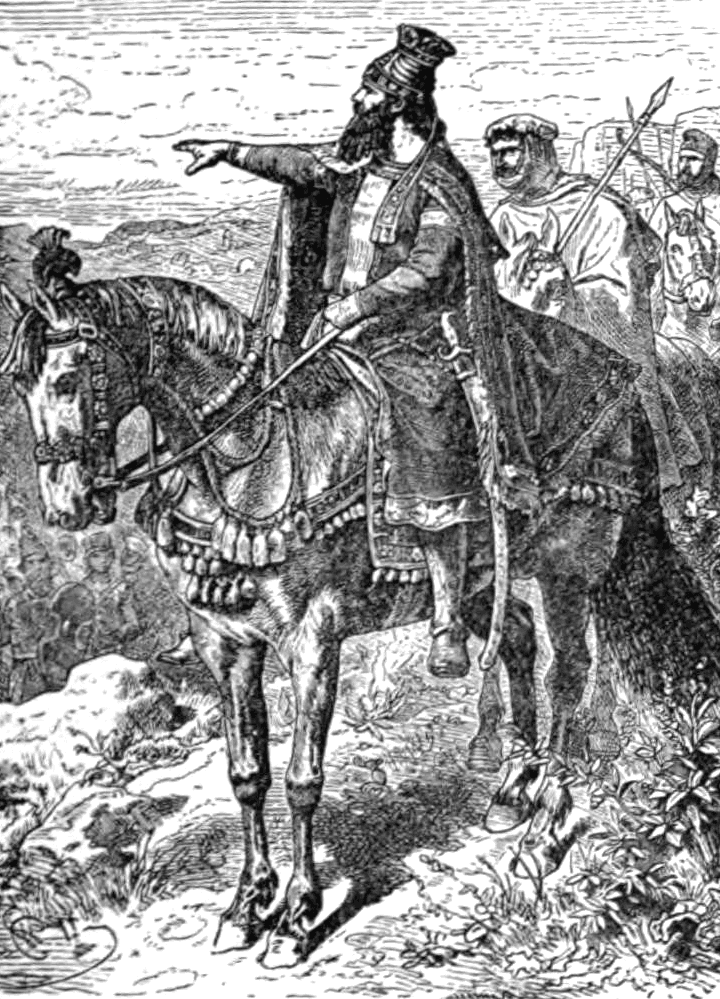
Cyrus the Great (c. 600–530 BCE) was the founder of the Achaemenid Persian Empire and one of the most influential rulers of the ancient world. He established a vast empire by conquering the Medes, Lydia, and Babylon, while allowing many conquered peoples to preserve their customs and religious practices. His rule is often associated with effective administration, religious tolerance, and the development of a powerful Persian state. Cyrus died around 530 BCE during a military campaign in Central Asia.
 Wikimedia Commons
Cyrus the Great: Full Biography
Biography
1. Introduction
Cyrus the Great, also known as Cyrus II of Persia, was the founder of the Achaemenid Persian Empire. Through military campaigns, political strategy, and the incorporation of diverse peoples, he created one of the most influential empires of the ancient world.
Cyrus ruled during the sixth century BCE and brought several major kingdoms under Persian control. His conquests included the Median Empire, the Kingdom of Lydia, and the Neo-Babylonian Empire. He is also remembered for policies that allowed certain conquered communities to maintain religious traditions and restore important temples.
2. Birth and Early Life
Cyrus was born around 600 BCE, although the exact date and place of his birth remain uncertain. He belonged to a Persian royal family associated with Anshan, an ancient region in what is now southwestern Iran.
His father was Cambyses I, a Persian ruler, and his mother is identified in ancient Greek accounts as Mandane, the daughter of the Median king Astyages. Details of his childhood are difficult to establish because many surviving stories were written long after his lifetime and contain legendary elements.
Despite these uncertainties, historical evidence confirms that Cyrus emerged from a royal Persian family and eventually transformed its regional power into a major empire.
3. Family and Royal Heritage
Cyrus belonged to the early Persian ruling house associated with the Achaemenid dynasty. His ancestry became an important part of the political legitimacy of the empire he established.
His son Cambyses II succeeded him as ruler and continued the expansion of Persian power. Cyrus also had other children, including Bardiya and daughters associated with later Persian royal marriages.
Dynastic relationships helped strengthen political alliances and maintain continuity within the ruling family.
4. Rise to Power
Cyrus became king of Anshan and the Persians around 559 BCE, according to the conventional chronology. At that time, the Medes were a major regional power, and Persian territories were closely connected to the political affairs of the Iranian plateau.
Cyrus gradually challenged Median dominance. Around 550 BCE, he defeated the Median king Astyages and took control of the Median kingdom.
Rather than simply destroying the existing political structure, Cyrus incorporated important Median officials and institutions into his growing state. This helped him gain access to a larger population, military resources, and established administrative networks.
5. Conquest of the Median Empire
The defeat of Astyages marked a turning point in Cyrus's career. The Persian ruler inherited or seized control of territories that extended well beyond his original homeland.
The conquest also gave Cyrus greater influence over western and central Asia. With the resources of Media under his control, he could undertake further campaigns against powerful neighboring kingdoms.
The union of Persian and Median territories became one of the foundations of the Achaemenid Empire.
6. Conquest of Lydia
Cyrus next turned his attention toward Lydia, a wealthy kingdom in western Anatolia ruled by King Croesus. Lydia was known for its prosperity, commercial networks, and strategic position near the Aegean world.
War broke out between the two rulers around the middle of the sixth century BCE. Cyrus defeated Croesus's forces and captured the Lydian capital, Sardis, around 547–546 BCE, though the precise chronology is debated.
The conquest brought the wealthy Lydian territories under Persian control and extended Cyrus's influence toward the western coast of Anatolia.
Greek-speaking cities in the region subsequently came under Persian authority, creating new political relationships between the empire and the Aegean world.
7. Expansion Across Western Asia
Following the conquest of Lydia, Cyrus and his commanders extended Persian authority over additional territories in Anatolia and surrounding regions.
Some communities submitted to Persian rule, while others resisted. Local rulers and officials were often retained when they could serve the interests of the new imperial administration.
This approach allowed the empire to govern a wide variety of peoples without requiring every region to adopt an identical political or cultural system.
The growing empire connected territories with different languages, religions, economies, and traditions.
8. Conquest of Babylon in 539 BCE
One of Cyrus's most significant achievements was the conquest of Babylon in 539 BCE. Babylon was the capital of the Neo-Babylonian Empire and one of the most important cities in the ancient Near East.
The Babylonian ruler Nabonidus faced political and religious tensions within his kingdom. Cyrus's forces defeated Babylonian troops and took control of Babylon in October 539 BCE.
Babylon became part of the Persian Empire, giving Cyrus authority over Mesopotamia and greatly expanding his political and economic resources.
The conquest was especially important because Babylon possessed a long tradition of urban administration, scholarship, trade, and religious institutions.
9. The Cyrus Cylinder
The Cyrus Cylinder is an ancient clay inscription created after the Persian conquest of Babylon. It records Cyrus's rise to power in Babylonian royal language and presents him as a ruler favored by the god Marduk.
The inscription describes the restoration of religious practices, the return of certain sacred objects, and the rebuilding or maintenance of temples. It also portrays Cyrus as a legitimate king who restored order after the rule of Nabonidus.
The cylinder is an important historical source for understanding how Cyrus presented his rule to Babylonian society.
It is sometimes described in modern discussions as an early declaration of human rights. However, historians caution that it was a royal inscription shaped by ancient Babylonian political and religious traditions, rather than a universal statement of individual rights in the modern sense.
10. Religious Policies and Conquered Peoples
Cyrus is often remembered for allowing some conquered communities to restore their religious practices and local institutions. His policies helped make Persian rule acceptable to certain groups whose religious sites or traditions had been disrupted by earlier rulers.
His administration did not impose a single religion across the empire. Instead, Persian rulers often worked through established local religious institutions and political elites.
This policy was practical as well as political: maintaining cooperation with local communities helped stabilize a vast and culturally diverse empire.
Nevertheless, ancient imperial rule still depended on conquest, taxation, military power, and political hierarchy. Cyrus's reputation for tolerance should therefore be understood within the realities of the ancient world.
11. Cyrus and the Jewish Exiles
Cyrus holds a significant place in Jewish history because biblical texts associate him with permission for Jewish exiles in Babylonia to return to Jerusalem and rebuild their temple.
After the conquest of Babylon, Persian policy allowed certain displaced populations and religious communities to restore important traditions and institutions. The biblical Book of Ezra describes a decree connected with the return of Jewish exiles and the rebuilding of the Second Temple.
For many Jewish traditions, Cyrus became an important foreign ruler who helped make the restoration of the Jerusalem Temple possible.
This legacy remains one of the best-known aspects of his historical reputation.
12. Government and Administration
Cyrus's empire incorporated territories with different political traditions and administrative systems. He relied on local elites and officials while maintaining royal authority over the larger imperial structure.
The empire's later system of provinces, commonly known as
Did you know?
**Did you know?** Cyrus the Great conquered Babylon in 539 BCE, and the ancient Cyrus Cylinder records how his rule was presented to the Babylonian people. Biblical tradition also credits him with allowing Jewish exiles to return to Jerusalem and rebuild their temple. His tomb can still be found at Pasargadae in modern Iran.