Monarch · Francia
Charlemagne
Charlemagne, also known as Charles the Great, was the King of the Franks from 768 and King of the Lombards from 774. In 800, Pope Leo III crowned him Emperor of the Romans, making him one of the most influential rulers of medieval Europe. He expanded the Frankish kingdom across much of Western and Central Europe, promoted Christianity, and supported educational and cultural reforms known as the Carolingian Renaissance. Charlemagne died on January 28, 814, in Aachen, in present-day Germany.
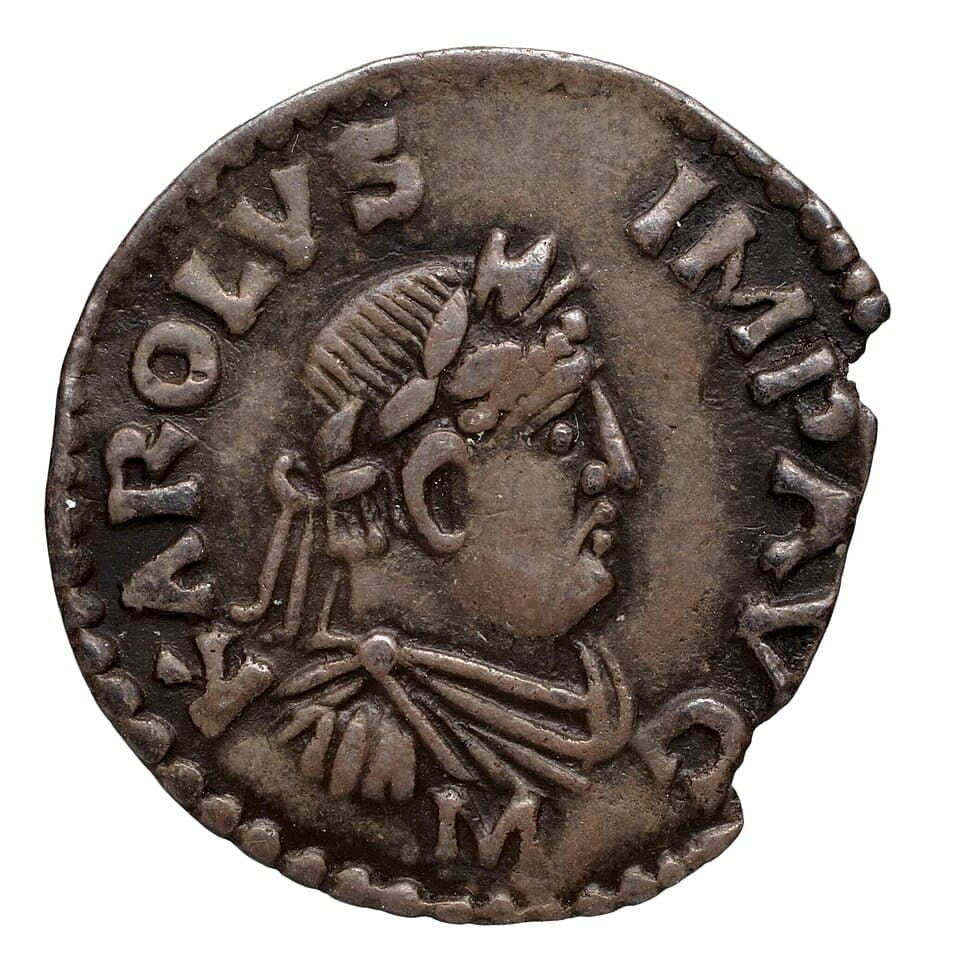 Wikimedia Commons
Charlemagne: Full Biography
Biography
Early Life and Birth
Charlemagne, whose name means “Charles the Great,” was born around 742. His exact birthplace and birth date remain uncertain. He was the son of Pepin the Short, King of the Franks, and Bertrada of Laon.
He grew up during a period when Western Europe was divided among numerous kingdoms and territories following the decline of the Western Roman Empire. His family belonged to the Carolingian dynasty, which was becoming increasingly powerful among the Franks.
Family Background
Charlemagne's father, Pepin the Short, became King of the Franks in 751 after the end of the Merovingian dynasty's rule. Pepin strengthened the relationship between the Frankish monarchy and the papacy, creating a political and religious alliance that influenced Charlemagne's reign.
Charlemagne's mother, Bertrada, also played a role in the royal family's affairs. The family connection to the Church helped establish the foundation for Charlemagne's later imperial coronation.
Becoming King of the Franks
In 768, Pepin the Short died, and his kingdom was divided between Charlemagne and his brother, Carloman. Charlemagne ruled part of the Frankish kingdom while Carloman controlled another portion.
When Carloman died in 771, Charlemagne took control of his brother's territories. He then became the sole ruler of the Franks and began expanding his authority through military campaigns, alliances, and administrative reforms.
Expansion of the Frankish Kingdom
Charlemagne devoted much of his reign to expanding and consolidating his kingdom. Through a series of military campaigns, he brought large areas of Western and Central Europe under Frankish control.
His campaigns extended Frankish influence into parts of modern-day France, Germany, Belgium, the Netherlands, Austria, and Italy. His empire became one of the most powerful political entities in Europe during the early Middle Ages.
The Saxon Wars
One of Charlemagne's longest military struggles was against the Saxons, who lived in territories east and northeast of the Frankish kingdom. The wars began in 772 and continued, with interruptions, for roughly three decades.
Charlemagne sought to bring Saxon territories under his political authority and convert their population to Christianity. The campaigns involved severe violence, forced resettlement, and coercive religious policies. The Saxon Wars remain a controversial part of his legacy.
Conquest of the Lombard Kingdom
In 774, Charlemagne invaded northern Italy and defeated the Lombard king, Desiderius. He assumed the title King of the Lombards and brought much of the Lombard kingdom under Frankish rule.
This victory strengthened his relationship with the papacy, which had sought protection against Lombard pressure. It also established Charlemagne as a major power in Italian affairs.
Relationship with the Papacy
Charlemagne maintained a close but complex relationship with the popes. The papacy benefited from his military protection, while Charlemagne gained religious support for his authority.
Their alliance helped shape the political order of medieval Western Europe. However, the relationship also raised questions about the balance between religious leadership and imperial power.
Coronation as Emperor
On December 25, 800, Pope Leo III crowned Charlemagne Emperor of the Romans during a ceremony at St. Peter's Basilica in Rome.
The coronation was a landmark in European history. It connected Charlemagne's rule with the legacy of the Roman Empire and strengthened the idea that a Western Christian emperor could exercise authority over a large part of Europe.
Historians continue to discuss the intentions behind the coronation and the degree to which Charlemagne expected the title. Regardless, it became an important precedent for later European emperors.
Government and Administration
Charlemagne ruled a vast territory that included peoples with different languages, customs, and traditions. To maintain control, he relied on regional officials, counts, royal representatives, and assemblies.
He regularly issued royal orders known as capitularies, addressing matters such as government, military organization, religious practice, and justice. Royal envoys, called missi dominici, were sent to inspect local officials and report on conditions throughout the empire.
Although his administration was not a modern centralized state, these measures helped strengthen royal authority across distant territories.
The Carolingian Renaissance
Charlemagne supported a revival of learning and intellectual activity that became known as the Carolingian Renaissance. He invited scholars from different parts of Europe to his court and encouraged improvements in education.
Important scholars associated with his court included Alcuin of York, who helped develop educational programs and
Did you know?
- Charlemagne was crowned Emperor of the Romans by Pope Leo III on Christmas Day in 800. - His name means “Charles the Great.” - He supported the Carolingian Renaissance, a revival of learning and scholarship in early medieval Europe. - He made Aachen, now in Germany, one of his principal royal residences. - Carolingian minuscule, a clear handwriting style promoted during his era, influenced the development of later European scripts. - His son Louis the Pious succeeded him after his death in 814. - Charlemagne's empire was divided among his grandsons under the Treaty of Verdun in 843. - His legacy includes both educational and administrative reforms and the forced conversion of conquered peoples.