Monarch · Thailand
Bhumibol Adulyadej
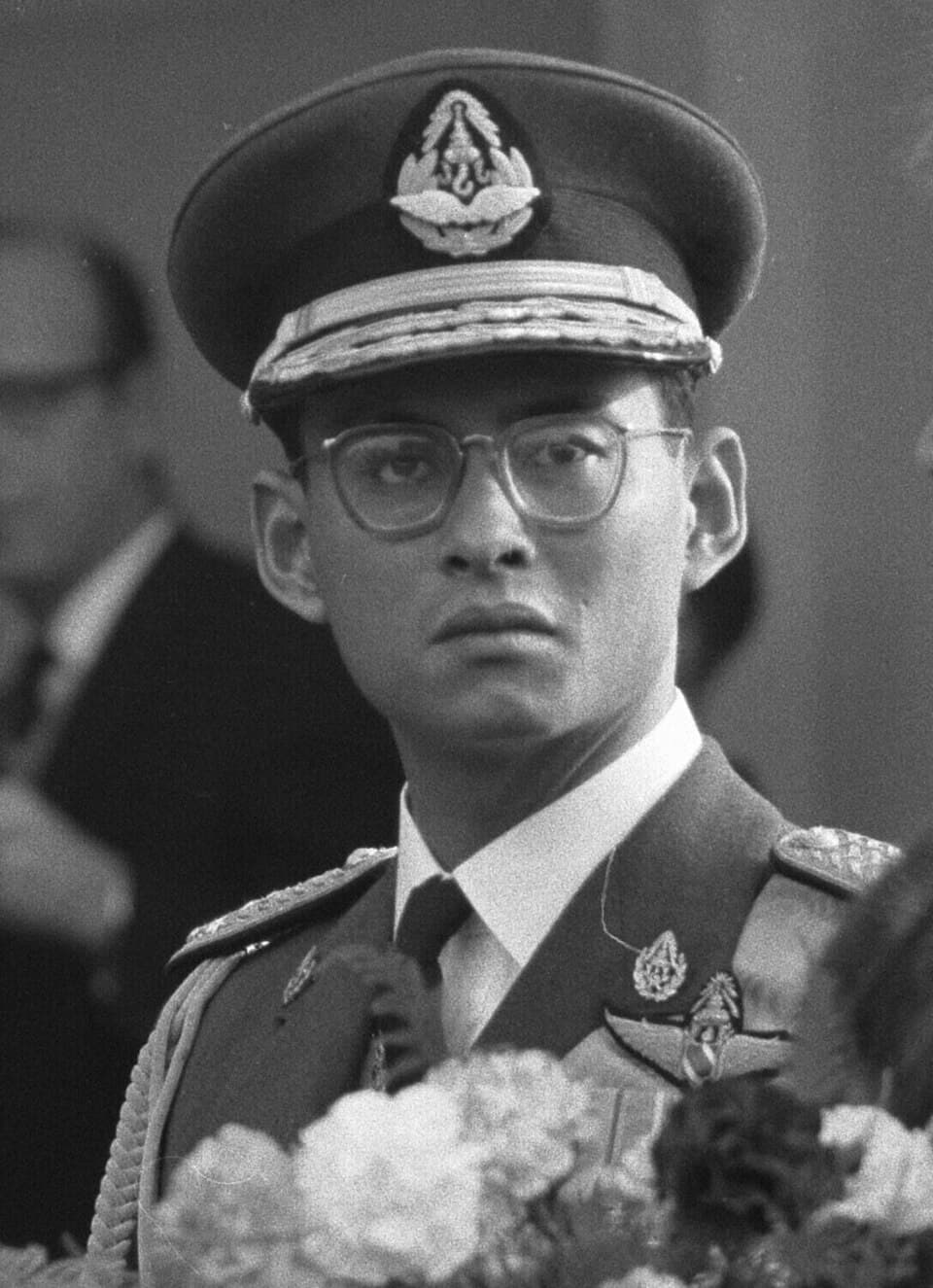
Bhumibol Adulyadej (1927–2016), also known as King Rama IX, was the King of Thailand from June 9, 1946, until his death on October 13, 2016. He was one of the world's longest-reigning monarchs, serving for more than 70 years. Born in the United States and educated partly in Switzerland, he became a central figure in modern Thai history. He was widely associated with rural development projects, agricultural initiatives, music, photography, and efforts to promote national stability.
 Wikimedia Commons
Bhumibol Adulyadej: Full Biography
Biography
Early Life and Birth
Bhumibol Adulyadej was born on December 5, 1927, at Mount Auburn Hospital in Cambridge, Massachusetts, United States. He was the youngest child of Prince Mahidol Adulyadej of Songkla and Mom Sangwan, later known as Princess Srinagarindra.
His birth in the United States was connected to his father's medical studies at Harvard University. Although Bhumibol spent his earliest years abroad, his family maintained strong connections to Thailand and its royal traditions.
Family Background
Bhumibol belonged to the Chakri dynasty, Thailand's royal house. His paternal grandfather was King Chulalongkorn, also known as Rama V, who introduced major administrative and social reforms in Thailand.
He had an elder sister, Princess Galyani Vadhana, and an elder brother, Prince Ananda Mahidol. Ananda later became King Rama VIII, a development that would significantly change Bhumibol's future.
Childhood and Education
Bhumibol spent part of his early childhood in Thailand before moving to Switzerland with his mother and siblings in 1933. He attended schools in the Lausanne area and studied languages, literature, and science.
He later enrolled at the University of Lausanne, initially pursuing scientific studies. His education was interrupted by the unexpected death of his elder brother, King Ananda Mahidol, in 1946. After becoming king, Bhumibol returned to Switzerland to continue his studies, switching his focus to law and political science to prepare for his constitutional role.
Becoming King of Thailand
On June 9, 1946, Bhumibol succeeded his brother as King of Thailand at the age of 18. His accession came during a period of political transition following World War II.
Because he had not completed his education, he returned to Switzerland before establishing his permanent residence in Thailand. His early reign unfolded as the country navigated constitutional government, military influence, and changing political institutions.
Marriage to Queen Sirikit
Bhumibol met Mom Rajawongse Sirikit Kitiyakara while he was in Europe. They became engaged in 1949 and married on April 28, 1950, in Bangkok. She subsequently became Queen Sirikit.
Their marriage was a prominent part of Thai public life. Queen Sirikit accompanied the king on many official visits and took part in charitable and rural development activities.
The couple had four children: Princess Ubol Ratana, Crown Prince Maha Vajiralongkorn, Princess Maha Chakri Sirindhorn, and Princess Chulabhorn.
Coronation and Royal Pledge
Bhumibol's coronation took place on May 5, 1950. During the ceremony, he pledged to reign with righteousness for the benefit and happiness of the Thai people.
This pledge became an important theme in the public presentation of his kingship. His work increasingly emphasized rural visits, development projects, and efforts to improve living conditions in communities across Thailand.
Role in Thailand's Constitutional Monarchy
Thailand became a constitutional monarchy in 1932, before Bhumibol took the throne. Under this system, the king served as head of state while elected and appointed institutions exercised formal governmental authority under the constitution.
During Bhumibol's long reign, Thailand experienced numerous changes of government, military coups, new constitutions, and periods of political unrest. Although the monarch's formal powers were constitutionally defined, Bhumibol became an influential public figure whose interventions and symbolic role were important during several national crises.
His relationship with political and military leaders evolved over the decades, making his reign a significant period in the development of Thailand's modern political system.
Rural Development Projects
One of the most recognizable aspects of Bhumibol's reign was his involvement in rural development. He frequently visited villages, agricultural communities, and remote areas to learn about local problems.
Royal development initiatives addressed issues such as water management, irrigation, soil conservation, agricultural productivity, and access to basic services. Projects were designed to respond to local environmental and economic conditions.
These activities contributed to his public image as a monarch concerned with practical improvements in people's daily lives. The projects also became an enduring part of the institutional legacy associated with his reign.
Agriculture and Water Management
Bhumibol supported initiatives intended to improve farming conditions and manage Thailand's water resources. His interests included irrigation systems, watershed protection, rainmaking research, and ways of reducing the effects of drought and flooding.
He encouraged practical experimentation and the adaptation of development methods to local circumstances. Water management became particularly important because agriculture remained a major source of income and employment for many Thai communities.
Some of these efforts were incorporated into broader royal development programs and continued to influence agricultural and environmental initiatives after his death.
The Sufficiency Economy Philosophy
Bhumibol became associated with the Sufficiency Economy Philosophy, which emphasized moderation, prudent decision-making, resilience, and preparation for uncertainty.
The philosophy encouraged individuals, households, and communities to consider their resources and risks rather than relying entirely on rapid expansion or excessive consumption. It was applied in discussions of agriculture, community development, education, and economic planning.
The concept gained particular prominence during Thailand's economic difficulties in the late 1990s. Its interpretation and application have varied, but it remains one of the most widely recognized ideas connected with Bhumibol's reign.
Music and Artistic Interests
Bhumibol was an accomplished musician and composer. He developed a strong interest in jazz and played instruments including the saxophone, clarinet, and trumpet.
He composed numerous musical works and sometimes performed with musicians. Music was one of the ways he expressed personal creativity beyond his official responsibilities.
His artistic interests also included painting and writing, reflecting a broad range of cultural pursuits throughout his life.
Photography and Engineering Interests
Photography was another major interest. Bhumibol often carried a camera during visits around Thailand and used photography to document landscapes, communities, and development activities.
He also showed interest in engineering and practical problem-solving. His involvement in development initiatives included studying technical challenges and encouraging solutions suited to Thailand's geography and resources.
These interests contributed to his public image as a monarch who combined ceremonial duties with technical and creative pursuits.
Political Crises in 1973
In October 1973, student-led demonstrations and wider public protests challenged the military-led government. The confrontation resulted in serious violence and the departure of several leading military figures from the country.
Bhumibol's role during the crisis became an important part of the history of the Thai monarchy. The events were followed by a period of greater political openness, although political conflict and instability continued.
The crisis illustrated how the king's position could become especially significant when established political institutions faced severe pressure.
The Events of 1976
On October 6, 1976, a violent crackdown on student demonstrators at Thammasat University was followed by a military coup. The episode remains one of the most painful and contested events in modern Thai history.
Bhumibol's reign coincided with this period of political polarization and anti-communist mobilization. Historians continue to examine the actions of state institutions, political organizations, and royal networks during the events and their aftermath.
The episode demonstrates that the history of his reign included not only development initiatives and national ceremonies, but also profound political conflict.
Political Crisis in 1992
In 1992, demonstrations against military-backed political leadership led to violent confrontations in Bangkok. The crisis became known as Black May.
Bhumibol met senior political figures during the turmoil, and the meetings were widely interpreted as an effort to encourage an end to the confrontation. The episode reinforced the public perception that he could serve as a mediator during periods of national crisis.
Nevertheless, Thailand continued to experience recurring disputes over military involvement, electoral politics, constitutional arrangements, and the distribution of political power.
International Relations and State Visits
During his reign, Bhumibol and Queen Sirikit undertook numerous state and official visits abroad. These visits helped maintain diplomatic relationships and presented Thailand as an active participant in international affairs.
Thailand's international position changed substantially during the Cold War and the decades that followed. The country developed economic ties with major powers and regional partners while navigating security concerns in Southeast Asia.
The monarchy remained an important symbol in Thailand's diplomatic identity, while the government and foreign service handled formal policy and negotiations.
Buddhism and Public Life
Buddhism occupies a central place in Thai cultural and religious life, and Bhumibol's kingship incorporated traditional Buddhist ceremonies and values. In 1956, he temporarily entered the Buddhist monkhood, following a long-standing Thai royal custom.
His public speeches and activities frequently emphasized duty, moderation, compassion, and responsibility. Religious symbolism formed an important part of royal ceremonies and public commemorations during his reign.
Health and Later Years
As Bhumibol grew older, his public appearances became less frequent. He spent extended periods receiving medical care, particularly during the final years of his life.
Despite his declining public activity, he remained a central figure in Thailand's national identity. His lengthy reign meant that several generations of Thai citizens had known no other monarch.
Death in 2016
Bhumibol Adulyadej died on October 13, 2016, at Siriraj Hospital in Bangkok, aged 88. His death followed a reign lasting more than 70 years.
The announcement prompted a period of national mourning. Large numbers of people gathered in Bangkok and elsewhere to pay their respects, and official commemorations continued for months.
His son, Maha Vajiralongkorn, succeeded him as King Rama X. The transition marked the end of one of the longest reigns in modern royal history.
Funeral and National Mourning
The funeral ceremonies for Bhumibol were conducted according to Thai royal and Buddhist traditions. His cremation took place in October 2017 at a specially constructed royal crematorium in Bangkok.
The elaborate ceremonies reflected the historical importance of the monarchy and the scale of public mourning following his death.
Legacy and Historical Assessment
Bhumibol's legacy includes rural development projects, agricultural initiatives, environmental programs, music, photography, and the Sufficiency Economy Philosophy. Many Thai people associated his reign with continuity and national identity during periods of political change.
At the same time, assessments of his political role remain complex. His reign coincided with military coups, restrictions on political activity, periods of democratic reform, and episodes of state violence. Scholars examine both the monarchy's symbolic influence and its relationships with military and political institutions.
His public standing, the constitutional position of the monarchy, and the wider political history of Thailand are distinct but interconnected subjects. Understanding his legacy requires considering both the development work associated with him and the contested political events that occurred during his long reign.
Conclusion
Bhumibol Adulyadej ruled Thailand from 1946 until his death in 2016. Known as King Rama IX, he became a defining figure in the country's modern history. His reign encompassed major economic and social changes, rural development efforts, artistic achievements, and repeated political crises. His influence continues to shape discussions of Thailand's monarchy, national identity, and twentieth-century history.
Did you know?
- Bhumibol Adulyadej was born in Cambridge, Massachusetts, in the United States. - He became king on June 9, 1946, following the death of his elder brother, King Ananda Mahidol. - His reign lasted more than 70 years, making him one of the longest-reigning monarchs in modern history. - He was a jazz enthusiast who played the saxophone and composed music. - Photography and engineering were among his personal interests. - He and Queen Sirikit had four children, including Thailand's current king, Maha Vajiralongkorn. - His Sufficiency Economy Philosophy emphasized moderation, resilience, and prudent use of resources.