Monarch
Akbar
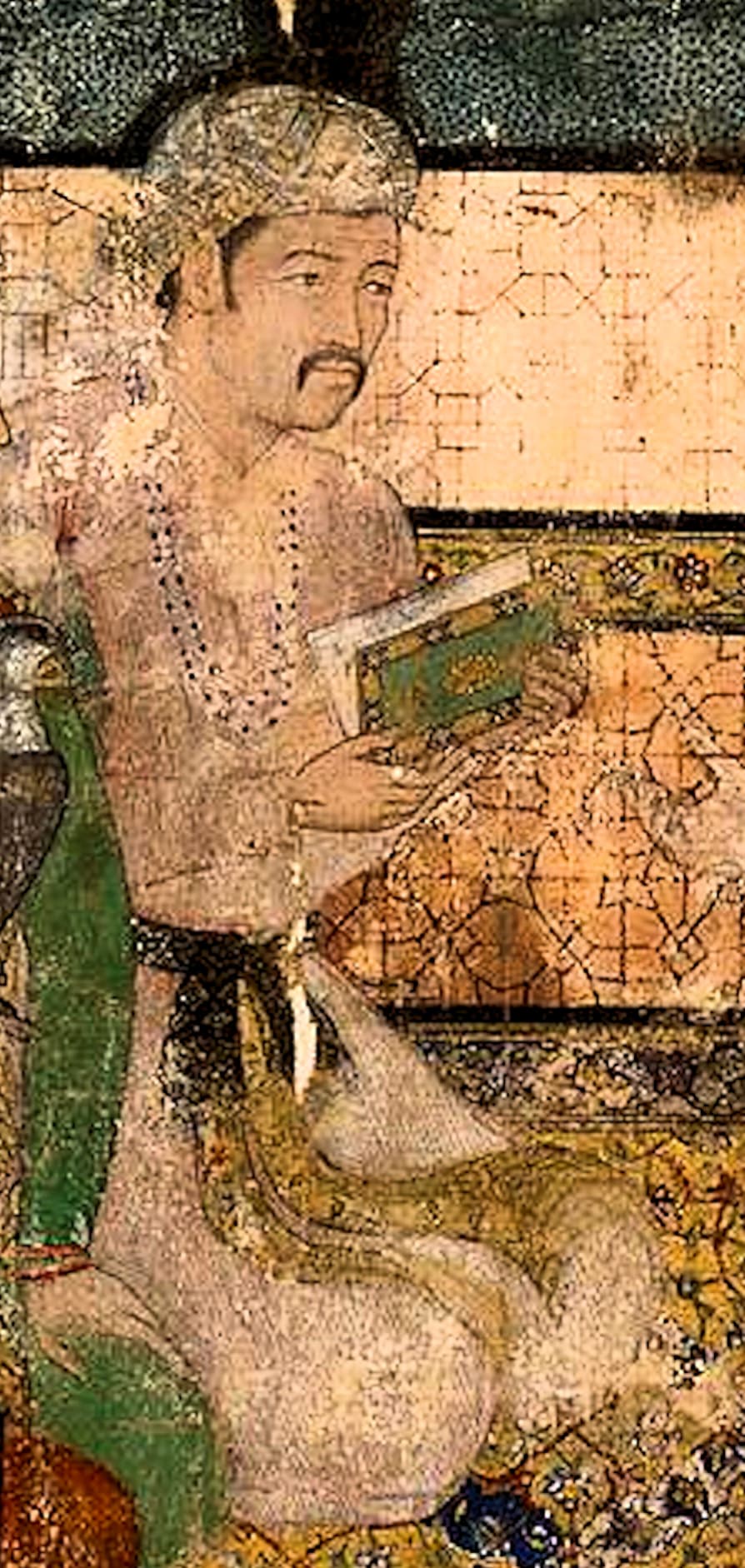
Akbar (1542–1605), widely known as Akbar the Great, was the third Mughal emperor of India, ruling from 1556 until his death in 1605. He was the son of Emperor Humayun and grandson of Babur, the founder of the Mughal Empire. Akbar expanded
 Wikimedia Commons
Akbar the Great: Full Biography
Biography
Early Life and Birth
Akbar, whose full name was Abu'l-Fath Jalal-ud-din Muhammad Akbar, was born on October 15, 1542, at Umerkot in the Sindh region of the Indian subcontinent, now in Pakistan. He was the son of Mughal Emperor Humayun and Hamida Banu Begum.
At the time of his birth, his father had lost control of much of the Mughal Empire and was living in exile. Akbar's early years were therefore marked by political uncertainty and the struggle to restore his family's position.
Despite these difficult beginnings, Akbar eventually became one of the most influential rulers in South Asian history.
Family Background
Akbar belonged to the Timurid royal lineage. His grandfather, Babur, founded the Mughal Empire in India after defeating Sultan Ibrahim Lodi at the First Battle of Panipat in 1526.
His father, Humayun, succeeded Babur but lost his territories to Sher Shah Suri. Humayun later regained Delhi in 1555, shortly before his death.
Akbar's mother, Hamida Banu Begum, played an important role in his family life. His royal ancestry connected him to Central Asian and Persian cultural traditions, which later influenced Mughal court culture.
Childhood and Education
Akbar's childhood was shaped by the political instability surrounding his father's exile and attempts to recover the throne. Unlike many princes, he did not receive a conventional formal education focused on reading and writing.
Historical accounts often describe him as having limited literacy, although he developed a strong interest in knowledge through discussions, readings performed by others, and conversations with scholars.
He received practical training in horsemanship, hunting, military affairs, and leadership. These skills proved important when he became emperor at a young age.
Becoming Emperor in 1556
Humayun died in January 1556 after falling down the steps of a building in Delhi. Akbar, then approximately 13 years old, succeeded him and was proclaimed emperor in February 1556.
Because of his youth, the experienced nobleman Bairam Khan served as his regent and military adviser. The Mughal Empire was still vulnerable, and several regional powers challenged its authority.
One of the most immediate threats came from Hemu, a military commander who captured Delhi and declared himself ruler. Akbar's forces confronted Hemu at the Second Battle of Panipat on November 5, 1556, securing a decisive Mughal victory.
This battle helped preserve Mughal rule and created the foundation for Akbar's later expansion.
Bairam Khan and the Early Reign
Bairam Khan played a major role in protecting the young emperor and strengthening Mughal control during the first years of Akbar's reign.
However, as Akbar grew older, he sought to exercise authority independently. In 1560, he removed Bairam Khan from his position as regent.
Bairam Khan initially resisted the decision but eventually submitted. Akbar allowed him to leave for a pilgrimage to Mecca, although Bairam Khan was killed during his journey.
After taking direct control, Akbar gradually reorganized the court and reduced the power of competing factions among the nobility.
Expansion of the Mughal Empire
Akbar transformed the Mughal Empire from a vulnerable kingdom into a major imperial power. His military campaigns and diplomatic arrangements extended Mughal influence across much of northern and central India.
He brought territories such as Malwa, Gujarat, Bengal, Kashmir, Sindh, and parts of the Deccan under Mughal control at different stages of his reign.
Expansion relied on military force, alliances, negotiated submissions, and the integration of regional elites into the imperial administration.
Akbar did not personally command every campaign. Experienced generals, governors, and nobles carried out many operations under his authority.
Rajput Alliances and Diplomacy
One of the most important features of Akbar's political strategy was his relationship with Rajput rulers. Rather than relying exclusively on conquest, he sought alliances with several Rajput kingdoms.
Some Rajput families entered into marriage alliances with the Mughal dynasty, while their leaders received positions and responsibilities within the imperial system.
Raja Man Singh of Amber became one of Akbar's prominent military commanders. Other Rajput rulers retained varying degrees of local authority in exchange for cooperation with the empire.
Not all Rajput states accepted Mughal supremacy. Mewar, particularly under Maharana Pratap, resisted Mughal expansion. The Battle of Haldighati in 1576 became one of the best-known episodes in this conflict.
Akbar's combination of warfare and diplomacy helped create a governing coalition that included people from different regional and religious backgrounds.
Administrative Reforms
Akbar developed a more centralized and organized system of imperial government. He divided the empire into administrative provinces, commonly called subahs, which were overseen by appointed officials.
Different officers managed military affairs, taxation, justice, and provincial administration. These responsibilities were intended to limit the concentration of power in any one official's hands.
The emperor also worked to establish clearer procedures for appointments, promotions, and the management of imperial resources.
Although the system was not free from corruption or local resistance, it strengthened the Mughal government's ability to administer a large and diverse territory.
The Mansabdari System
Akbar developed the mansabdari system to organize imperial officers and military commanders. A mansab indicated an official's rank and determined aspects of status, salary, and military obligations.
Mansabdars could be assigned responsibilities in civil administration as well as military service. Their positions depended on imperial appointment rather than solely on hereditary status.
The system helped the emperor maintain control over the nobility and mobilize military resources when necessary.
It became one of the defining institutions of Mughal administration and continued, with changes, under later emperors.
Land Revenue and Economic Reforms
Agriculture was the main economic foundation of Akbar's empire, making land taxation essential to government finance.
Akbar's administration improved the measurement of agricultural land and the collection of information about crops, yields, and prices. Revenue officials used this information to estimate the taxes due from cultivators.
Raja Todar Mal became closely associated with the development of the imperial revenue system. A method based on average agricultural yields and prices over a period of years helped standardize assessments in areas where it was implemented.
The system aimed to make revenue collection more predictable and provide the state with a reliable income. However, its effects varied by region, and peasants could still experience heavy burdens, local abuses, and crop-related hardship.
Religious Tolerance and Policy
Akbar ruled over a population that included Muslims, Hindus, Jains, and followers of other religious traditions. Over time, he pursued policies intended to improve cooperation among these communities and reduce the political importance of religious divisions.
He abolished the pilgrimage tax in 1563 and the jizya tax on non-Muslims in 1564. He also appointed Hindu nobles to important military and administrative positions.
His approach did not mean that religious conflict disappeared or that every community experienced the empire in the same way. Nevertheless, his policies represented a significant effort to build imperial loyalty across religious boundaries.
The Ibadat Khana
In 1575, Akbar established the Ibadat Khana, or House of Worship, at Fatehpur Sikri. It was initially a place for discussions among Muslim religious scholars.
The discussions later broadened to include participants from other religious traditions, including Hindus, Jains, Christians, and Zoroastrians.
Akbar listened to debates about religious belief, ethics, philosophy, and the responsibilities of rulers. These exchanges influenced his evolving approach to religion and imperial authority.
The Ibadat Khana became an important symbol of the intellectual curiosity that characterized his later reign.
Din-i Ilahi
In the 1580s, Akbar developed a spiritual and ethical fellowship commonly known as Din-i Ilahi, sometimes referred to as Tawhid-i Ilahi.
The movement drew selectively on ideas and practices that Akbar encountered through religious discussions. It emphasized loyalty, ethical conduct, and the spiritual responsibilities of its participants.
It was never a mass religion, and only a small number of people at court appear to have joined it. Historians continue to debate its precise nature and purpose.
It is therefore more accurate to understand Din-i Ilahi as a limited court-centered spiritual initiative than as a widely established replacement for the religions practiced throughout the empire.
Fatehpur Sikri and Architecture
Akbar established Fatehpur Sikri as an imperial capital in the 1570s. The city included palaces, courtyards, administrative buildings, religious structures, and residential areas.
Its architecture combined Persian, Central Asian, and regional Indian influences. Notable structures include the Buland Darwaza, the Jama Masjid, and buildings associated with the imperial court.
The city was closely connected to Akbar's political ambitions and his interest in creating a distinctive imperial culture. The court later moved away from Fatehpur Sikri, and the city was eventually largely abandoned as a permanent capital.
Art, Literature, and Culture
Akbar was a major patron of painting, architecture, literature, and historical writing. His court brought together artists, scholars, musicians, administrators, and religious thinkers from different backgrounds.
The Mughal painting tradition developed considerably under his patronage. Artists combined Persian artistic techniques with Indian subjects, styles, and visual traditions.
Akbar also encouraged the translation of selected Sanskrit works into Persian, helping make texts from different literary and intellectual traditions available to the imperial court.
This cultural exchange contributed to the development of a distinctive Indo-Persian court culture.
Akbarnama and Abul Fazl
Abul Fazl, one of Akbar's closest advisers and intellectual associates, wrote the Akbarnama, a major historical account of the emperor's life and reign.
Its third section, the Ain-i-Akbari, describes imperial administration, the army, revenue systems, geography, customs, and other aspects of Mughal society.
These works are among the most important sources for studying Akbar's government. However, because they were produced within the imperial court, historians also consider their purpose in presenting and legitimizing the emperor's rule.
Birbal, Tansen, and the Imperial Court
Akbar's court became famous for its association with influential figures in literature, administration, and the arts.
Birbal, a trusted courtier known for his wit and intelligence in later stories, served Akbar in an official capacity. Many popular tales about their conversations were developed or embellished over time and should not all be treated as verified historical events.
Tansen, a celebrated musician, became associated with Akbar's court and helped establish the emperor's reputation as a patron of music.
These figures remain prominent in popular accounts of Akbar's reign, illustrating the lasting cultural memory of his court.
Family and Children
Akbar had several wives and consorts, reflecting the political and social customs of the imperial court. His marriage alliances also helped build relationships with regional ruling families.
His children included Prince Salim, later Emperor Jahangir; Prince Murad; Prince Daniyal; and several daughters.
Succession became a major concern during the later years of his reign. Salim occasionally challenged his father's authority, creating tensions within the imperial family.
Despite these difficulties, Salim eventually succeeded Akbar and continued the Mughal dynasty.
Military Strategy and Leadership
Akbar's military success depended on a combination of cavalry, infantry, artillery, fortified positions, and the organization of nobles and their forces.
He made use of diplomacy to reduce resistance where possible and used campaigns to bring strategically important territories under Mughal control.
His willingness to incorporate former opponents into the imperial system was an important part of his state-building strategy.
Military expansion was accompanied by the development of administrative institutions that helped maintain control over conquered areas after battles had ended.
Later Years and Death
During the final years of his reign, Akbar continued to oversee a vast empire but faced personal and political challenges, including tensions with his son Salim.
Akbar died on October 27, 1605, at Agra, aged 63. He was succeeded by Salim, who became Emperor Jahangir.
Akbar was buried at Sikandra, near Agra, where his tomb remains an important example of Mughal architecture.
Akbar's Tomb
Akbar's Tomb at Sikandra was begun during his lifetime and completed under his successor. The complex combines architectural influences associated with the Mughal tradition and features a monumental gateway, gardens, and a richly decorated mausoleum.
The tomb reflects the artistic and architectural developments of the period and remains a significant historical site.
Historical Legacy
Akbar's reign helped establish the Mughal Empire as one of the most powerful states in the Indian subcontinent. His administrative reforms, military expansion, diplomatic alliances, and cultural patronage influenced later Mughal rulers.
His religious policies have made him a central figure in discussions of pluralism and governance in South Asian history. At the same time, his empire was built through conquest and maintained through a hierarchical system of imperial authority.
A balanced assessment of Akbar recognizes both the scale of his political achievements and the realities of early modern imperial rule.
Conclusion
Akbar the Great ruled the Mughal Empire from 1556 until 1605. From his uncertain childhood and accession as a young prince, he built a powerful state through military campaigns, diplomacy, administrative reforms, and cultural patronage.
His reign left a lasting mark on the political, artistic, and religious history of the Indian subcontinent. He remains one of the best-known rulers of the Mughal dynasty and a significant figure in world history.
Did you know?
- Akbar became emperor in 1556 when he was approximately 13 years old. - His regent, Bairam Khan, helped secure the Mughal throne during the early years of his reign. - Akbar abolished the pilgrimage tax in 1563 and the jizya tax on non-Muslims in 1564. - He established the Ibadat Khana at Fatehpur Sikri to host religious and philosophical discussions. - Akbar's court patronized the musician Tansen and the writer and adviser Abul Fazl. - The Akbarnama and Ain-i-Akbari provide important information about his reign and administration. - His son Prince Salim succeeded him as Emperor Jahangir in 1605.