Activist · Korean Empire
Yun Ch'iho
Yun Ch'iho (1865–1945) was a Korean independence-era intellectual, educator, Christian activist, translator, and political thinker. He played an important role in Korea’s modernization movement during the late Joseon dynasty and the Japanese colonial period. Educated partly in the United States and influenced by Western political and religious ideas, Yun advocated educational reform, social progress, and Christian values. His legacy remains complex because of his early reformist activities and later accommodation with Japanese colonial authorities.
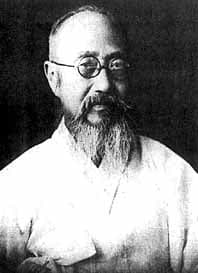 Wikimedia Commons
Yun Ch'iho: Full Biography
Biography
Early Life and Family Background
Yun Ch'iho (also written Yun Chi-ho; Korean: 윤치호) was born on December 21, 1865, in Asan, in what is now South Korea. He belonged to the influential Haepyeong Yun family during the late Joseon dynasty, a period when Korea was facing increasing pressure from foreign powers and debates about modernization.
His father, Yun Ung-nyeol, was a prominent government official and military leader. Growing up in an elite family gave Yun access to educational opportunities and introduced him to the political and social structures of traditional Korean society.
Yun later became known by the pen name Jwaong. His life reflected the dramatic transformation of Korea from a traditional monarchy into a country under Japanese colonial rule.
Education in Korea
Yun received a traditional education in classical Chinese literature and Confucian learning. His early studies prepared him for participation in government and public affairs.
However, Korea was increasingly encountering new political ideas, technologies, educational systems, and diplomatic practices from abroad. Yun became interested in foreign languages and modern education, believing that Korea needed significant reforms to remain independent and competitive.
His intellectual development would eventually bring him into contact with Japanese, Chinese, American, and European ideas.
Studies in Japan
In 1881, Yun traveled to Japan as part of Korea's efforts to study foreign institutions and modernization. He learned about Western-style education, political organization, and new approaches to national development.
His experience in Japan helped strengthen his belief that Korea needed institutional and educational reform. Japan's rapid modernization offered an example of how an East Asian country could adopt selected foreign practices.
At the same time, the growing influence of Japan over Korea created a political dilemma that would shape Yun's later life.
Political Reform and the Gapsin Coup
Yun returned to Korea and became involved in reformist circles that sought to modernize the government and reduce the influence of conservative institutions.
In 1884, he supported the Gapsin Coup, an attempted reform movement led by Korean modernizers who sought rapid political and institutional change. The coup failed after only a few days, partly because of intervention by Chinese forces.
The failure placed reformists in danger. Yun left Korea and went to Shanghai, China, where he continued his intellectual development and encountered Christian missionary institutions.
Conversion to Christianity
While living in Shanghai, Yun studied at an Anglo-Chinese school associated with Christian missionary education. He converted to Christianity in 1887 and became a Methodist.
His conversion marked a major turning point in his life. He came to regard education, moral development, religious faith, and social reform as closely connected.
Yun believed Christianity could contribute to the modernization of Korean society, although his understanding of religion developed through his encounters with Western missionaries, foreign societies, and Korean cultural traditions.
He subsequently became an important advocate for Christian education and the growth of Protestant institutions in Korea.
Education in the United States
From 1888 to 1893, Yun studied in the United States, attending Vanderbilt University and later Emory College, now part of Emory University.
His years in America exposed him to Western political thought, Christian theology, modern education, and debates about democracy and social progress. He also encountered racial prejudice, which complicated his view of American society and its claims to moral leadership.
These experiences influenced his understanding of modernity. He admired aspects of Western education and institutional development while recognizing that Western societies themselves could practice discrimination.
His international education helped establish him as one of Korea's early modern intellectuals with extensive experience of foreign institutions.
Return to Korea and Government Service
Yun returned to Korea in 1893 and resumed public life during a period of intense political instability. The Joseon government was struggling with internal reform demands and increasing pressure from foreign powers.
He held government positions, including service in educational and foreign-affairs administration. His work reflected his belief that Korea needed stronger institutions, improved education, and greater public awareness.
However, the political environment was increasingly difficult. Rival factions, court politics, and foreign interference limited the opportunities available to reformers.
The Independence Club
Yun became involved with the Independence Club, a reformist organization established in the 1890s. The club advocated modernization, public participation, national sovereignty, and reforms to strengthen Korea.
He worked alongside other prominent reformers, including Seo Jae-pil and Syngman Rhee. The movement sought to encourage public discussion and greater accountability in government.
Yun also participated in journalism and helped promote the circulation of modern political ideas. The Independence Club became an important center of civic activism during a period when the Korean public was beginning to engage more visibly with national political questions.
The organization eventually faced government opposition and was dissolved in 1898.
Journalism and Public Debate
Yun supported the development of modern journalism as a way to educate the public and encourage political discussion. He was associated with early Korean newspapers and reformist publishing activities.
He believed that access to information and education could help citizens understand government policy and the challenges facing the country.
His writing and public activities connected political reform with moral and educational improvement. Nevertheless, his views on the Korean public and the pace of political change evolved over time, revealing tensions within his reformist outlook.
Christian Education and Modernization
As Korea faced increasing Japanese pressure, Yun increasingly emphasized education and the development of capable institutions as ways to strengthen society.
In 1907, he helped establish an Anglo-Korean educational institution in Songdo, now Kaesong, that became known as Songdo School. The school combined Korean educational needs with elements of modern and Christian education.
He believed that education could cultivate discipline, practical knowledge, and leadership. His educational work contributed to the development of modern Christian schooling in Korea.
Yun also participated in international Protestant discussions, including the World Missionary Conference held in Edinburgh in 1910.
Japanese Influence and the Annexation of Korea
Japan expanded its control over Korea during the early twentieth century. Korea became a Japanese protectorate in 1905 and was formally annexed by Japan in 1910.
Yun had initially supported reform and national strengthening, but Japanese domination severely narrowed the space for independent political activity.
Rather than continuing to oppose colonial rule through direct nationalist resistance, he increasingly pursued education, religious work, and other activities within the limits imposed by the colonial government.
This change became one of the most controversial aspects of his life. His earlier involvement in reformist and patriotic movements contrasted sharply with his later accommodation of Japanese imperial authority.
The 105-Person Incident
In 1911, Yun was arrested in connection with the case commonly known as the 105-Person Incident. Japanese colonial authorities accused Korean activists and Christian leaders of participating in a conspiracy against the colonial government.
The case was widely associated with the colonial administration's efforts to suppress Korean nationalist and Christian networks. Yun was imprisoned during the investigation and was released in 1913 following a special imperial pardon.
The experience further restricted his political options and influenced his subsequent decisions. However, it did not erase the controversy surrounding his later relationship with the Japanese colonial system.
Leadership in the Korean YMCA
Yun continued his involvement in Christian institutions and served as a leading figure in the Korean Young Men's Christian Association (YMCA). He became its general secretary in 1915 and remained associated with the organization through 1920.
The YMCA promoted education, physical development, community activities, and Christian leadership. Under Yun's involvement, it provided opportunities for young Koreans to develop organizational skills and participate in modern civic life.
His work in Christian institutions demonstrated his continued commitment to education and social development, even as his political reputation became increasingly contested.
Diaries and Intellectual Thought
Yun kept extensive diaries that documented his experiences, observations, and changing views over many decades. These writings have become important sources for historians studying late Joseon Korea, the Korean Empire, and Japanese colonial rule.
His diaries reveal a complex intellectual personality. They address religion, politics, education, international relations, racial prejudice, and the challenges of Korean modernization.
They also record doubts and contradictions in his thinking. His writings are valuable partly because they show how a prominent Korean intellectual struggled with the limits of reform and the pressures of imperial power.
Family and Personal Life
Yun came from a prominent family and maintained connections with influential political and social figures. His family background contributed to his access to education and public office.
His wider family included individuals who later became significant in South Korean public life, including his nephew Yun Bo-seon, who became the fourth president of South Korea.
Yun's personal experiences, international education, religious conversion, and changing political circumstances all influenced his public decisions.
Collaboration with Japanese Colonial Authorities
Yun's later political conduct remains a major source of historical controversy. After initially participating in Korean reform and nationalist movements, he accepted a Japanese noble title and held positions within colonial-era institutions.
During the later colonial period, particularly after Japan expanded its military campaigns in Asia, he made public statements and contributions that supported the Japanese imperial war effort. These actions led to his identification as a collaborator with Japanese colonial rule.
His case illustrates the difficult but consequential distinction between earlier reformist activity and later cooperation with an occupying power. His educational and Christian contributions are part of his history, but they do not cancel the significance of his collaboration.
Final Years
During the 1930s and early 1940s, Yun remained involved in institutional and public life under Japanese rule. His later activities reflected his accommodation to the colonial political order rather than a return to his earlier reformist opposition.
As Japan's empire approached collapse during World War II, Korea remained under colonial rule. Yun died on December 6, 1945, shortly after Japan's surrender and Korea's liberation in August of that year.
His death came before the later division of Korea and the establishment of the Republic of Korea in 1948.
Legacy and Historical Assessment
Yun Ch'iho occupies a complicated place in modern Korean history. He was an early advocate of modernization, a Christian intellectual, an educator, and a participant in reformist organizations that sought to strengthen Korean society.
His diaries and writings remain important historical materials for understanding the intellectual debates of his time. His contributions to Christian education and civic institutions also form part of his legacy.
At the same time, his acceptance of Japanese colonial authority and support for aspects of the imperial system have led historians and the Korean public to criticize him as a collaborator. His career demonstrates how reformist ideals could become entangled with political accommodation and imperial power.
A balanced assessment must recognize both his earlier reform activities and the consequences of his later decisions.
Conclusion
Yun Ch'iho was a prominent Korean intellectual whose life spanned the decline of the Joseon dynasty, the modernization debates of the late nineteenth century, and Japanese colonial rule. His education in Japan and the United States, conversion to Christianity, involvement in the Independence Club, and work in Christian education made him an influential figure in Korea's modernization history.
Yet his later cooperation with Japanese colonial authorities remains a central and troubling part of his legacy. His life offers an important example of the complexities, contradictions, and difficult choices that shaped Korea during one of its most turbulent historical periods.
Did you know?
- Yun Ch'iho studied in both Japan and the United States, gaining exposure to different educational and political systems. - He converted to Christianity while studying in Shanghai in 1887 and later became an influential Methodist educator. - He attended Vanderbilt University and Emory College in the United States. - He was involved in the Independence Club, which promoted political reform and public participation in Korea. - His extensive diaries provide historians with valuable insights into Korean society during the late Joseon and Japanese colonial periods. - He was imprisoned in connection with the 105-Person Incident and released in 1913. - His legacy remains controversial because he moved from early reformist and nationalist activities to cooperation with Japanese colonial authorities.