Entrepreneur · United States
Warren Buffett
Warren Buffett is an American investor, businessman, and philanthropist widely known for his long-term investment philosophy and leadership of Berkshire Hathaway. Born on August 30, 1930, in Omaha, Nebraska, he developed an interest in business and investing at a young age. Buffett became one of the world's most prominent investors by building a diversified business empire through disciplined capital allocation, value investing, and long-term ownership of successful companies. Often called the “Oracle of Omaha,” he is also known for his straightforward communication style, frugal habits, and commitment to philanthropy.
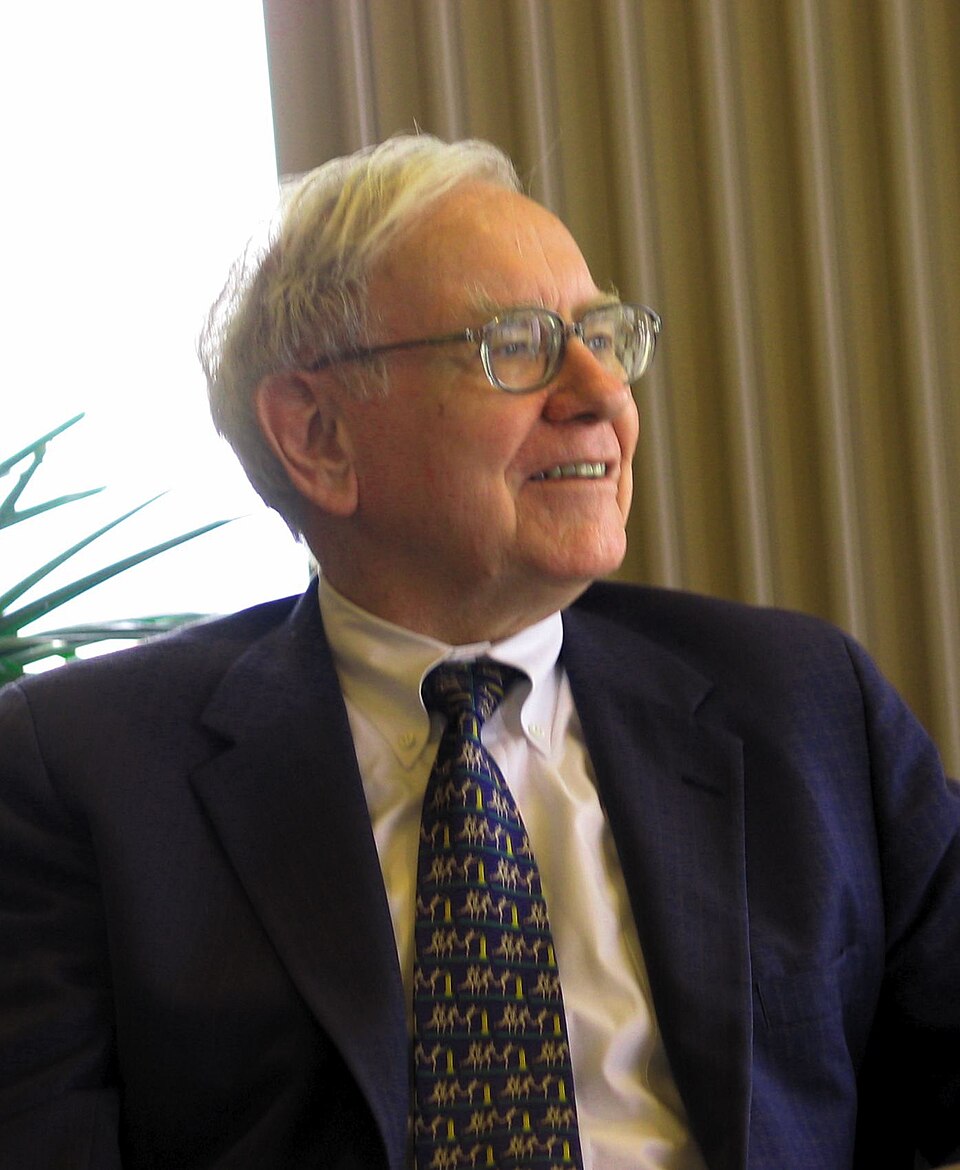 Wikimedia Commons
Warren Buffett: Full Biography, Investment Career, Achievements, and Legacy
Biography
1. Introduction
Warren Edward Buffett is an American investor, businessman, and philanthropist widely recognized for his investment philosophy and long-term approach to building wealth. Often called the “Oracle of Omaha,” he became one of the most influential figures in modern finance through his leadership of Berkshire Hathaway.
Buffett's investment approach emphasizes understanding businesses, evaluating their intrinsic value, maintaining financial discipline, and holding quality investments over extended periods. Rather than focusing exclusively on short-term market movements, he has encouraged investors to think like business owners.
Beyond his financial career, Buffett is known for his straightforward communication, relatively modest lifestyle, annual shareholder letters, and extensive charitable commitments. His life and career have influenced generations of investors, entrepreneurs, and business students.
2. Early Life and Family Background
Warren Edward Buffett was born on August 30, 1930, in Omaha, Nebraska, United States. His father, Howard Buffett, was a stockbroker who later served as a Republican member of the U.S. House of Representatives. His mother was Leila Stahl Buffett.
Growing up in a family with connections to finance and public service exposed Warren to business and economic discussions at an early age. He developed an interest in numbers, money, and entrepreneurship while still a child.
Buffett showed an early desire to earn and save money. He experimented with small business activities and became curious about how companies operated and how investments could grow over time.
His early experiences helped shape the habits that later became associated with his investment philosophy: patience, careful observation, independent thinking, and a focus on long-term results.
3. Education and Early Interest in Investing
Buffett attended the University of Pennsylvania's Wharton School before transferring to the University of Nebraska, where he earned a bachelor's degree in business administration in 1950.
He then applied to Harvard Business School but was not admitted. Instead, he attended Columbia Business School, where he studied under economist and investor Benjamin Graham, a leading advocate of value investing. Buffett earned a master's degree in economics from Columbia in 1951.
Graham's teachings had a profound effect on Buffett. He learned to examine a company's underlying financial value rather than relying on market excitement or speculation. He also developed an appreciation for buying securities at prices that offered a margin of safety.
Another influential figure was David Dodd, who co-authored Security Analysis with Graham. The principles associated with their work helped establish the analytical foundation of Buffett's investment strategy.
After completing his education, Buffett worked for Graham's investment partnership, where he gained practical experience in securities analysis and business valuation.
4. Beginning of His Investment Career
Buffett began investing at a young age. As a child, he explored small business opportunities, and by his early teens he had already purchased shares in a publicly traded company.
In 1956, he established Buffett Partnership Ltd., an investment partnership that brought together capital from a group of investors. He managed the partnership using principles influenced by value investing and his own developing approach to business analysis.
The partnership achieved substantial success and helped Buffett build his reputation as a thoughtful investor. He studied businesses, assessed their financial condition, and looked for opportunities that he believed were undervalued.
By 1969, Buffett decided to wind down the partnership as he found the investment environment increasingly difficult to navigate according to his standards. He subsequently concentrated on Berkshire Hathaway, the company that would become the central vehicle for his business and investment activities.
5. Berkshire Hathaway and Business Expansion
Berkshire Hathaway began as a textile manufacturing business. Buffett started buying its shares in the early 1960s and eventually gained control of the company in 1965.
He later moved Berkshire away from its struggling textile operations and transformed it into a diversified holding company with investments and operating businesses across several industries.
A key part of Berkshire's development was its insurance business. Insurance operations generated funds known as float—money collected through premiums that can be invested before claims are paid, subject to the company's obligations and the risks of its insurance activities.
Berkshire used its capital and investment income to acquire businesses and purchase stakes in publicly traded companies. Its operations expanded into insurance, rail transportation, energy, manufacturing, retail, and consumer products.
Over time, Berkshire became associated with well-known businesses and investments, including GEICO, BNSF Railway, See's Candies, and significant holdings in companies such as Apple and American Express.
Buffett's leadership helped make Berkshire Hathaway one of the most closely followed companies in the investment world. Its annual shareholder meetings and letters became important sources of insight into business management and capital allocation.
6. Investment Philosophy and Value Investing
Buffett is strongly associated with value investing, an approach that seeks to identify investments trading below their estimated underlying worth. However, his philosophy evolved beyond simply buying statistically cheap stocks.
Influenced initially by Benjamin Graham, Buffett later placed increasing emphasis on business quality, competitive advantages, capable management, and the potential for sustainable earnings.
Several principles are central to his approach:
- Understand the business: Invest in companies whose products, operations, and financial characteristics can be evaluated.
- Focus on long-term value: Consider the economic performance of a business over many years rather than reacting to every market movement.
- Seek a margin of safety: Avoid paying prices that leave little room for error in estimates or business performance.
- Look for durable competitive advantages: Favor businesses with characteristics that help them defend their market position.
- Value management quality: Consider how leaders allocate capital, treat shareholders, and manage risk.
- Maintain financial discipline: Avoid investments that depend on unrealistic expectations or excessive borrowing.
Buffett has also emphasized that investors should distinguish the market price of a security from the value of the underlying business. Market prices can fluctuate substantially even when a company's long-term prospects change much less.
His philosophy does not eliminate risk or guarantee investment success. Business conditions, valuations, management decisions, and broader economic developments can all affect investment outcomes.
7. Charlie Munger and a Lasting Partnership
Charlie Munger was one of Buffett's closest business partners and most influential intellectual collaborators. Munger, a lawyer and investor, encouraged Buffett to place greater emphasis on purchasing excellent businesses at reasonable prices rather than focusing only on inexpensive but mediocre companies.
Their partnership helped shape Berkshire Hathaway's approach to acquisitions, capital allocation, and business ownership.
Munger served as Berkshire's vice chairman and contributed to the company's strategic thinking for decades. His ability to analyze businesses, challenge assumptions, and communicate complex ideas in straightforward language complemented Buffett's investment style.
The two men were also known for their annual shareholder meeting discussions, in which they answered questions about investing, business management, and human behavior.
Munger died on November 28, 2023, shortly before his 100th birthday. Buffett has continued to acknowledge the importance of Munger's ideas and influence on his thinking.
8. Major Investments and Business Holdings
Buffett's career includes investments in a broad range of businesses. His decisions have often reflected a preference for companies with recognizable products, established customers, dependable economics, and long-term earning potential.
Notable businesses and investments associated with Berkshire Hathaway include:
- Apple: Berkshire built a substantial investment in the technology company, which became one of its most prominent publicly traded holdings.
- American Express: A long-standing investment connected to a financial-services company with a major consumer and merchant network.
- Coca-Cola: A well-known consumer brand that has been a significant Berkshire investment for decades.
- Bank of America: A major financial-services investment held by Berkshire for many years.
- GEICO: An insurance business that became an important part of Berkshire's insurance operations.
- BNSF Railway: A major freight railroad acquired by Berkshire in 2010.
- See's Candies: A confectionery business that influenced Buffett's appreciation for strong brands and favorable business economics.
- Berkshire Hathaway Energy: An energy business with operations across utilities and related infrastructure.
Berkshire's portfolio has changed over time as valuations, business conditions, and capital-allocation priorities have shifted. Buffett's public investment decisions are closely watched, but they should not automatically be treated as suitable choices for every investor.
9. Wealth and Financial Success
Buffett's wealth was built primarily through his ownership of Berkshire Hathaway and the long-term growth of its businesses and investments.
Unlike entrepreneurs whose fortunes originate from founding a technology company or selling a private enterprise, Buffett accumulated much of his wealth through decades of investing and reinvesting capital.
His approach illustrates the potential effects of compounding: when investment returns are retained and reinvested, they can generate additional returns over time. However, compounding depends on the returns achieved, the time period, costs, taxes, and the risks involved.
Buffett is also known for maintaining a comparatively modest lifestyle relative to his wealth. He has continued to live in the Omaha home he purchased in 1958, which has become one of the best-known details of his public image.
His wealth fluctuates with financial markets and Berkshire Hathaway's share price. Therefore, estimates of his net worth vary over time.
10. Philanthropy and the Giving Pledge
Buffett has pledged to give away more than 99% of his wealth over his lifetime or through his estate. His philanthropic commitments have made him one of the most prominent charitable donors in modern history.
In 2006, he announced a major program of charitable contributions, including substantial gifts to the Bill & Melinda Gates Foundation and foundations connected to his family.
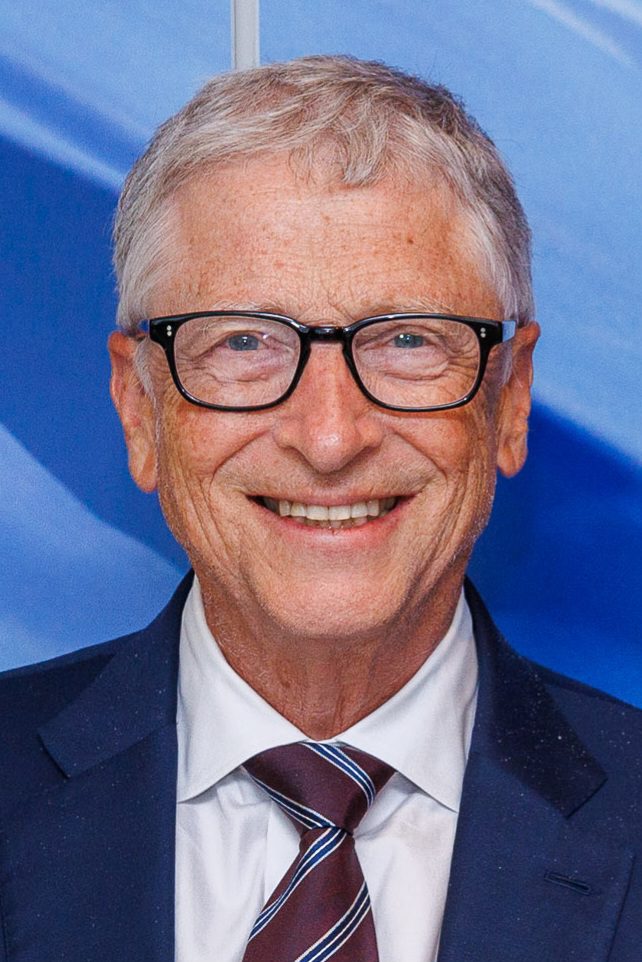
In 2010, Buffett and Bill Gates launched the Giving Pledge, an initiative that invites wealthy individuals and families to commit to donating a substantial portion of their wealth to charitable causes.
Buffett's philanthropy has supported areas including global health, poverty reduction, education, reproductive health, and social development. His children also lead or support charitable organizations that focus on different social priorities.
His approach to giving reflects his belief that significant wealth can be used to address problems beyond the business world. The timing, distribution, and management of charitable contributions remain important parts of his long-term philanthropic plans.
11. Personal Life and Family
Buffett married Susan Thompson in 1952. They had three children: Susan, Howard, and Peter. Susan played an important role in his personal life and later became involved in philanthropic work.
Although Warren and Susan Buffett lived separately for much of their later marriage, they remained married until her death in 2004. Buffett subsequently married Astrid Menks in 2006.
Buffett has generally kept many aspects of his private life out of the spotlight, although his family, habits, and views have frequently been discussed in interviews and business profiles.
He is known for his preference for simple routines, reading extensively, and spending considerable time studying companies and business reports. These habits have become part of the public image associated with his investment career.
12. Leadership Transition at Berkshire Hathaway
Buffett led Berkshire Hathaway for decades, serving as its chief executive officer from 1970 and as chairman from that same year.
In May 2025, he announced his intention to step down as chief executive at the end of that year. Greg Abel, who had served as Berkshire's vice chairman for non-insurance operations, became CEO on January 1, 2026.
In September 2026, Berkshire announced that Buffett would become chairman emeritus while remaining a member of the board of directors. Howard G. Buffett was elected chairman of the board.
These changes marked a major stage in Berkshire Hathaway's succession planning. Buffett's continued role as a director allows him to remain connected to the company, while day-to-day executive leadership has passed to Abel.
The transition is significant because Berkshire's identity and investment culture developed around Buffett's long tenure. Preserving its decentralized operating model, financial discipline, and approach to capital allocation remains an important consideration for the company's future.
13. Awards, Recognition, and Achievements
Buffett's influence extends beyond investment returns. He has received widespread recognition for his business leadership, financial expertise, and philanthropic commitments.
His major achievements include:
- Transforming Berkshire Hathaway from a textile manufacturer into a diversified holding company.
- Becoming one of the world's most widely followed investors.
- Helping popularize value investing and long-term business analysis.
- Establishing a record of shareholder communication through Berkshire's annual letters and meetings.
- Pledging the vast majority of his wealth to charitable purposes.
- Co-founding the Giving Pledge with Bill Gates.
- Supporting philanthropic initiatives in global health, education, and social development.
- Influencing generations of investors, business leaders, and students.
His legacy is also associated with the importance of patience, business fundamentals, and disciplined capital allocation.
14. Books and Educational Influence
Buffett has influenced business education through his shareholder letters, interviews, public talks, and contributions to investment literature. He has not written a conventional autobiography that serves as the definitive account of his life, but numerous books examine his philosophy and career.
The Essays of Warren Buffett: Lessons for Corporate America, compiled by Lawrence A. Cunningham, organizes many of Buffett's ideas about corporate governance, accounting, investment, and shareholder relations.
The Snowball: Warren Buffett and the Business of Life by Alice Schroeder is a detailed biography that examines his upbringing, personal life, and business career.
Buffett's communications are often valued for explaining complex business concepts in accessible language. His discussions of accounting, management incentives, market psychology, and the role of patience have become widely used educational resources.
15. Influence on Modern Investing
Buffett's influence is visible in the way many investors evaluate companies. He helped popularize the idea that owning a share of stock means owning a portion of a real business, rather than merely holding a symbol that changes price on a screen.
His emphasis on business quality, management integrity, financial strength, and long-term ownership has influenced professional investors and individual shareholders alike.
At the same time, Buffett's success has depended on specific historical opportunities, Berkshire's access to capital, its business structure, and decisions made over many decades. His results cannot be reproduced simply by copying individual investments or slogans.
His career is therefore studied both as a record of successful business decisions and as an example of the importance of context, judgment, risk management, and patience in investing.
16. Conclusion
Warren Buffett's life represents a long journey from a young investor in Omaha to one of the most influential figures in global business. Through Berkshire Hathaway, he developed a distinctive approach to investing that combines financial analysis, business ownership, long-term thinking, and disciplined capital allocation.
His impact extends beyond wealth creation. He has influenced business education, encouraged charitable giving, and helped make investing more understandable to a broad audience.
As Berkshire Hathaway continues under new executive leadership, Buffett's principles and decades of experience remain an important part of the company's history. His legacy is likely to be discussed for many years in conversations about investing, business leadership, and philanthropy.
Did you know?
- Warren Buffett bought his first shares at just 11 years old. - He filed his first tax return at age 13 and reportedly claimed a deduction related to his newspaper delivery work. - He studied under Benjamin Graham at Columbia Business School, an experience that strongly influenced his investment philosophy. - Buffett gained control of Berkshire Hathaway in 1965, when it was still a textile company. - He is widely known as the “Oracle of Omaha” because of his investment expertise and long association with Omaha, Nebraska. - He and Charlie Munger worked together for decades, helping shape Berkshire Hathaway's investment strategy. - Buffett and Bill Gates launched the Giving Pledge in 2010 to encourage wealthy people to give much of their fortunes to charity. - He has pledged to donate more than 99% of his wealth to philanthropic causes. - Buffett stepped down as Berkshire Hathaway's CEO at the end of 2025, with Greg Abel succeeding him on January 1, 2026. - In September 2026, Buffett became chairman emeritus of Berkshire Hathaway while remaining on its board.