Politician · Italy
Silvio Berlusconi
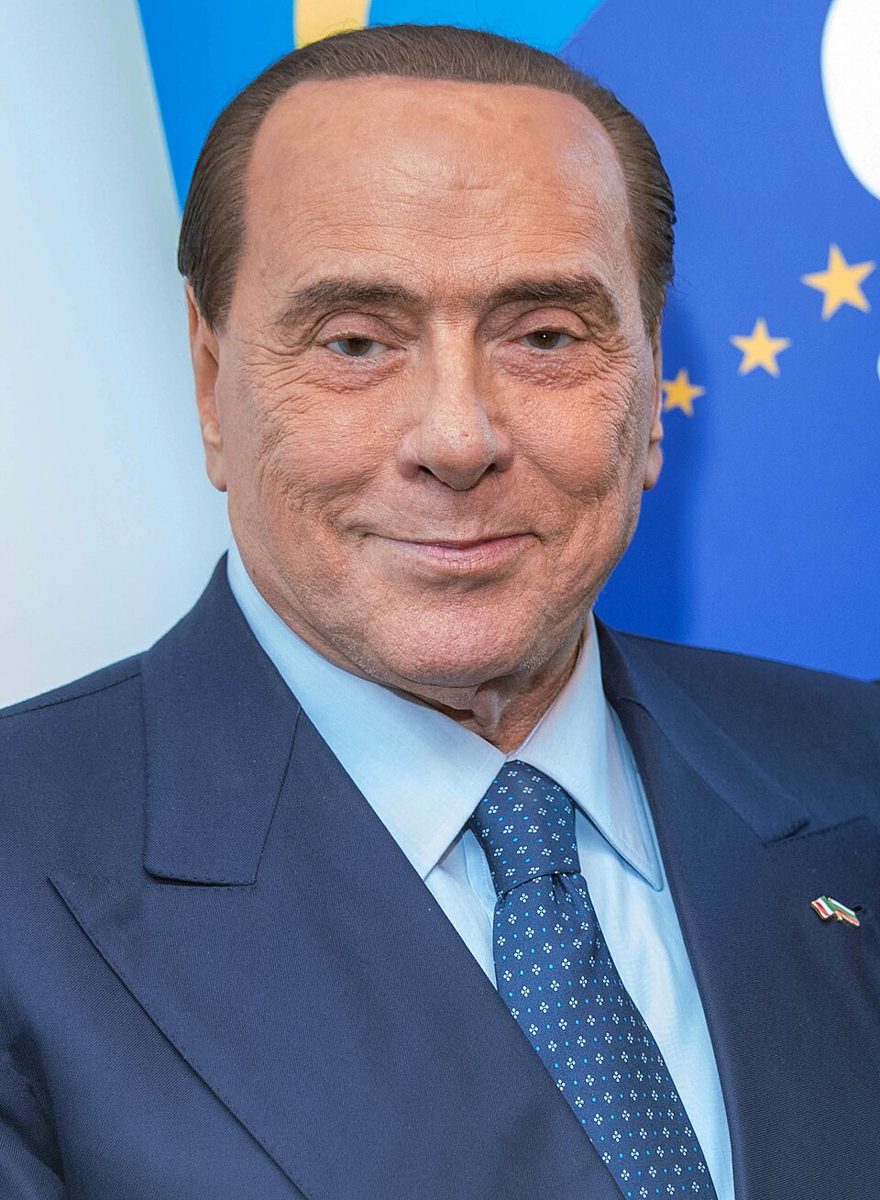
Silvio Berlusconi was an Italian media tycoon, entrepreneur, and politician who served as Prime Minister of Italy for four terms between 1994 and 2011. Born on September 29, 1936, in Milan, Italy, he built a major business empire spanning television, publishing, advertising, and professional football. He founded the political party Forza Italia in 1994 and became one of Italy's most influential and controversial political figures. Berlusconi was also the longtime owner of AC Milan, helping the football club achieve significant domestic and international success. His political career was marked by economic reforms, media influence, personal scandals, and numerous legal controversies. He died on June 12, 2023, at the age of 86, leaving a lasting impact on Italian politics, business, and popular culture.
 Wikimedia Commons
Silvio Berlusconi Biography: Political Career, Business Empire, and Legacy
Biography
1. Introduction
Silvio Berlusconi was an Italian businessman, media magnate, and politician who served as Prime Minister of Italy during three periods in office, spanning four governments, between 1994 and 2011. He became one of the most recognizable figures in Italian public life through his combination of business success, television influence, political campaigning, and ownership of AC Milan.
Berlusconi founded the political movement Forza Italia in 1994 and built a political career that profoundly influenced Italian center-right politics. His time in office included economic and institutional reforms, international diplomacy, frequent political disputes, and numerous legal controversies.
His legacy remains a subject of debate because of his influence on Italian media, political institutions, football, and public culture.
2. Early Life and Family Background
Silvio Berlusconi was born on September 29, 1936, in Milan, Italy. He was the eldest child of Luigi Berlusconi, a bank employee, and Rosa Bossi, who worked as a homemaker.
He grew up in a middle-class family during a period of significant political and economic change in Italy. His childhood took place under the Fascist regime and during the Second World War, after which Italy underwent major political and social transformation.
Berlusconi developed an interest in business, communication, and public performance from an early age. As a young man, he displayed an entrepreneurial spirit and experimented with small commercial activities while pursuing his education.
These interests later became central to his career in property development, television, advertising, and politics.
3. Education
Berlusconi attended school in Milan and went on to study law at the University of Milan. He graduated in 1961 with a degree in law.
His education provided a foundation for understanding business arrangements, contracts, and commercial activity. Rather than pursuing a conventional legal career, he entered the construction and property-development industries after completing his studies.
His early business ventures helped him establish the financial resources and professional connections that would later support his expansion into television and other sectors.
4. Early Business Career in Real Estate
Berlusconi began his entrepreneurial career in construction and property development in the early 1960s.
He established companies involved in residential construction and became associated with major development projects around Milan. Among his best-known projects were Milano 2 and Milano 3, planned residential communities designed to combine housing with commercial and recreational facilities.
These projects contributed to his financial growth and provided the foundation for his expanding business interests.
His success in real estate also helped him develop a reputation as an ambitious entrepreneur who sought opportunities in emerging markets.
5. Building the Fininvest Business Group
In 1978, Berlusconi established Fininvest, a holding company that eventually encompassed a broad range of commercial activities.
The group expanded into television, advertising, publishing, insurance, finance, and entertainment. Its growing portfolio made Berlusconi one of Italy's most prominent private-sector business figures.
Fininvest also became an important vehicle for coordinating his investments and managing the development of related companies.
The group's expansion gave Berlusconi a substantial presence in industries that shaped Italian consumer culture and public communication.
6. Television and Media Empire
Berlusconi transformed Italian commercial television during the 1980s. He developed Canale 5 into a major national television network and expanded his broadcasting interests through the acquisition of Italia 1 and Rete 4.
The resulting commercial television group competed directly with Italy's public broadcaster, RAI.
Berlusconi's networks emphasized entertainment, popular programming, advertising, and formats designed to attract large audiences. Their success changed the structure of Italian broadcasting and expanded the role of private commercial television.
His media interests later became associated with Mediaset, one of Italy's major commercial broadcasting groups.
The scale of his media holdings became a major political issue after he entered government. Critics argued that his ownership of influential television networks created conflicts of interest between his private business activities and his responsibilities as prime minister.
7. Entry into Politics
In January 1994, Berlusconi announced his entry into politics and founded Forza Italia, a new political movement that presented itself as an alternative to Italy's established parties.
His decision came during a period of major political upheaval. Investigations into corruption had weakened traditional political organizations, while the collapse of older party structures created space for new political movements.
Berlusconi used his experience in business and television to build a national campaign. His communication style emphasized economic opportunity, entrepreneurship, lower taxation, and opposition to the political left.
Forza Italia formed alliances with other center-right parties and won the general election in March 1994.
Berlusconi became prime minister in May 1994, beginning a political career that would repeatedly return him to the center of Italian government.
8. First Government: 1994–1995
Berlusconi's first government took office in May 1994. The coalition included Forza Italia, the Northern League, and the National Alliance's political predecessor, the National Alliance movement's allies in the center-right bloc.
The government faced internal disagreements and challenges involving economic policy, coalition management, and the relationship between Berlusconi's business interests and his political responsibilities.
The coalition broke apart in late 1994 after the Northern League withdrew its support. Berlusconi resigned in January 1995.
Although his first government lasted less than a year, it established him as a major figure in Italian politics and laid the groundwork for future center-right electoral campaigns.
9. Return to Power: 2001–2006
Berlusconi returned to office after the center-right coalition won the general election in May 2001. His second government was sworn in the following month.
His administration pursued policies involving taxation, employment, pensions, infrastructure, and business regulation. The government also introduced changes to parts of Italy's legal and institutional framework.
During this period, Berlusconi became a prominent participant in European and international diplomacy. Italy remained a member of the European Union and NATO, and his government maintained close relations with the United States.
His administration also faced criticism over economic performance, public debt, labor-market conditions, and legislation affecting his business interests.
Berlusconi's second government lasted until April 2005, after which he formed a third government during the same parliamentary term. The overall period ended in May 2006 following an election defeat.
10. Foreign Policy and International Relations
Berlusconi maintained relationships with numerous international leaders and frequently used personal diplomacy as part of his foreign policy approach.
His governments supported Italy's participation in NATO and maintained a close relationship with the United States. Italy participated in the international coalition following the September 11, 2001, terrorist attacks and later deployed forces to Afghanistan and Iraq under different international arrangements.
Berlusconi also cultivated relationships with Russian President Vladimir Putin and Libyan leader Muammar Gaddafi. These relationships attracted attention because of their implications for energy policy, migration, trade, and European security.
His foreign policy often emphasized bilateral agreements, economic partnerships, and personal connections with other heads of government.
The results and consequences of these relationships remain subjects of political and historical analysis.
11. Third Period in Office: 2008–2011
Berlusconi returned to the premiership in May 2008 after his center-right coalition won the general election.
His fourth government faced major challenges, including the international financial crisis, Italy's economic difficulties, rising public debt, and the European sovereign debt crisis.
The government introduced measures intended to manage the economy and maintain financial stability. However, concerns about Italy's public finances and borrowing costs increased during 2011.
Berlusconi also faced sustained political controversy and declining parliamentary support.
In November 2011, he resigned as prime minister amid growing pressure from financial markets, European partners, and political opponents. Mario Monti succeeded him as head of a new government.
His departure marked the end of his longest continuous period in office, although he remained active in Italian politics afterward.
12. Forza Italia and Later Political Activity
After leaving the premiership, Berlusconi continued to lead and influence center-right politics.
His political movement underwent organizational changes, including the creation of The People of Freedom, known in Italian as Il Popolo della Libertà, in 2009. In 2013, he revived Forza Italia as a separate political party.
Despite legal difficulties and changes in the political landscape, he continued to campaign, participate in elections, and influence coalition negotiations.
In 2019, he was elected to the European Parliament. In 2022, he returned to Italy's Senate following the national election.
He remained a central figure in Forza Italia until his death in June 2023.
13. AC Milan Ownership and Football Success
Berlusconi purchased AC Milan in 1986, beginning a period of major sporting success for the club.
Under his ownership, Milan became one of Europe's most prominent football teams. The club won multiple Italian league titles and European trophies, including five European Cup or UEFA Champions League titles during his presidency.
The club featured celebrated players such as Paolo Maldini, Franco Baresi, Marco van Basten, Ruud Gullit, Frank Rijkaard, Kaká, and Andriy Shevchenko.
Berlusconi's tenure also saw the appointment of influential managers, including Arrigo Sacchi and Carlo Ancelotti, whose teams became known for tactical organization and attacking football.
He sold his controlling interest in AC Milan in 2017.
In 2018, he acquired Italian club Monza through his investment group. Monza subsequently reached Serie A, Italy's top division, for the first time in its history in 2022.
Football remained one of the most visible parts of Berlusconi's public identity.
14. Legal Controversies and Public Criticism
Berlusconi's career was accompanied by numerous investigations, court proceedings, and public controversies.
His business holdings and political responsibilities repeatedly raised questions about conflicts of interest, media concentration, and the independence of public institutions.
He was involved in cases relating to tax matters, corruption allegations, business dealings, and personal conduct. The outcomes varied by case, including acquittals, dismissals, convictions, and changes arising from appeals or legal developments.
In 2013, Italy's highest court upheld a tax-fraud conviction related to the Mediaset tax case. The conviction led to his exclusion from elected office for a period under Italian law, although he later returned to Parliament.
He was also tried in the Ruby case, involving allegations connected to a young woman who attended events at his residence. His original conviction was overturned on appeal, and he was acquitted in subsequent proceedings.
These controversies significantly shaped public debate about his political influence, the relationship between wealth and political power, and the operation of Italy's justice system.
15. Personal Life and Family
Berlusconi married Carla Elvira Dall'Oglio in 1965. They had two children, Marina and Pier Silvio, before separating.
In 1990, he married actress Veronica Lario. They had three children: Barbara, Eleonora, and Luigi. The couple later separated, and their divorce was finalized in 2014.
His children became involved in different aspects of the family business and public life. Marina Berlusconi became a prominent business executive, while Pier Silvio Berlusconi took on senior responsibilities within the media group.
Berlusconi's private life received extensive media attention, particularly because of his public image, relationships, and social events.
16. Wealth and Business Interests
Berlusconi accumulated substantial wealth through property development, broadcasting, publishing, advertising, and financial services.
His business interests were largely organized through Fininvest, which maintained significant holdings in media and other commercial sectors.
His financial position made him one of Italy's wealthiest individuals and contributed to his international visibility.
At the same time, his wealth and media ownership became recurring issues in political debates over competition, democratic accountability, and the separation of private economic power from public office.
His career illustrates the complex relationship between business success, mass communication, and political influence.
17. Awards and Recognition
Berlusconi received various honors and forms of recognition during his business and political career.
His notable distinctions included:
- Knight of the Order of Merit for Labour: An Italian honor awarded in recognition of professional and entrepreneurial achievements in 1977. He voluntarily relinquished the title in 2014.
- AC Milan's European success: His ownership period included multiple Italian league championships and European Cup or UEFA Champions League victories.
- International political recognition: As prime minister, he participated in major international summits and diplomatic initiatives involving the European Union, NATO, and other international organizations.
These distinctions reflect different aspects of his public life, from business to football and political leadership.
18. Death and Final Years
Silvio Berlusconi died on June 12, 2023, at San Raffaele Hospital in Milan, Italy. He was 86 years old.
He had been hospitalized amid health problems, including chronic leukemia that had been publicly disclosed in 2023.
His death prompted reactions from political leaders, business figures, football organizations, and members of the public. Supporters emphasized his role in reshaping Italian politics and commercial television, while critics highlighted the controversies that accompanied his years in power.
He was buried following a state funeral at Milan Cathedral.
19. Legacy and Influence
Berlusconi's influence extended across Italian politics, business, media, and football.
In politics, he helped establish Forza Italia as a major center-right party and changed how political campaigns used television, personal branding, and direct communication with voters.
In business, he contributed to the expansion of commercial broadcasting and the development of a large media group. His ownership of influential television networks also raised lasting questions about conflicts of interest and media pluralism.
In football, his ownership of AC Milan coincided with an exceptionally successful period for the club in Italian and European competitions.
His legacy remains contested. Some observers emphasize his entrepreneurial achievements and political longevity, while others focus on institutional conflicts, legal controversies, and the broader effects of concentrated media ownership.
20. Conclusion
Silvio Berlusconi was a businessman and political leader whose career reshaped several aspects of modern Italian public life. From real estate and commercial television to the premiership and professional football, he built a public identity that combined business success with political ambition.
His governments influenced domestic policy and Italy's international relationships, while his media empire transformed the country's broadcasting landscape. His ownership of AC Milan also connected his name with a celebrated period in European football.
Berlusconi's life and career remain important subjects for understanding the relationship between business, media, political leadership, and public accountability in contemporary Italy.
Did you know?
- Silvio Berlusconi graduated in law from the University of Milan in 1961. - He founded Fininvest in 1978, building a business group with interests in television, publishing, advertising, and finance. - His television networks, including Canale 5, Italia 1, and Rete 4, helped transform Italian commercial broadcasting. - He founded Forza Italia in 1994 and entered national politics that same year. - He served as prime minister through four governments across three periods: 1994–1995, 2001–2006, and 2008–2011. - Under his ownership, AC Milan won five European Cup or UEFA Champions League titles. - He acquired AC Monza in 2018, and the club reached Italy's Serie A in 2022. - Berlusconi was elected to the European Parliament in 2019 and returned to Italy's Senate in 2022. - His career generated extensive debate about media ownership, conflicts of interest, and the relationship between business and politics. - He died in Milan on June 12, 2023, at the age of 86.