Activist · United States
Rosa Parks
Rosa Parks (1913–2005) was an American civil rights activist best known for refusing to give up her bus seat to a white passenger in Montgomery, Alabama, on December 1, 1955. Her arrest helped spark the Montgomery Bus Boycott, a landmark campaign against racial segregation in the United States. Often called the “Mother of the Civil Rights Movement,” Parks dedicated much of her life to racial equality, justice, and human rights.
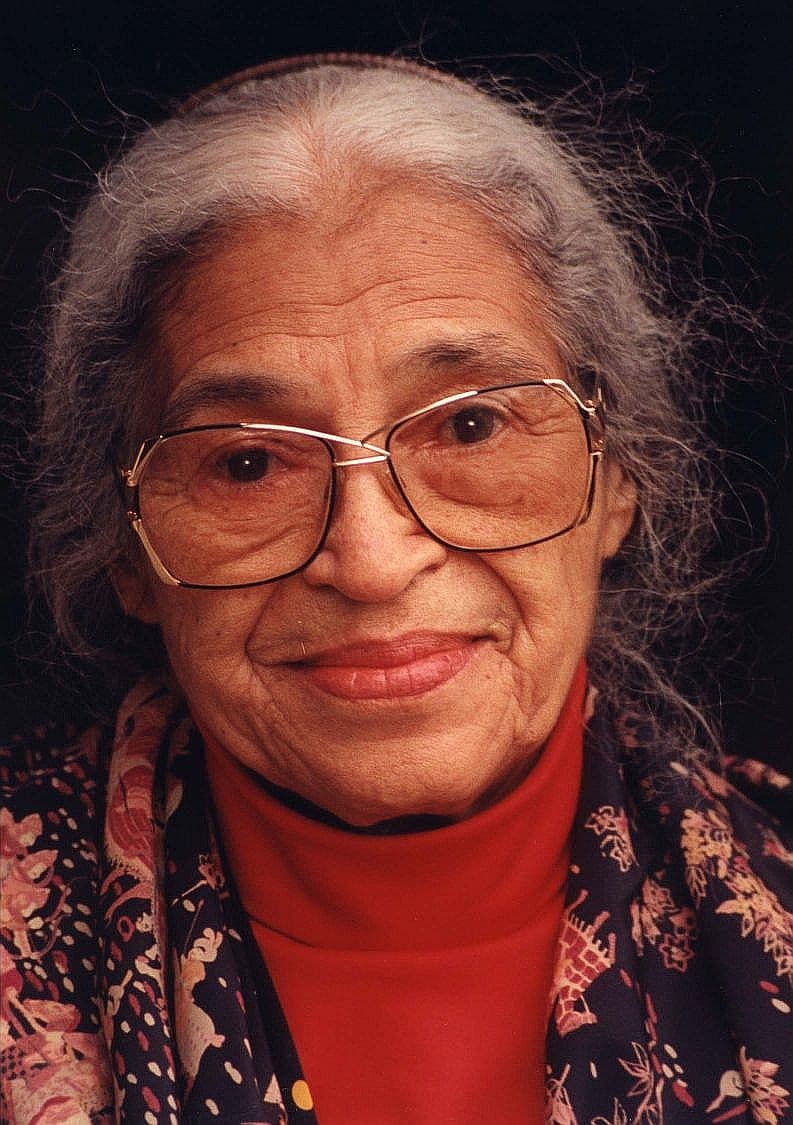 Wikimedia Commons
Rosa Parks: Full Biography
Biography
Early Life and Birth
Rosa Louise McCauley Parks was born on February 4, 1913, in Tuskegee, Alabama, United States. She became one of the most recognizable figures in the American civil rights movement through her lifelong opposition to racial discrimination.
She spent much of her early childhood in rural Alabama, where racial segregation and discrimination shaped everyday life for African Americans. These experiences helped develop her determination to challenge injustice and defend human dignity.
Family Background
Rosa was the daughter of James McCauley, a carpenter, and Leona Edwards McCauley, a teacher. She had a younger brother named Sylvester.
After her parents separated, Rosa lived with her mother and maternal grandparents near Pine Level, Alabama. Her grandparents strongly influenced her upbringing and taught her the importance of self-respect, independence, and standing up against unfair treatment.
Childhood Under Segregation
Growing up in the American South, Parks witnessed the effects of Jim Crow laws, which enforced racial segregation in public spaces and restricted African Americans' rights.
Black children often attended underfunded schools, and African Americans faced discrimination in transportation, employment, housing, and voting. Parks also grew up aware of the threat of racial violence, including violence associated with white supremacist groups.
These experiences shaped her understanding of inequality long before the bus protest that made her famous.
Education
Parks attended rural schools before continuing her education at the Montgomery Industrial School for Girls, an institution that emphasized academic learning and practical skills.
She later attended Alabama State Teachers College's laboratory school for a time but left before completing her studies because of family responsibilities.
In 1933, she completed her high school education with support from her family. At a time when educational opportunities for African American women were limited, completing high school was a significant personal achievement.
Marriage to Raymond Parks
In 1932, Rosa married Raymond Parks, a barber and active supporter of civil rights in Montgomery, Alabama.
Raymond encouraged her educational ambitions and shared her opposition to racial injustice. Together, they participated in activities supporting African Americans who faced discrimination and unfair treatment.
Their marriage provided Rosa with personal support as she became increasingly involved in organized civil rights work.
Early Civil Rights Activism
Long before her famous bus protest, Parks was involved in efforts to challenge racial injustice. She joined the Montgomery branch of the National Association for the Advancement of Colored People (NAACP) in 1943.
She served as the branch secretary for many years, working alongside local activists to investigate discrimination, support voter registration, and seek justice for victims of racial violence.
Her work included gathering information about abuses against African Americans and helping bring neglected cases to public attention. This history demonstrates that her later protest was part of a sustained commitment to civil rights rather than an isolated act.
Work as a Seamstress
Parks worked as a seamstress and held jobs in Montgomery, including employment at the Montgomery Fair department store.
Her work provided an income, but she lived in a society where racial discrimination limited professional opportunities and personal freedom for African Americans.
The contrast between her ordinary working life and her growing involvement in activism reflected the experiences of many Black women who balanced employment, family responsibilities, and the struggle for equal rights.
The Highlander Folk School
In the summer of 1955, Parks attended a workshop at the Highlander Folk School in Tennessee. The institution provided training for people involved in social movements, including campaigns against segregation.
The workshop gave Parks an opportunity to exchange ideas with activists from different backgrounds and strengthened her commitment to racial equality.
It also reinforced her belief that organized communities could challenge discriminatory laws and practices through sustained collective action.
The Montgomery Bus System
In the 1950s, Montgomery operated a racially segregated public bus system. African American passengers generally had to sit in designated sections and could be required to surrender seats when white seating areas became full.
These rules were part of a broader system of racial inequality that restricted Black Americans' access to public facilities and treated them as second-class citizens.
Parks had experienced discriminatory treatment on buses before 1955. Her eventual refusal to surrender her seat came after years of confronting segregation and participating in civil rights activism.
The Historic Bus Protest
On December 1, 1955, Parks boarded a bus in Montgomery after finishing her workday. She sat in the section designated for Black passengers.
When the bus became crowded, the driver ordered Parks and other Black passengers to give up their seats so a white passenger could sit. Parks refused to move.
Her decision challenged the city's segregation rules. Police arrested her, and she was charged with violating local segregation regulations.
Parks later explained that her action was not simply the result of physical tiredness. She was tired of accepting unjust treatment and believed she had a right to remain where she was seated.
The Montgomery Bus Boycott
Parks's arrest helped trigger the Montgomery Bus Boycott, which began on December 5, 1955. African American residents organized a mass refusal to use the city's segregated buses.
The boycott was supported by local civil rights organizations, church leaders, community members, and volunteers. The newly formed Montgomery Improvement Association coordinated the campaign, with Martin Luther King Jr. elected as its president.
Parks became an important symbol of the protest, but the boycott depended on the collective efforts of thousands of ordinary people who walked, shared rides, and organized alternative transportation.
The campaign continued for 381 days, demonstrating the strength of coordinated community action.
Her Role During the Boycott
Parks did more than become a symbol of resistance. She participated in organizing and supporting the campaign, including helping with transportation arrangements and public awareness.
The boycott placed significant pressure on the bus system and challenged the economic and political foundations of segregation.
Parks and her husband faced serious personal consequences. She lost her job, and Raymond also experienced employment difficulties connected to the controversy. The family received threats and faced financial insecurity.
Despite these hardships, Parks continued to support the movement for equality.
Legal Victory Against Bus Segregation
The Montgomery Bus Boycott was accompanied by a legal challenge to racial segregation on public transportation.
In the case of Browder v. Gayle, a federal court ruled in 1956 that segregation on Montgomery's public buses was unconstitutional. The United States Supreme Court upheld the decision.
The boycott ended in December 1956, after the ruling took effect. African American residents could finally use the city's buses without the legally enforced racial separation that had governed the system.
The outcome became an important victory in the broader civil rights struggle and demonstrated the effectiveness of combining community organizing with legal action.
Moving to Detroit
In 1957, Parks and her husband moved from Montgomery to Detroit, Michigan, partly because of employment difficulties and the threats they faced after the boycott.
Relocating did not end her involvement in civil rights activism. She continued to support campaigns against racial discrimination and became involved in issues affecting African American communities in Detroit.
She recognized that segregation and inequality existed outside the American South as well, particularly in housing, education, employment, and access to economic opportunities.
Work with Congressman John Conyers
In 1965, Parks began working in the Detroit office of U.S. Representative John Conyers. She remained in the position until her retirement in 1988.
Her work involved helping constituents who faced difficulties involving housing, employment, education, and access to government services.
This role allowed her to continue public service while supporting people dealing with social and economic inequality. It also demonstrated that her commitment to civil rights extended well beyond the Montgomery bus incident.
Advocacy for Young People
Parks believed that young people needed opportunities to understand history, develop confidence, and participate in community life.
In 1987, she helped establish the Rosa and Raymond Parks Institute for Self Development with Elaine Eason Steele. The organization focused on youth development and educational programs.
One of its initiatives, Pathways to Freedom, helped young people learn about civil rights history through educational travel and historical experiences.
Her work reflected her belief that education and civic engagement could help future generations build a more equitable society.
Views on Racial Justice
Parks's activism addressed more than bus segregation. Throughout her life, she supported efforts to challenge racial violence, discriminatory housing practices, unequal education, and barriers to political participation.
She also supported broader movements seeking economic justice and equal treatment for African Americans.
Her later activism showed that she did not regard the Montgomery Bus Boycott as the end of the struggle. She continued to argue that meaningful equality required sustained work across many areas of society.
Books and Personal Reflections
Parks shared her experiences and ideas through autobiographical writing and other publications. Her books helped readers understand both her personal history and the broader struggle for civil rights.
Among her notable works are Rosa Parks: My Story, written with Jim Haskins, and Quiet Strength, written with Gregory J. Reed.
These works describe her experiences with segregation, her participation in the civil rights movement, and her belief in dignity, courage, and justice.
Her writings also helped challenge simplified portrayals of her as a person who acted without preparation or prior involvement in activism.
Awards and Recognition
Parks received numerous awards in recognition of her contributions to civil rights and American public life.
In 1979, the NAACP awarded her the Spingarn Medal, one of its most distinguished honors. In 1996, President Bill Clinton awarded her the Presidential Medal of Freedom.
In 1999, she received the Congressional Gold Medal, one of the highest civilian honors bestowed by the United States Congress.
These recognitions reflected the national significance of her activism and the lasting influence of her role in the struggle against racial segregation.
Final Years
During her later years, Parks remained an influential public figure and an inspiration to civil rights activists. She continued to attend events, support educational initiatives, and encourage younger generations to work for justice.
Although she experienced health and financial challenges at different points in her later life, her historical contributions remained widely recognized.
She spent her final years in Detroit, where she had lived since leaving Montgomery.
Death and National Honors
Rosa Parks died on October 24, 2005, in Detroit, Michigan, at the age of 92.
Her death prompted tributes from across the United States and around the world. She became the first woman to lie in honor in the United States Capitol Rotunda, an exceptional recognition of her contribution to the nation.
Her funeral and memorial services brought together political leaders, civil rights activists, and members of the public to honor her life and legacy.
Historical Legacy
Rosa Parks remains a central figure in the history of the American civil rights movement. Her refusal to surrender her seat helped mobilize a community-wide protest that challenged racial segregation.
Her story also highlights the importance of long-term organizing. Parks was already an experienced activist before 1955, and her historic action emerged from years of work against injustice.
Her legacy is closely connected to the thousands of people who participated in the Montgomery Bus Boycott and the many other activists who fought segregation through protests, legal challenges, voter registration campaigns, and community organizing.
Cultural Influence
Parks's life has been represented in books, films, educational programs, museums, and public commemorations. Her name is associated with courage, resistance, and the pursuit of equality.
Schools, streets, public facilities, and commemorative events have been named in her honor. Her story is frequently taught to illustrate how individual acts of resistance can contribute to broader social movements.
At the same time, historians have emphasized the need to recognize the full scope of her activism rather than reducing her life to a single moment on a bus.
Conclusion
Rosa Parks transformed American history through her determination to challenge racial segregation and defend human dignity. Her refusal to surrender her bus seat helped inspire the Montgomery Bus Boycott and contributed to a landmark legal victory against segregated public transportation.
Yet her contribution extended far beyond that event. Through decades of activism, public service, and youth education, she remained committed to racial justice and equal rights. Her life continues to remind people that lasting social change depends on courage, collective action, and persistent work for justice.
Did you know?
- Rosa Parks was already an experienced civil rights activist before her famous bus protest in 1955. - She served as secretary of the Montgomery NAACP branch for approximately twelve years. - The Montgomery Bus Boycott lasted **381 days**. - Parks attended an interracial activist-training workshop at the Highlander Folk School in 1955. - In 1999, she received the Congressional Gold Medal. - In 2005, she became the first woman to lie in honor in the United States Capitol Rotunda.