Activist · Iraq
Nadia Murad
**Short Bio** Nadia Murad Basee Taha, born on 10 March 1993, is an Iraqi Yazidi human rights activist, author, and Nobel Peace Prize laureate. She grew up in Kocho, a village near Sinjar in northern Iraq. In 2014, she was captured by Islamic State militants during their campaign against the Yazidi community and suffered severe abuse before escaping captivity. Rather than remain silent, Murad publicly shared her experiences and became an international advocate for survivors of sexual violence, human trafficking, and genocide. In 2016, she was appointed the United Nations' first Goodwill Ambassador for the Dignity of Survivors of Human Trafficking. In 2018, she received the Nobel Peace Prize jointly with Denis Mukwege. She later founded Nadia's Initiative to support survivors and help rebuild communities affected by atrocities.
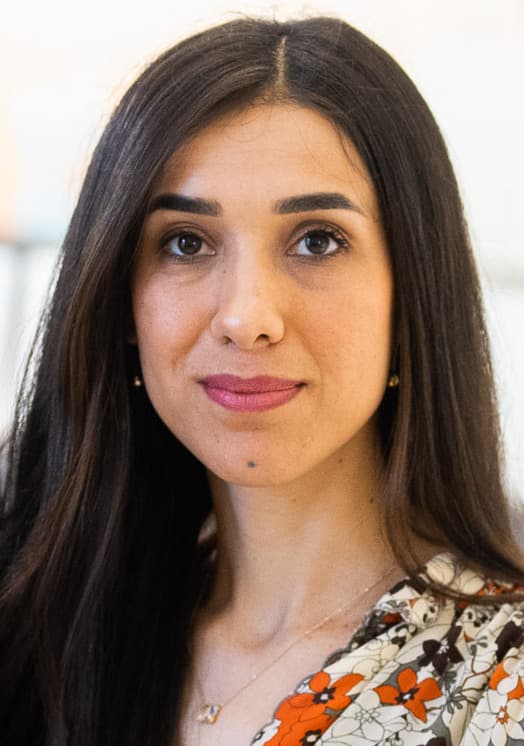 Wikimedia Commons
Nadia Murad: Full Biography
Biography
1. Introduction
Nadia Murad is an Iraqi Yazidi human rights activist whose courage and advocacy have brought international attention to sexual violence in conflict, human trafficking, and the persecution of religious minorities. After surviving captivity by Islamic State militants in 2014, she dedicated her life to seeking justice for survivors and helping protect vulnerable communities.
Her decision to speak publicly about her experiences helped bring the suffering of the Yazidi people to international attention. In 2018, she received the Nobel Peace Prize jointly with Denis Mukwege for their efforts to end the use of sexual violence as a weapon of war and armed conflict.
2. Early Life and Birth
Nadia Murad Basee Taha was born on 10 March 1993 in Kocho, a village near Sinjar in northern Iraq. She belongs to the Yazidi community, an ancient ethno-religious minority with distinctive religious traditions and a long history in the region.
She grew up in a rural environment where family relationships, community life, and Yazidi traditions played important roles. Before the conflict transformed her life, she hoped to complete her education and establish a small beauty salon in her hometown.
Her early years were shaped by ordinary family and village life, far removed from the international attention she would later receive.
3. Family and Community Background
Murad grew up in a large family in Kocho. Her mother and siblings were central to her life, and her community provided a strong sense of belonging.
The Yazidis have historically faced discrimination and persecution because of their religious identity. In 2014, the Islamic State launched a systematic campaign against Yazidi communities in the Sinjar region.
The attack devastated Murad's family and village. She lost her mother and several brothers and other relatives during the violence, experiences that later became an important part of her testimony and advocacy.
4. The 2014 Islamic State Attack
In August 2014, Islamic State militants attacked Yazidi communities in and around Sinjar in northern Iraq. The assault involved killings, abductions, forced displacement, and systematic persecution.
Kocho was among the villages affected. Many Yazidi men and older women were killed, while women and girls were abducted and subjected to sexual slavery and other abuses.
Murad was among those captured. The attack marked a devastating turning point in her life and became part of the broader campaign against the Yazidi population that international bodies and investigators have described as genocide.
5. Captivity and Escape
During her captivity, Murad endured repeated sexual violence and other forms of abuse. She was moved between locations controlled by Islamic State militants and faced threats to her life.
After several months, she managed to escape with assistance that enabled her to leave captivity and reach safety. Her escape marked the beginning of a difficult process of recovery and rebuilding her life.
Rather than hide what had happened to her, Murad decided to speak publicly about the crimes committed against her and other Yazidi women and girls.
6. Rebuilding Her Life in Germany
In 2015, Murad arrived in Germany as part of a program that provided refuge and assistance to survivors of the Islamic State's atrocities.
Germany offered her a safer environment in which to begin rebuilding her life. However, the trauma of captivity and the loss of family members remained profound challenges.
While seeking safety and recovery, she increasingly focused on raising awareness of the suffering of Yazidi survivors and calling for international action against sexual violence and human trafficking.
7. Choosing to Speak Out
Murad's decision to speak publicly about her experiences was central to her emergence as a human rights advocate. She gave testimony to international institutions and met political leaders, journalists, and human rights organizations.
By describing the abuses suffered by Yazidi women and girls, she challenged the stigma often imposed on survivors of sexual violence. She argued that survivors should be treated with dignity and that perpetrators should be held accountable.
Her testimony helped bring international attention to the systematic nature of the crimes committed against Yazidis and the need for justice.
8. United Nations Goodwill Ambassador
In 2016, Murad was appointed the United Nations' first Goodwill Ambassador for the Dignity of Survivors of Human Trafficking, through the United Nations Office on Drugs and Crime.
The appointment recognized her work in raising awareness about human trafficking and sexual violence. It also gave her an international platform to advocate for survivors who often lacked access to legal protection, medical assistance, and social support.
Through this role, she called on governments and international organizations to investigate abuses, protect survivors, and strengthen efforts to prevent trafficking and sexual exploitation.
9. Receiving the Nobel Peace Prize
In October 2018, Nadia Murad was awarded the Nobel Peace Prize jointly with Denis Mukwege, a physician from the Democratic Republic of the Congo who has treated survivors of sexual violence.
The Nobel Committee recognized both individuals for their efforts to end the use of sexual violence as a weapon of war and armed conflict.
Murad became one of the youngest Nobel Peace Prize laureates of her generation. The award recognized not only her personal courage but also her efforts to secure justice for survivors and bring attention to the persecution of the Yazidi community.
10. The Last Girl: My Story of Captivity and My Fight Against the Islamic State
Murad published her memoir, The Last Girl: My Story of Captivity and My Fight Against the Islamic State, in 2017, with the assistance of writer Jenna Krajeski.
The book recounts her childhood, the attack on her village, her captivity, her escape, and her decision to become an activist.
It also documents the suffering of the Yazidi community and explains why she believes survivors deserve justice rather than silence or shame.
The memoir helped readers around the world understand the human consequences of genocide and the importance of listening to survivors.
11. Advocacy for Yazidi Survivors
Murad has consistently called for greater support for Yazidi women and girls who survived captivity, sexual violence, and displacement.
Her advocacy includes demands for psychological care, medical treatment, education, financial support, and opportunities for survivors to rebuild their lives.
She has also emphasized that assistance should extend beyond individual survivors to families and communities devastated by violence.
Her work seeks to ensure that survivors are not defined only by their suffering but are recognized as individuals with rights, dignity, and the ability to shape their own futures.
12. Nadia's Initiative
Murad founded Nadia's Initiative to support communities affected by genocide and mass atrocities, particularly the Yazidi community in the Sinjar region.
The organization works to advance community rebuilding, improve access to essential services, support survivors, and encourage the sustainable recovery of areas damaged by conflict.
Its work reflects Murad's belief that justice must include more than prosecuting perpetrators. Survivors and displaced families also need safe homes, functioning public services, educational opportunities, and the ability to return to their communities when conditions permit.
Nadia's Initiative has become an important part of her long-term humanitarian work.
13. Campaign Against Sexual Violence in Conflict
A major focus of Murad's work is ending the use of sexual violence as a method of warfare. She has spoken to international audiences about how armed groups use sexual violence to terrorize communities, destroy family structures, and persecute minorities.
She urges governments and international institutions to recognize these acts as serious crimes and ensure that perpetrators face justice.
Murad also emphasizes that survivors must be able to speak without fear of stigma, retaliation, or discrimination. Her advocacy has helped place survivors' experiences at the center of discussions about conflict-related sexual violence.
14. Fight Against Human Trafficking
Murad's experience of captivity made the prevention of human trafficking a central part of her activism.
She advocates for stronger systems to identify trafficking victims, protect those at risk, and investigate the networks responsible for exploitation.
She also calls for long-term assistance for survivors, including safe housing, counseling, education, and opportunities to regain financial independence.
Her work highlights the connection between trafficking, armed conflict, forced displacement, and the exploitation of vulnerable populations.
15. Seeking Justice for the Yazidi Genocide
Murad has repeatedly called for international recognition of the crimes committed against the Yazidi people and for accountability for those responsible.
She has addressed international institutions and political leaders, urging them to investigate killings, abductions, sexual slavery, and other abuses.
Her advocacy has contributed to broader efforts to document the atrocities and support legal proceedings against suspected perpetrators.
For Murad, justice also means acknowledging the experiences of survivors, recovering the remains of victims where possible, and helping families discover the fate of missing relatives.
16. Personal Life
Murad has generally kept many details of her private life away from public attention, choosing to focus much of her public work on human rights and humanitarian issues.
In 2018, she married Abid Shamdeen, a fellow Yazidi who has also been involved in efforts supporting the Yazidi community. Their relationship attracted attention because it represented a new chapter in her life after years of trauma and displacement.
Murad's personal journey demonstrates that recovery after severe violence is complex and individual. Her public advocacy has never meant that the challenges of rebuilding a private life have disappeared.
17. International Recognition and Awards
The Nobel Peace Prize remains Murad's most internationally recognized honor. It brought further attention to her efforts to end sexual violence in conflict and promote justice for survivors.
Her work has also received recognition from governments, human rights organizations, and international institutions.
These honors have helped amplify her message, but Murad has consistently emphasized that recognition alone is not enough. She continues to call for concrete action to protect survivors, support affected communities, and prevent future atrocities.
18. Influence on Human Rights Discussions
Murad's testimony has contributed to international discussions about genocide, sexual violence, human trafficking, and the rights of religious minorities.
Her work illustrates the importance of survivor testimony in documenting atrocities and encouraging accountability. It also highlights the difficulties survivors may face when seeking justice, including stigma, displacement, and the destruction of their communities.
By speaking openly about her experiences, she has encouraged broader recognition of survivors as participants in justice and recovery efforts rather than merely as victims of violence.
19. Challenges and Continuing Work
Despite international recognition, major challenges remain for the Yazidi community. Many families have experienced displacement, loss of relatives, and damage to homes and community infrastructure.
Survivors may also face long-term psychological distress, economic hardship, and difficulties accessing adequate services.
Murad's continuing work focuses on keeping these needs visible to international decision-makers and encouraging sustained assistance. She has emphasized that recovery requires long-term commitments rather than short-lived public attention.
20. Legacy and Historical Significance
Nadia Murad's legacy is closely connected to her courage in speaking about crimes committed against the Yazidi people and her commitment to helping survivors.
Her Nobel Peace Prize brought global recognition to the struggle against sexual violence in conflict. Her memoir and public testimony have helped communicate the human impact of genocide, trafficking, and forced displacement.
Through Nadia's Initiative, she has also pursued practical recovery and rebuilding efforts. Her work combines advocacy for accountability with a focus on helping affected communities regain security, dignity, and opportunity.
21. Conclusion
Nadia Murad transformed a personal experience of persecution and captivity into a sustained campaign for human rights and justice. As a Yazidi survivor, author, and Nobel Peace Prize laureate, she has helped bring international attention to sexual violence in conflict and the persecution of religious minorities.
Her advocacy continues to emphasize the dignity of survivors, the importance of holding perpetrators accountable, and the need to rebuild communities affected by atrocities.
Her story remains an important example of how survivor testimony can contribute to global awareness and efforts to prevent future violence.
Did you know?
**Did You Know?** - Nadia Murad was born on 10 March 1993 in Kocho, near Sinjar in northern Iraq. - She belongs to the Yazidi community, an ancient ethno-religious minority. - In 2014, she survived captivity by Islamic State militants and later spoke publicly about the crimes committed against Yazidis. - In 2016, she became the United Nations' first Goodwill Ambassador for the Dignity of Survivors of Human Trafficking. - She received the 2018 Nobel Peace Prize jointly with Denis Mukwege. - Her memoir, *The Last Girl: My Story of Captivity and My Fight Against the Islamic State*, was published in 2017. - She founded Nadia's Initiative to support survivors and help rebuild communities affected by genocide and mass atrocities. - Her advocacy focuses on justice for survivors, preventing human trafficking, and ending sexual violence in conflict.